
FLASHFORGE Silk PLA Filament Review: Luster Without the Layer Lines
This review is based on real experiences shared by owners in online communities.
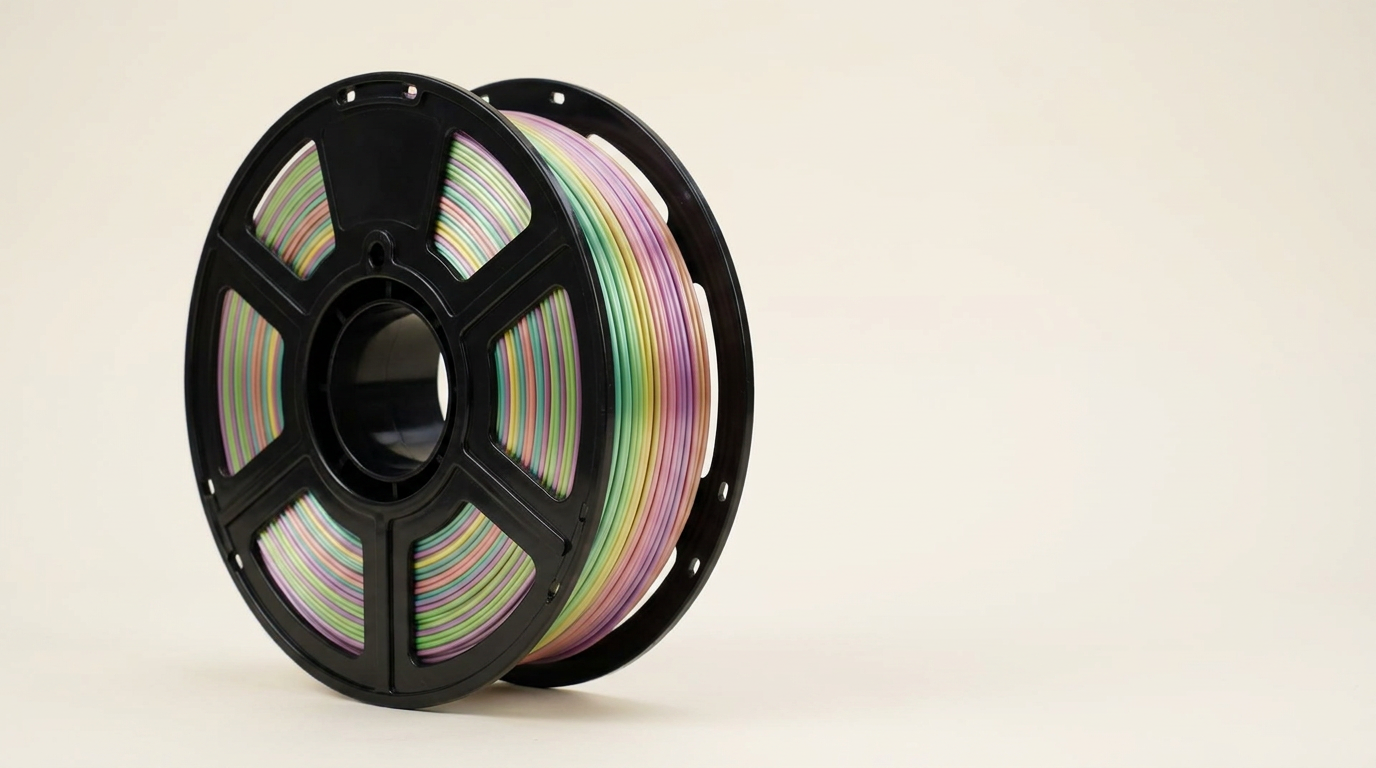
In a 3D printing market often saturated with functional, matte filaments, the FLASHFORGE Silk PLA Filament offers a distinct aesthetic proposition: sophisticated luster. While many filaments prioritize structural integrity or raw speed, silk PLAs target visual appeal. For producers of display pieces, artistic models, or prototypes where appearance is paramount, the choice of filament can elevate a print from utilitarian to artisanal.
This FLASHFORGE offering carves out a niche for those who recognize the aesthetic impact of a final product. It is less about breaking speed records or achieving extreme mechanical properties, and more about delivering a polished, professional finish directly off the print bed, often bypassing post-processing. The true test for a silk filament lies in its ability to consistently produce this high-quality surface without introducing common printing complexities. Evaluating this filament requires a focus on surface fidelity and print consistency, acknowledging its primary use case in decorative and artistic applications.
Our review examines whether this particular FLASHFORGE filament lives up to its promise of aesthetic quality and ease of use, considering its place in a segment where visual outcome often dictates success.
What owners love
- + Delivers a pronounced silky, glossy, and professional finish
- + Offers vibrant color options, including effective multi-color transitions
- + Consistently praised for ease of printing with minimal clogs or tangles
- + Achieves good layer adhesion for reliable prints
- + Provides significant visual appeal for decorative and artistic models
- + Generally considered good value for its aesthetic quality
Common complaints
- − Requires slower print speeds compared to standard PLA for optimal results
- − Multi-color filaments need larger prints to showcase color changes effectively
- − Some users experienced initial stringing if print settings were not adjusted
- − Can adhere strongly to PEI beds, occasionally requiring release agents
- − Popular colors may experience stock shortages
Design & Build
The FLASHFORGE Silk PLA Filament distinguishes itself with its inherent aesthetic properties. Owners consistently highlight the material's ability to produce models with a deep, metallic luster and a smooth, professional finish that effectively conceals layer lines. This 'luster tax' a product pays and receives, means the material is designed from the ground up for visual impact, a key differentiator from standard matte or even glossy PLAs. The varied color range, particularly the bi-color and gradient options, receives particular praise, with users noting rich gold, vibrant blues, and striking red/gold combinations. These color transitions are central to the appeal, although some owners advise that larger prints are necessary to fully appreciate the color shifts. The spool winding is consistently described as neat, which contributes to reliable feeding and reduces the risk of entanglement, a common frustration for many 3D printing enthusiasts.
Setup & Ease of Use
Ease of printing is a recurring theme, with many users reporting successful prints even as novices. Several owners note that the filament performs well with default silk settings on their printers, including Flashforge’s own machines and other popular brands like Anycubic. However, a common observation is the 'speed-fidelity trade-off' inherent to silk PLA; achieving the optimal smooth, lustrous finish often necessitates reducing print speed. One user explicitly mentioned a 50% speed reduction for best results, indicating that while it prints easily, it demands patience for peak aesthetic output. The filament's moisture resistance appears adequate upon arrival, with several users reporting no issues with an un-dried roll or good performance directly out of the vacuum-sealed packaging. This suggests Flashforge maintains reasonable quality control over filament dryness before shipping.
Performance in Real Use
In day-to-day operation, the FLASHFORGE Silk PLA Filament demonstrates solid performance. Owners consistently report minimal issues with clogging or feeding, affirming the manufacturer's claims of being clog-free and bubble-free. Layer adhesion is generally strong, contributing to robust decorative prints that hold together well. The primary performance characteristic highlighted by users is the superior surface finish; the filament effectively mimics a professional, almost post-processed look, directly off the print bed, an achievement many other filaments struggle to replicate. Specific applications include artistic sculptures, decorative items, and even trophies, where visual appeal is paramount. The 'small print visual tax' is apparent, as very small objects do not always display the full spectrum of multi-color transitions as effectively as larger ones. The only notable performance caveat is the strong adhesion some users experience on PEI print beds, occasionally requiring a release agent like glue stick or Magigoo to prevent surface damage upon part removal, especially with larger prints.
Software & Ecosystem
While FLASHFORGE manufactures 3D printers, the Silk PLA filament is not restricted to a proprietary ecosystem. Owners using printers from various brands, including Anycubic and Bambu Lab, report successful integration and performance. This speaks to the filament's adherence to standard PLA specifications, making it broadly compatible with most FDM 3D printers that support 1.75mm PLA. The general consensus is that using standard or recommended 'silk PLA' profiles in common slicing software yields good results, though individual printer calibration for temperature and speed can further optimize the unique flow characteristics of silk filaments. This broad compatibility offers users flexibility and avoids the 'vendor lock-in' sometimes associated with printer manufacturers selling their own consumables.
Value & Reliability
The FLASHFORGE Silk PLA Filament generally offers strong value for its price point, which typically falls in the roughly $20 to $30 range for a 1kg spool. Owners frequently express satisfaction with the quality received relative to the cost, perceiving it as a 'good value' or 'great price'. The reliability stems from consistent print quality, minimal issues with tangling, clogging, or moisture, and the repeatable achievement of its signature silky finish. Several users indicate an intent to repurchase or make this their 'go-to' filament, which serves as a strong indicator of perceived long-term reliability and satisfaction. Occasional stock shortages for popular colors suggest high demand, further validating its market reception. The filament's ability to consistently produce aesthetically superior prints without significant struggle positions it as a reliable option for those prioritizing visual outcome.
Verdict
Buy - The FLASHFORGE Silk PLA Filament consistently delivers on its promise of a professional, lustrous finish with minimal printing difficulties.
This filament is an excellent choice for creators prioritizing visual aesthetics in their 3D prints. If you produce artistic models, display pieces, or prototypes where a shiny, smooth, and layer-line-hiding surface is desired, this offers a compelling combination of quality and ease of use. It represents good value, particularly for those who appreciate a finished look straight off the print bed. Users of Flashforge printers may find it especially convenient, but its broad compatibility makes it suitable for most FDM printer owners.
Conversely, those focused solely on speed, structural strength for functional parts, or who require immediate, drastic color changes on very small prints, might find the inherent characteristics of silk PLA a slight limitation. If your priority is rapid prototyping or purely utilitarian components, standard PLA may be a more cost-effective choice. Anyone unwilling to slightly reduce print speeds for optimal cosmetic quality should also consider alternatives.
This filament embodies the 'aesthetic over raw speed' niche, demonstrating that the 3D printing landscape has matured beyond mere functional output. It caters to the growing segment of makers who view prints not just as objects, but as visual statements, offering a tangible path to achieving a polished, display-ready product without resorting to extensive post-processing.
FAQ
More 3D Printing Supplies reviews
Kretrum Silk Dual Color PLA Filament Review: Vibrant Aesthetics for 3D Printing
eSUN High Speed PLA+ Filament Review: The Workhorse for Fast Printers
SUNLU PETG Filament 4kg Review: The Bulk Workhorse for High-Volume Prints
Deeplee PLA+ 2.0 Filament Review: A Workhorse Material for 3D Printing
FLASHFORGE Rapid PLA: The 'Stealth Performance' Filament
RAMBERY Silk Dual Color PLA Filament Review: Aesthetic Impact for Small Prints
This review is based on real experiences shared by owners in online communities.