
FLASHFORGE Rapid PETG Filament Review: High-Speed Metallic Gold
By AValidReview. An AI-assisted summary of customer feedback, not a hands-on test.
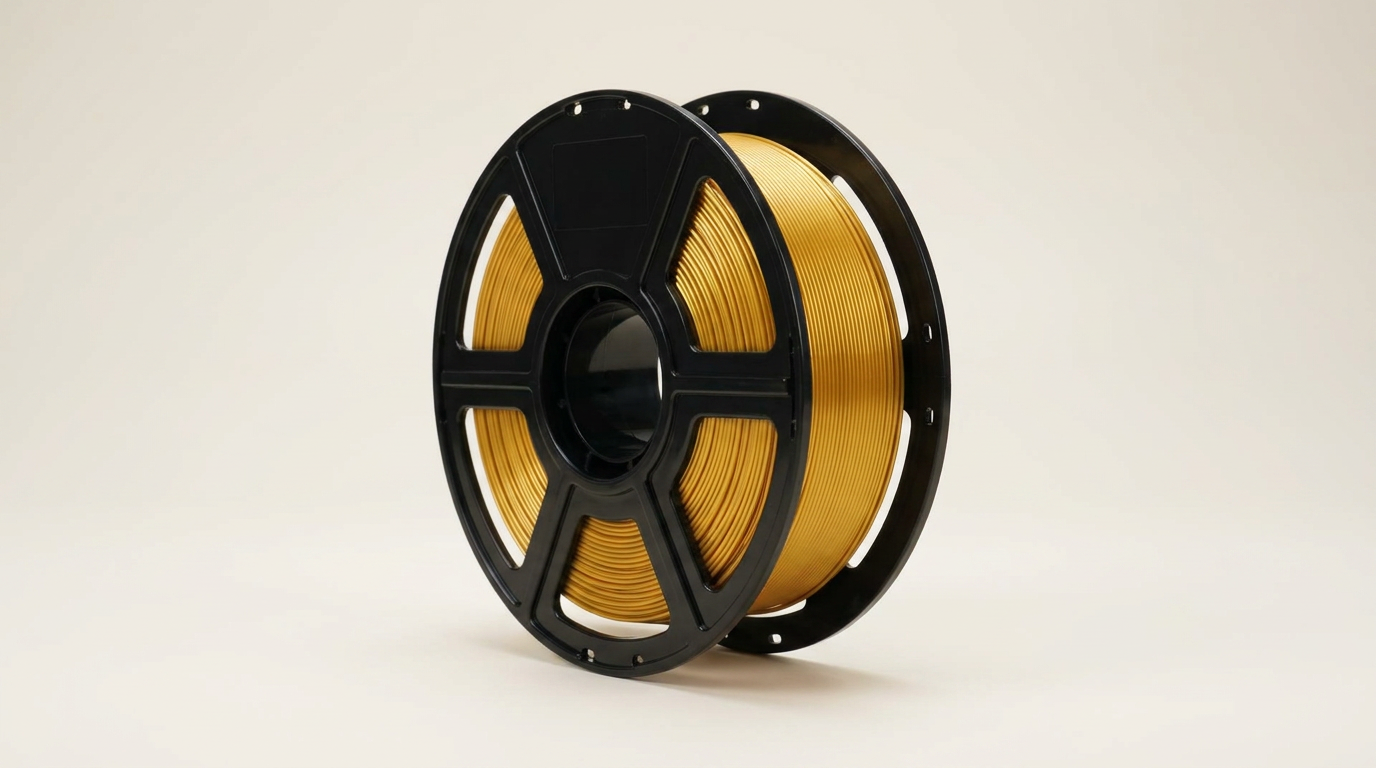
In a 3D printing market often chasing the next speed record, the FLASHFORGE Rapid PETG Filament in Metallic Bright Gold quietly carves out a niche: balancing rapid prototyping with aesthetic demands. This is not simply a high-speed PETG; it's a filament designed to deliver visual impact without compromising the practical benefits of PETG or the efficiency of modern printers. Many filaments promise speed, but few pair it with a consistent, eye-catching metallic finish that resists common printing frustrations.
While the industry buzz often centers on raw print speeds or exotic materials, FLASHFORGE addresses a common pain point for users with faster machines: finding materials that can keep up without sacrificing quality or requiring extensive tuning. This filament aims to simplify the high-speed PETG experience, making advanced printing more accessible. The core proposition here is a material that integrates smoothly into demanding workflows, prioritizing print reliability and visual appeal over chasing maximum theoretical velocities at all costs. This approach creates a "functional aesthetic" category that distinguishes it from purely functional or purely decorative options.
Our assessment delves into how well the Rapid PETG Metallic Bright Gold delivers on these promises, examining its printing behavior, the quality of its metallic finish, and its overall suitability for a range of projects, from structural components to decorative pieces. We evaluate its performance against the backdrop of owner experiences, noting where it excels and where users encounter the inherent trade-offs of PETG.
What owners love
- + Delivers a consistent, eye-catching metallic gold finish
- + Prints reliably on high-speed machines with minimal tuning
- + Strong layer adhesion and reduced stringing reported by many
- + Excellent bed adhesion, often without glue or excessive adjustments
- + Good mechanical strength suitable for functional parts
- + Consistent spool winding prevents tangles and clogs
Common complaints
- − Metallic colors may require drying for optimal finish and consistency
- − Some users note a learning curve for optimal PETG temperature settings
- − Perceived as slightly more expensive than some PETG alternatives
- − Shrinkage can be more pronounced than with PLA, requiring consideration
- − Slippery plastic spool design noted by one user
Design & Build
The FLASHFORGE Rapid PETG Filament is manufactured for high-speed applications, distinguishing itself through an upgraded winding technology designed to prevent tangles and blockages. Owners consistently report a clean, untangled spool, which is critical for unattended high-speed prints. The filament's dimensional accuracy is stated at +/- 0.02mm, a specification reflected in the consistent extrusion experiences. The metallic bright gold variant aims for a specific aesthetic, and owners frequently praise its vibrant, consistent sheen that often disguises layer lines. One user described the metallic effect as fine and consistent, without visible glitter particles, which contributes to a smoother finish and avoids nozzle clogging. The physical spool itself has been noted as having a slippery plastic surface, which, while not a performance issue, is a minor design detail some users observed compared to more common cardboard spools. This product exemplifies the "engineered aesthetic" approach, where the material's properties are optimized not just for performance but also for a specific visual outcome.
Setup & Ease of Use
While FLASHFORGE markets this filament as printing without pre-drying or extensive parameter tweaks, owner experiences indicate a nuanced reality for optimal results. Many users, even new to 3D printing, report successfully using default PETG settings on popular high-speed machines like the Bambu Lab P1S and A1 Mini. However, a significant number of experienced users emphasize the importance of drying PETG, particularly the metallic colors, to prevent issues like stringing and inconsistent adhesion. This suggests a "moisture management overhead" for achieving the advertised pristine metallic finish. One new user initially encountered bed adhesion and stringing problems, which were resolved by adjusting printhead and bed temperatures. This indicates that while the filament is generally forgiving, some initial calibration specific to the printer and environment remains beneficial. For users new to PETG, understanding its moisture sensitivity is key, regardless of the 'rapid' designation. The ease of use, therefore, hinges on acknowledging and addressing PETG's inherent material characteristics.
Performance in Real Use
The FLASHFORGE Rapid PETG delivers on its high-speed promise, with numerous owners reporting successful prints at elevated speeds without sacrificing quality. Users on fast printers like the Bambu Lab X1C and V400 note good layer adhesion and clean results, attributing this to the filament's rapid melting and smooth flow characteristics. The metallic bright gold color consistently receives praise for its visual appeal, described as "pretty material," "super nice looking," and "vibrant." The finish is often highlighted for its ability to reflect light and enhance object curves, creating an "art/sculpture visual level." Functional parts printed with this filament are described as strong and durable, suggesting it retains the mechanical properties expected from PETG. However, one owner mentioned that PETG, in general, can be brittle, and advised adjusting infill patterns. While high-speed performance is a primary feature, the product also implicitly caters to a "creative confidence" user segment, where the material choice supports both the structural and aesthetic goals of their projects, making it a versatile option beyond mere rapid prototyping.
Software & Ecosystem
This filament demonstrates broad compatibility within the 3D printing ecosystem, often integrating seamlessly with default or slightly modified profiles for other high-flow PETG filaments. Many users report success using stock PETG settings on their Bambu Lab printers (P1S, X1C, A1 Mini) or Flashforge machines (AD5X). This plug-and-play capability reduces the barrier to entry for high-speed PETG, allowing users to leverage existing software profiles without extensive custom calibration. One user specifically mentioned using the default Bambu Labs PETG HF profile with impressive results, highlighting the filament's consistent performance across different ecosystems. The absence of specific software dependencies or unique hardware requirements positions this filament as a versatile choice for a wide range of modern FDM printers capable of high-speed operation. This low-friction integration speaks to a "universal profile" design philosophy, where the filament's properties are tuned to align with common high-performance printer settings, reducing the need for proprietary adjustments.
Value & Reliability
Owners generally perceive the FLASHFORGE Rapid PETG as a high-quality, reliable filament, even if some consider its price point to be slightly above average, typically in the high teens to low twenties. The consensus suggests that the consistent print quality, reliable high-speed performance, and attractive metallic finish justify the cost for many users. The filament's reliability is frequently cited, with reports of no clogs, tangles, or feeding problems through entire spools. This consistent performance translates into less wasted time and material, contributing to its overall value proposition. For functional parts, its strength and clean output are valued. The long-term reliability is also supported by users re-ordering multiple spools across different colors, indicating sustained satisfaction. While initial setup might require some temperature tuning or drying, the consistent performance after calibration solidifies its reputation as a dependable material. This represents a strong "reliability dividend," where the upfront cost is offset by reduced print failures and consistent output over time.
Verdict
Buy - This filament consistently delivers high-quality, aesthetically pleasing prints, particularly for users with high-speed 3D printers.
This is an excellent choice for 3D printer owners who prioritize both rapid production and a striking metallic finish. It performs well on modern high-speed machines like Bambu Lab and Flashforge printers, making it suitable for both functional prototypes and visually appealing decorative pieces. Users transitioning from PLA to PETG will find its print characteristics relatively forgiving, provided they address PETG's inherent moisture sensitivity through drying. Those looking for an economical, no-frills PETG for purely utilitarian parts might find alternatives in the under $20 range, but will likely sacrifice the visual quality and high-speed reliability this filament offers.
FLASHFORGE's Rapid PETG represents a strategic play in the filament market, acknowledging that raw speed is only one piece of the puzzle. It cultivates the "performative aesthetic" segment: materials that not only perform under pressure but also deliver a tangible visual upgrade to the finished product. This moves beyond mere functionality, recognizing that for many users, the perceived quality and visual impact of a printed object are as critical as its dimensional accuracy or print time, offering a compelling blend of utility and appeal.
FAQ
More 3D Printing Supplies reviews
MarsWork Pre-Dried PLA Basic 8x250g Bundle Review
Meuymeu 8-Pack Silk and Glow PLA+ Filament Review
SUNLU 16 Color PLA Filament Bundle Review
ANYCUBIC Multicolor PLA 10KG Review: Budget Bulk Reality
ANYCUBIC PLA Filament Refill Review: Smart Spooling
ALECPEA 3D Print Glue Review: Precision Bonding for Makers
This review is based on real experiences shared by owners in online communities.