
FLASHFORGE PETG-CF Filament Review: Elevated Prints, Utility Focus
This review is based on real experiences shared by owners in online communities.
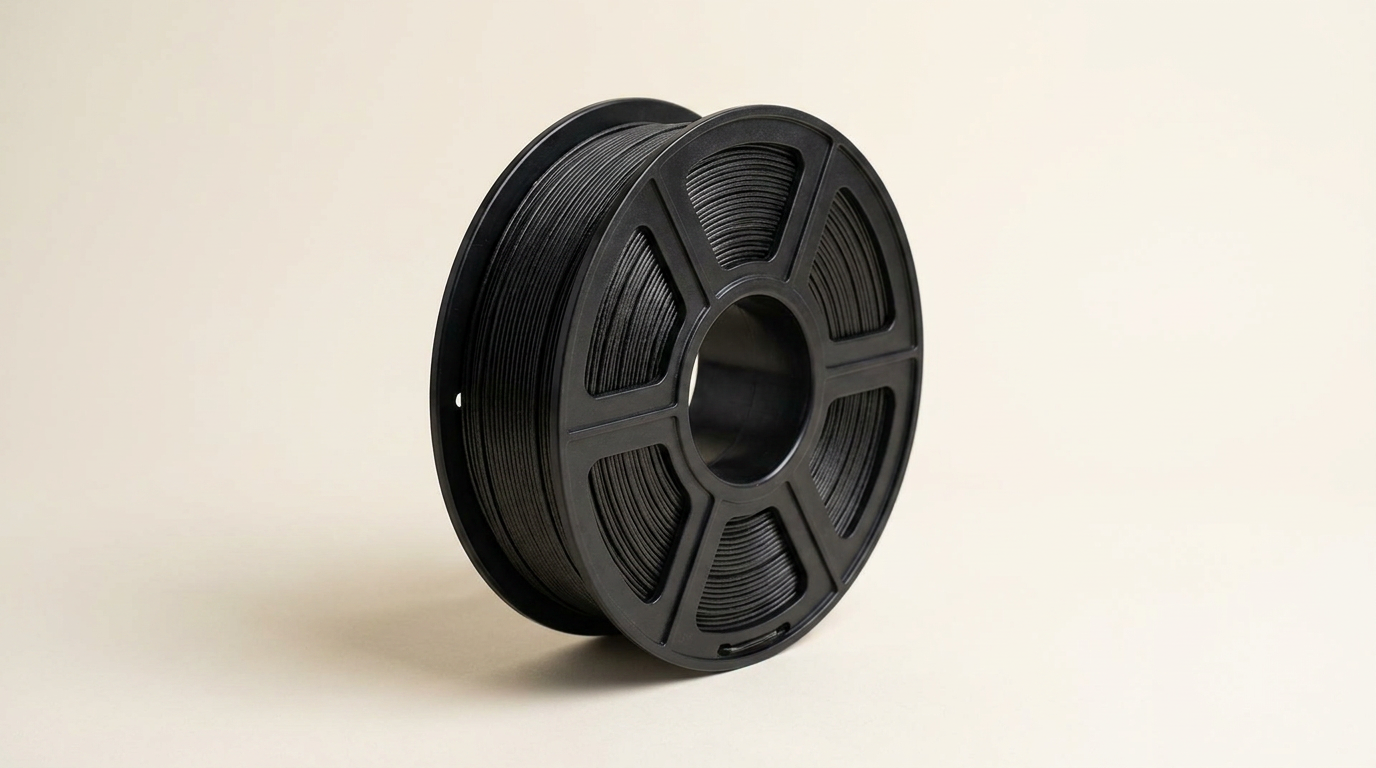
The modern 3D printing landscape increasingly demands materials that transcend basic prototyping, pushing towards functional parts with enhanced mechanical properties and aesthetic finishes. While standard PETG offers a balance of strength and flexibility, the addition of carbon fiber aims to elevate its utility. Flashforge's PETG-CF filament enters this space not as a revolutionary material, but as a refined formulation that addresses common pain points in composite printing, particularly for users seeking a 'set-and-forget' experience.
This filament appears to challenge the notion that exotic materials require extensive calibration, positioning itself as a reliable workhorse for everyday functional applications. Its design philosophy leans into reducing the friction typically associated with carbon-fiber infused materials, offering a compelling proposition for those prioritizing consistent results and minimal post-processing.
What owners love
- + Consistently excellent surface finish with minimal layer lines
- + High print reliability across diverse printer setups
- + Enhanced part strength and rigidity reported by owners
- + Good dimensional stability and resistance to warping
- + Minimal stringing and good moisture resistance out of box
Common complaints
- − Requires a hardened steel nozzle due to abrasive carbon fibers
- − Limited color options available compared to standard PETG
- − Some owners suggest pre-drying for optimal results, despite packaging claims
- − Can be brittle if printed parts are designed too thin
- − Slightly higher cost than standard PETG filament
Design & Build
Flashforge's PETG-CF filament integrates carbon fiber into a PETG base, engineered for improved strength and heat resistance. Owners consistently report that the material itself feels robust, and the matte finish imparted by the carbon fiber is a significant aesthetic advantage. This finish effectively masks layer lines, contributing to a perceived higher quality output, often described as resembling injection-molded parts. The material's inherent rigidity, while beneficial for functional components, introduces a design constraint: thin features can exhibit brittleness, a characteristic trade-off with many composite filaments. The 'quiet-hours tax' of carbon fiber materials-the requirement for a hardened nozzle-is present here, as the abrasive fibers will degrade standard brass nozzles over time.
Setup & Ease of Use
One of the most striking aspects of the Flashforge PETG-CF is its reported ease of use. Multiple owners, even those with varying printer models like Ender 3V3, Bambu Lab P1S/X1C/A1 Mini, and Sovol SV-06, find it prints well with minimal calibration. Many report success using generic PETG-CF profiles directly. While Flashforge claims thorough drying and vacuum sealing, a few long-term users still recommend pre-drying for 6-24 hours to ensure optimal performance, a common best practice for hygroscopic filaments, particularly PETG. However, several owners have printed successfully directly from the package, indicating good initial moisture control. The filament's consistent diameter and low tendency for tangles contribute significantly to a smoother printing experience, reducing the 'first-layer cliff' where initial setup failures derail prints.
Performance in Real Use
The performance of this PETG-CF filament garners consistent praise. Users frequently highlight exceptional layer adhesion, minimal stringing, and a general absence of warping. The finish is a recurring positive, with prints described as 'beautiful' and 'clean,' often requiring no post-processing for utilitarian parts. Functional applications are a strong suit; owners print outdoor items, tool holsters, and mechanical components that withstand environmental stress. One long-term user noted prints surviving a full year of outdoor exposure, including extreme temperature fluctuations. The increased strength and lighter weight compared to regular PETG are also distinct advantages, making it suitable for parts where structural integrity and reduced mass are critical. Optimal print speeds vary among users, with success reported from 125mm/s to 180mm/s, suggesting a versatile operating window.
Software & Ecosystem
The Flashforge PETG-CF integrates effectively with various printer ecosystems. Users across different brands, including Bambu Lab and Flashforge's own machines, report successful printing with their respective slicer software. Generic PETG-CF profiles in popular slicers like Orca Slicer and Bambu Studio are often sufficient, minimizing the need for extensive custom profile generation. This wide compatibility reduces the 'ecosystem lock-in' effect, where specific filaments are optimized only for a narrow range of hardware. While some owners expressed a desire for RFID tags for automatic recognition in advanced systems like Bambu Lab's AMS, the filament's inherent printability offsets this minor convenience gap for many.
Value & Reliability
Positioned in the around $25-$30 price range per kilogram, the Flashforge PETG-CF offers strong value for a carbon fiber infused filament. Owners frequently remark on its reliability, citing consistent results across multiple spools. This reliability translates into less wasted material and fewer failed prints, which directly impacts overall cost-effectiveness. The perceived premium finish and enhanced mechanical properties further solidify its value proposition, especially for those creating functional or visually critical parts. The company's general positive reputation and stated customer support (though not explicitly tested by reviews here) also contribute to a sense of security in the purchase. The consistent positive feedback suggests a low defect rate and a high degree of product consistency, establishing it as a dependable option in its category.
Verdict
Strong Buy - This filament offers exceptional print quality and reliability, making it a standout choice for functional and aesthetic applications.
This is an ideal filament for 3D printing enthusiasts and professionals who require strong, dimensionally stable parts with a premium matte finish. If your projects demand durability, a reduction in visible layer lines, and broad compatibility across different FDM printers, this Flashforge PETG-CF is a compelling choice, especially given its price point in the mid $20s. However, users new to carbon fiber filaments must factor in the need for a hardened steel nozzle. Those purely seeking cost-effective, non-critical prototyping filament, or who need a wider range of glossy color options, might find standard PETG or PLA more suitable.
Flashforge's PETG-CF isn't just another composite; it represents a maturation of specialty filament into an accessible, high-performance staple. It redefines the entry point for quality carbon fiber prints, allowing creators to produce 'production-ready' parts without the calibration overhead typically associated with such materials. This product quietly validates the future where advanced materials become everyday workhorses, not just experimental indulgences.
FAQ
More 3D Printing Supplies reviews
ELEGOO Silk PLA Filament Review: A Budget Silk Filament Leader
ELEGOO Matte PLA Filament: A Premium Finish for Everyday Prints
ELEGOO PLA Filament Bundle Review: The Daily Driver Standard
eSUN PLA Basic Filament Review: A High-Speed Performer
SUNLU Silk PLA Filament Review: The Aesthetic Play in 3D Printing
ELEGOO Rapid PETG Filament Review: High-Speed Printing Achieved
This review is based on real experiences shared by owners in online communities.