
FLASHFORGE Carbon Fiber PETG: Performance & Print Quality Review
By AValidReview. An AI-assisted summary of customer feedback, not a hands-on test.
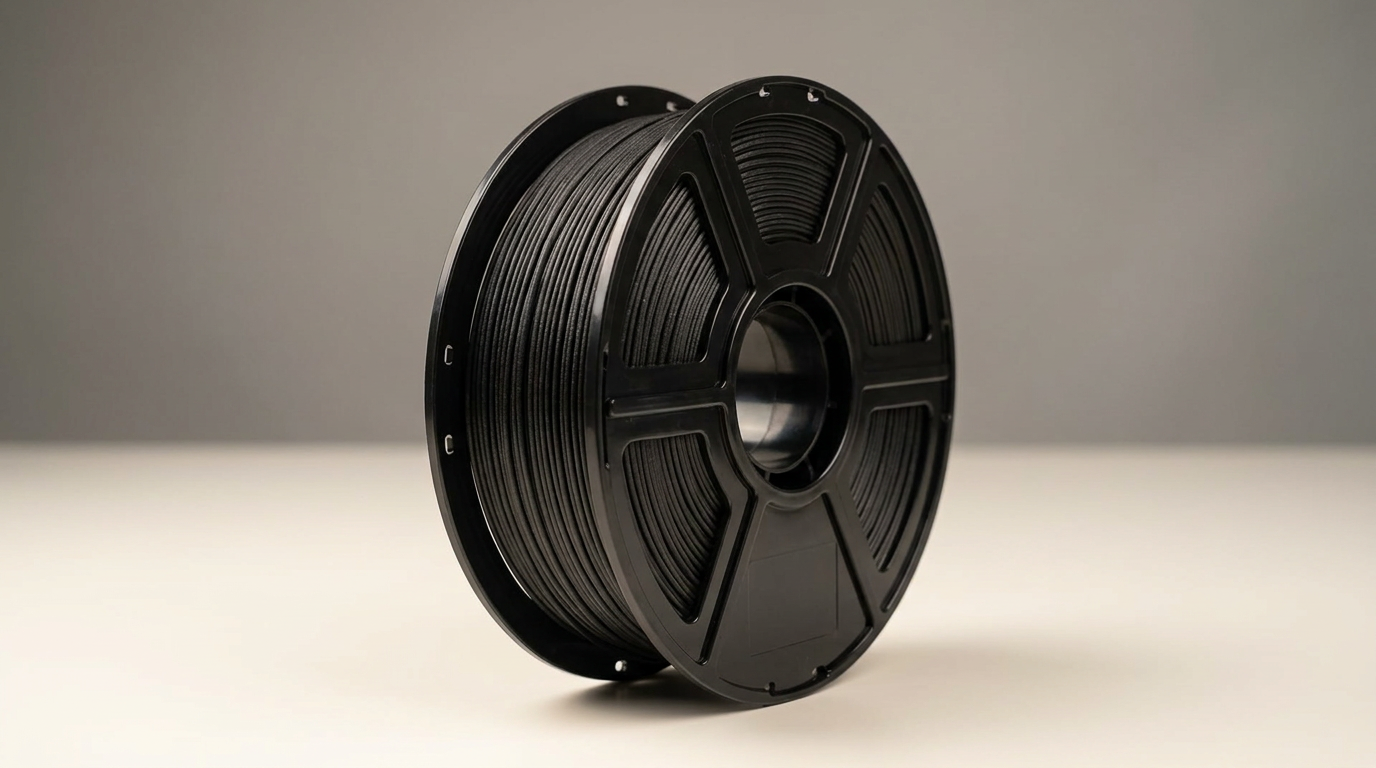
The proliferation of specialized 3D printing filaments has created a distinct market for materials that offer more than basic PLA or PETG. Carbon fiber infused PETG, or PETG-CF, promises enhanced mechanical properties without the printing complexity often associated with nylons or ABS. FLASHFORGE's Carbon Fiber PETG enters this segment with claims of high strength and printability, aiming to bridge the gap between functional performance and user-friendliness for hobbyists and professionals alike.
Most advanced filaments come with a hidden curriculum: a steep learning curve or specific hardware requirements that challenge even experienced users. The true test for a material like FLASHFORGE's PETG-CF is not just its theoretical properties, but how consistently it delivers them under diverse real-world printing conditions. This review examines whether this particular offering manages to sidestep the usual trade-offs, delivering on its strength and ease-of-use promises without demanding excessive tuning or hardware upgrades from its users.
This filament distinguishes itself through a critical balance point: providing advanced material benefits while maintaining accessibility. Owners frequently highlight its capacity for producing strong, aesthetically pleasing parts with minimal fuss, positioning it as a potent option for users seeking robust functional prints without the typical material-specific headaches. Our analysis delves into what makes this PETG-CF a standout in a crowded market.
What owners love
- + Delivers exceptional strength and rigidity for functional parts
- + Consistently produces smooth prints with a desirable matte or semi-gloss finish
- + Surprisingly easy to print, often using stock PETG-CF profiles on various machines
- + Reduced stringing and warping compared to standard PETG, improving print reliability
- + Strong layer adhesion leads to durable, hard-to-break parts
- + Good value for the performance offered, frequently noted as well-priced
Common complaints
- − Requires a hardened nozzle; brass nozzles will wear prematurely
- − Can be hygroscopic and often needs drying for optimal performance
- − Some reports of inconsistent spool winding leading to print failures
- − Occasional bed adhesion issues, sometimes requiring higher bed temperatures
- − Potential for thermal issues (heat creep) with smaller nozzles or longer prints without proper setup
Design & Build
FLASHFORGE's Carbon Fiber PETG filament is a composite material, integrating chopped carbon fibers into a PETG base. This infusion aims to enhance the mechanical properties, providing increased stiffness and tensile strength over traditional PETG. Owners consistently report that printed parts exhibit these enhanced characteristics, frequently describing them as 'very stiff and strong' and 'hard to break.' The visual aesthetic also benefits; the carbon fiber imparts a distinct matte or semi-gloss finish, which many users prefer for functional components, noting it effectively hides layer lines and offers a 'machined parts' appearance. This 'functional aesthetic' is a key advantage, delivering both performance and a refined look without needing post-processing.
Setup & Ease of Use
A recurring theme among owners is the filament's surprising ease of printing, often defying the expectations for carbon fiber composites. Many users, including first-time PETG users, report successful prints using recommended temperatures or even stock PETG-CF profiles on printers like the Bambu X1C or Adventurer 5M. This 'plug-and-play' capability significantly lowers the barrier to entry for advanced materials. However, a critical nuance emerges: while printing is straightforward, material preparation is key. The filament exhibits hygroscopic tendencies, making pre-drying essential for consistent results. Several long-term users emphasize that drying for 8-12 hours at 65C is a prerequisite for avoiding issues like blobbing, snapping, and poor adhesion, classifying this as the 'pre-flight checklist' for reliable prints. The use of a hardened nozzle is also universally recommended to prevent premature wear on standard brass nozzles.
Performance in Real Use
The performance of FLASHFORGE PETG-CF is consistently rated highly for functional applications. Owners frequently leverage it for tools, structural components, printer upgrades, and homelab enclosures, citing its ability to withstand stress and impact. The carbon fiber content significantly boosts rigidity and wear resistance, making it suitable for parts requiring durability, such as gears. Specific examples include strong legs for lap desks and landing gear for RC planes, both requiring high strength-to-weight ratios. Prints exhibit excellent layer adhesion and dimensional accuracy. While some users report minor initial bed adhesion challenges that resolved with slightly elevated bed temperatures (around 90C), the overall consensus points to a filament that performs reliably once dialed in, delivering strong, clean, and dimensionally stable parts that maintain their integrity under load.
Software & Ecosystem
The filament does not rely on a proprietary software ecosystem, functioning well with standard slicers and printer firmware. A notable advantage is its compatibility across a range of popular 3D printers, including Bambu Lab A1 and P1S, Adventurer 5M, and Prusa MK3s. Many owners report success by simply utilizing the standard PETG-CF profiles available for their specific machines, indicating good profile generalizability. The filament also works within integrated systems like Bambu Lab's AMS lite (when bypassed or with specific settings), showcasing its adaptability. This broad compatibility reduces the 'ecosystem lock-in' that some specialized filaments demand, allowing users to integrate it into their existing workflows without significant software or hardware overhauls. However, users must be aware of the hardened nozzle requirement, which is a hardware, not software, consideration.
Value & Reliability
FLASHFORGE Carbon Fiber PETG generally provides good value for its performance. Many owners view it as a well-priced option in the carbon fiber filament category, especially given its consistent quality and ease of use. For around $20 to $25 per kilogram, it competes favorably with more expensive branded alternatives while offering comparable or superior printability. Reliability, however, presents a 'second-half cliff' for some users. While many spools print flawlessly from start to finish, a few owners encountered issues like inconsistent winding or reduced adhesion and blobbing during the latter half of a spool. These instances, though not widespread, suggest occasional quality control variances that can impact long-term reliability for certain batches. Despite these isolated reports, the overwhelming sentiment is positive, with users expressing intent to repurchase due to the overall blend of quality, strength, and cost-effectiveness.
Verdict
Buy - This filament consistently delivers high-strength, dimensionally accurate prints with exceptional ease for a carbon fiber composite.
This is an excellent choice for anyone seeking to upgrade their functional prints beyond standard PETG without the typical frustration associated with more exotic materials. It suits users who need robust, stiff parts for applications like tools, enclosures, or structural components, and who possess a hardened nozzle or are willing to invest in one. If you frequently print strong prototypes or end-use parts that benefit from increased rigidity and a clean aesthetic, this filament offers superb value.
Skip this if you are unwilling to pre-dry your filament or if your printer lacks a hardened nozzle. While its ease of use is a highlight, ignoring the moisture sensitivity or using an inappropriate nozzle will lead to failed prints and a poor experience. It is not for the user seeking the absolute cheapest option, but rather for those prioritizing a balance of performance, print quality, and a streamlined workflow that outperforms budget alternatives.
FAQ
More 3D Printing Supplies reviews
ACESAY Glow in the Dark PLA+ Review: Novelty With Hidden Costs
Kretrum Glow in the Dark PLA Review: Vivid Color, Subdued Glow
MarsWork Pre-Dried PLA Basic 8x250g Bundle Review
Meuymeu 8-Pack Silk and Glow PLA+ Filament Review
SUNLU 16 Color PLA Filament Bundle Review
ANYCUBIC Multicolor PLA 10KG Review: Budget Bulk Reality
This review is based on real experiences shared by owners in online communities.