
eSUN PLA Basic Filament Review: A High-Speed Performer
This review is based on real experiences shared by owners in online communities.
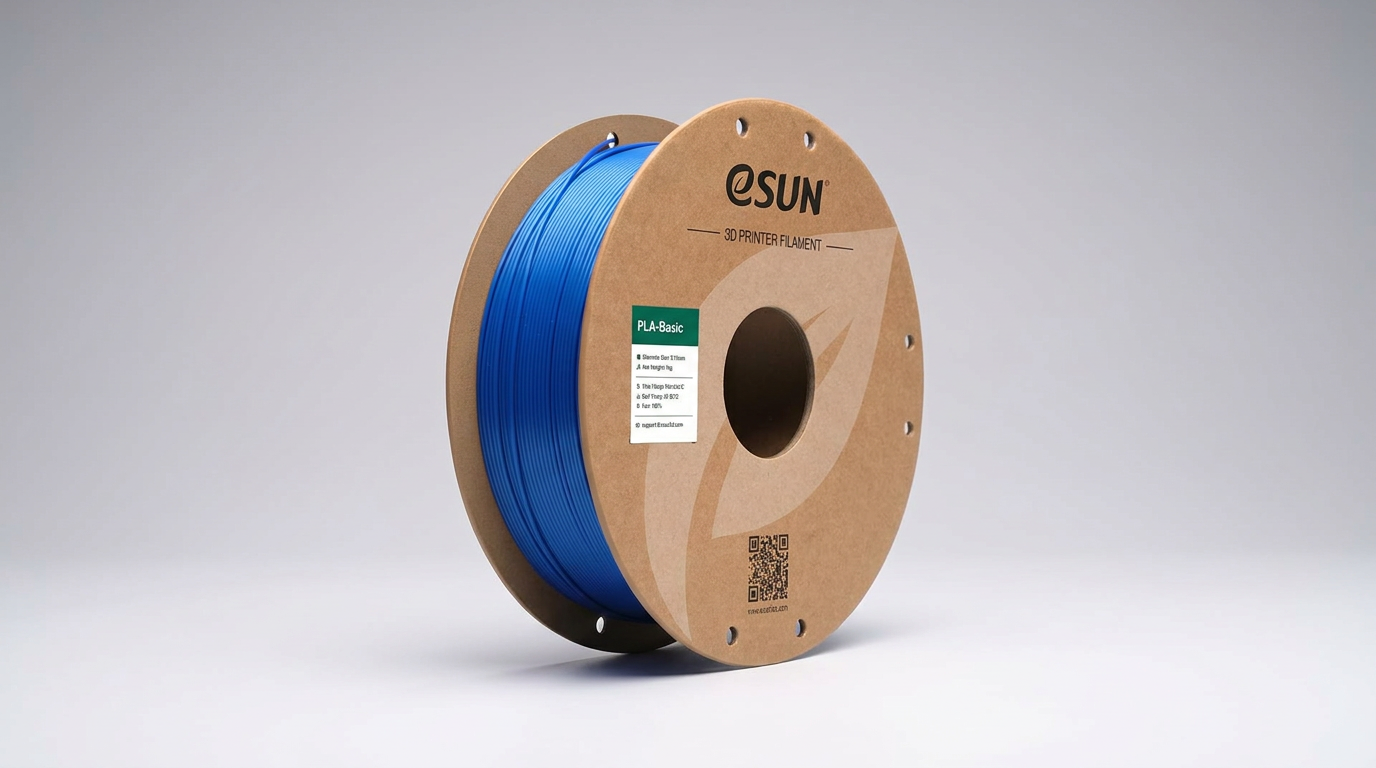
The 3D printing landscape is increasingly defined by speed, yet many filaments designed for rapid production introduce new challenges in print quality or reliability. eSUN's PLA Basic Filament, however, positions itself as a material specifically formulated to keep pace with the faster FDM machines now common in hobbyist and professional workshops. This filament aims to deliver on the promise of high-speed printing without demanding significant compromises from the user.
Unlike standard PLA, which can struggle with volumetric flow rates at elevated print speeds, eSUN's offering incorporates material modifications intended to maintain melt consistency and layer adhesion. This focus on optimized rheology suggests a product engineered to reduce common high-speed printing artifacts like underextrusion or weak layer bonds, directly addressing a critical pain point for owners of modern, accelerated printers. The underlying design principle here is what we term the "High-Flow Highway"- a filament that clears traditional bottlenecks to enable sustained rapid material deposition.
Our analysis of owner feedback reveals how well this specific formulation navigates the demands of quick output, assessing its performance beyond the marketing claims. We investigate its practical implications for print fidelity, ease of use, and overall consistency, offering a critical perspective on whether it truly streamlines the fast-printing workflow or merely adds another variable to manage.
What owners love
- + Consistent, smooth extrusion with minimal clogging reports
- + Excellent layer adhesion and reduced stringing, even at high speeds
- + Vibrant and appealing color reproduction across various shades
- + Good value for money, often priced competitively
- + Reliable winding and vacuum packaging ensures readiness for use
Common complaints
- − Inconsistent color representation in marketing images vs. actual filament
- − Occasional reports of poor spool winding, though typically excellent
- − Some users noted a need to adjust print settings for optimal bed adhesion
- − Not universally vacuum sealed upon delivery, affecting storage
Design & Build
The eSUN PLA Basic Filament presents as a standard 1.75mm diameter, 1KG spool product. Its physical attributes are geared towards compatibility with a broad spectrum of FDM 3D printers, including popular high-speed models like Bambu Lab, AnkerMake, and Creality K1 series. Owners frequently commend the filament's consistent diameter and good winding, though a few isolated reports mention imperfect spooling, which is an anomaly from the brand's usual quality control. The filament typically arrives in vacuum-sealed packaging with desiccant, a critical detail for preserving material integrity, although some buyers noted instances where the vacuum seal was compromised. This packaging inconsistency, while not widespread, introduces a minor element of the 'Unboxing Lottery'- where initial quality can vary slightly.
Setup & Ease of Use
A key selling point for this filament is its advertised ease of use, and owner experiences largely support this. Many users report the filament feeds smoothly and consistently, requiring minimal intervention. The absence of bubbles and reduced stringing are frequently cited benefits, contributing to a high success rate for prints. However, some owners find the material benefits from specific tuning, particularly regarding bed temperature. Several users note raising bed temperatures to 65C or 70C for the first layer to ensure optimal adhesion, especially on smooth plates. This suggests while largely 'easy to print,' it is not always a 'drop-in-and-go' solution across all printer setups. Its high compatibility is a practical advantage, reducing the headache of finding a filament that performs well across multiple machines.
Performance in Real Use
Performance is where the eSUN PLA Basic Filament truly distinguishes itself. Owners consistently praise its ability to produce clean, detailed prints with good layer adhesion. The specific formulation appears effective in mitigating common high-speed printing issues, with users successfully pushing volumetric flow rates well beyond typical PLA limits, some reaching 26mm³/s or more. This capability supports the manufacturer's claim of 'High Speed PLA' and directly validates our 'High-Flow Highway' concept. Prints exhibit good surface finish, often with a pleasant satin appearance. Colors are generally vibrant and appealing, though the occasional discrepancy between product image and actual filament color is noted. The material's reliability in continuous printing, without clogs or jams, makes it a preferred choice for larger projects or batch production. The ability to print without significant issues across various printers confirms its robust performance characteristics.
Software & Ecosystem
As a raw material, the eSUN PLA Basic Filament does not come with its own dedicated software or ecosystem in the traditional sense. Its utility lies in its broad compatibility with existing 3D printer slicing software. Users typically employ standard PLA profiles as a starting point, then make minor adjustments for optimal results, primarily in temperature settings. Its high-speed characteristics mean it integrates well with modern slicer features designed to optimize for speed, such as variable layer height or increased volumetric flow limits. This flexibility reduces the 'Software Friction Tax' many specialized filaments incur by demanding proprietary profiles or complex settings. It performs well with popular slicers like Bambu Studio, PrusaSlicer, and Flashforge Slicer, using general PLA settings with minor tweaks.
Value & Reliability
The eSUN PLA Basic Filament often represents a strong value proposition. Owners frequently highlight its competitive pricing relative to its consistent performance and quality. For those engaged in extensive printing, the blend of affordability and reliability makes it a go-to choice. Long-term users attest to the filament not becoming brittle quickly, a common issue with some PLA brands, which contributes to its overall reliability and reduces waste. The brand's reputation for producing consistent material also plays a role; while occasional quality assurance lapses appear (e.g., winding issues, non-vacuum sealed bags), these are infrequent. The filament’s durability and consistent print success rates reinforce its reputation as a dependable workhorse material, justifying its cost for everyday and specialized high-speed applications.
Verdict
Buy - This filament consistently delivers on its promise of reliable high-speed printing without significant compromise.
This filament is an excellent choice for users of modern, faster FDM printers who prioritize throughput and consistent print quality. If your setup supports higher volumetric flow rates and you want a material that won't bottleneck your machine's capabilities, this eSUN PLA Basic offers a compelling balance of performance and cost. It is also suitable for general everyday printing, particularly for those seeking vibrant colors and smooth finishes. Those who might struggle to dial in specific temperature settings or demand perfectly color-matched marketing images might find minor frustrations, but the core performance remains strong.
The eSUN PLA Basic Filament quietly redefines the "basic" expectation for PLA. It’s not just another commodity material; it represents a smart optimization for the accelerating pace of consumer-grade additive manufacturing. This is a filament designed for the era of speed, turning what was once a premium feature into an accessible, reliable standard for the everyday maker. It exemplifies the "Performance Dividend"- delivering advanced capabilities at a budget-friendly price point, pushing the category forward without fanfare.
FAQ
More 3D Printing Supplies reviews
ELEGOO PLA Filament Bundle Review: The Daily Driver Standard
SUNLU Silk PLA Filament Review: The Aesthetic Play in 3D Printing
ELEGOO Rapid PETG Filament Review: High-Speed Printing Achieved
ARKA 3D Printing Super Glue Gel Review: Bonds PLA, ABS, PETG, TPU
ELEGOO Rapid PLA Plus Filament Review: Speed Without Compromise
DIYSELF 16-Piece Exacto Knife Set Review: Precision for the Practical Crafter
This review is based on real experiences shared by owners in online communities.