
eSUN High Speed PLA+ Filament Review: The Workhorse for Fast Printers
This review is based on real experiences shared by owners in online communities.
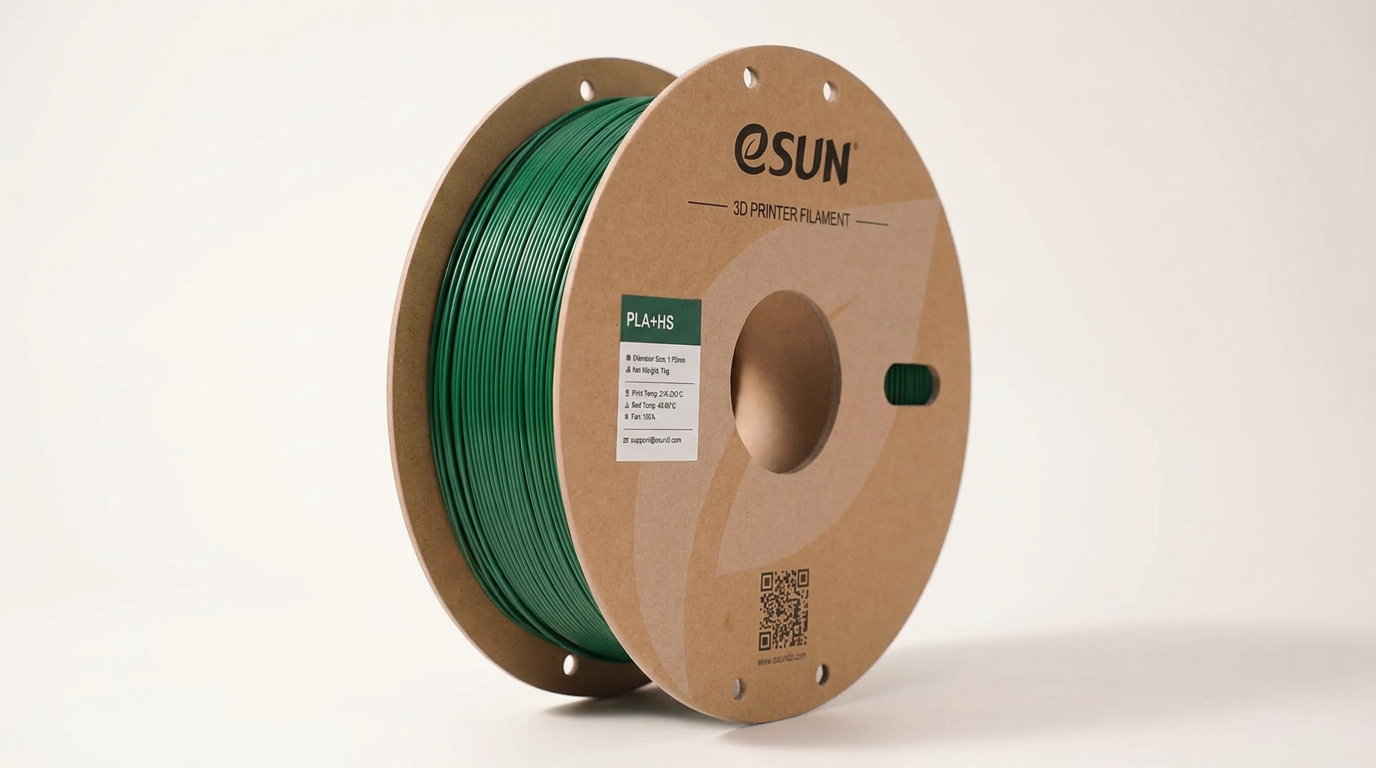
The proliferation of high-speed 3D printers, from Bambu Lab's A1 to Creality's K1 series, introduced a new pressure point: filament performance at accelerated feed rates. While standard PLA may suffice for slower machines, achieving consistent results at 300mm/s or more demands a different material profile. This evolution has birthed a new sub-category of filaments designed for the "speed tax" of modern hardware.
eSUN's High Speed PLA+ enters this space not as a revolutionary material, but as a pragmatic choice for users who have upgraded their hardware but not necessarily their filament expectations. It promises enhanced durability and print fidelity under duress, bridging the gap between enthusiast-grade filaments and the demanding needs of rapid prototyping and production. This review assesses whether it delivers on that promise, focusing on its real-world performance as reported by users on the front lines of high-speed additive manufacturing.
What emerges from owner feedback is a consistent narrative: this filament is a dependable, high-yield option for the current generation of fast printers. It carves out a niche as the "everyday driver" for speed-optimized setups, challenging the notion that premium-priced, brand-specific filaments are the only route to reliable high-speed output.
What owners love
- + Reliable, consistent printing at high speeds (up to 300mm/s)
- + Excellent layer adhesion and minimal stringing reported by users
- + Enhanced durability and toughness compared to standard PLA
- + Consistently good print quality with smooth finishes
- + Good value proposition for its performance tier
Common complaints
- − Some owners wish for a more matte finish
- − Requires slightly higher print temperatures than standard PLA for optimal results
- − Color accuracy can occasionally surprise expectations from images
- − Relies on proper bed adhesion techniques (e.g., glue stick) for long prints
- − Cardboard spool can be a minor inconvenience for some setups
Design & Build
The eSUN High Speed PLA+ filament adheres to a standard 1.75mm diameter, with owners reporting consistent dimensional accuracy. This precision is critical for the demanding feed rates of modern high-speed printers, preventing extruder skips and flow inconsistencies. The material itself is an enhanced PLA formulation, designed to withstand the thermal and mechanical stresses of rapid extrusion without significant degradation in strength or print detail. Users frequently cite its increased durability over conventional PLA, making printed parts more resilient.
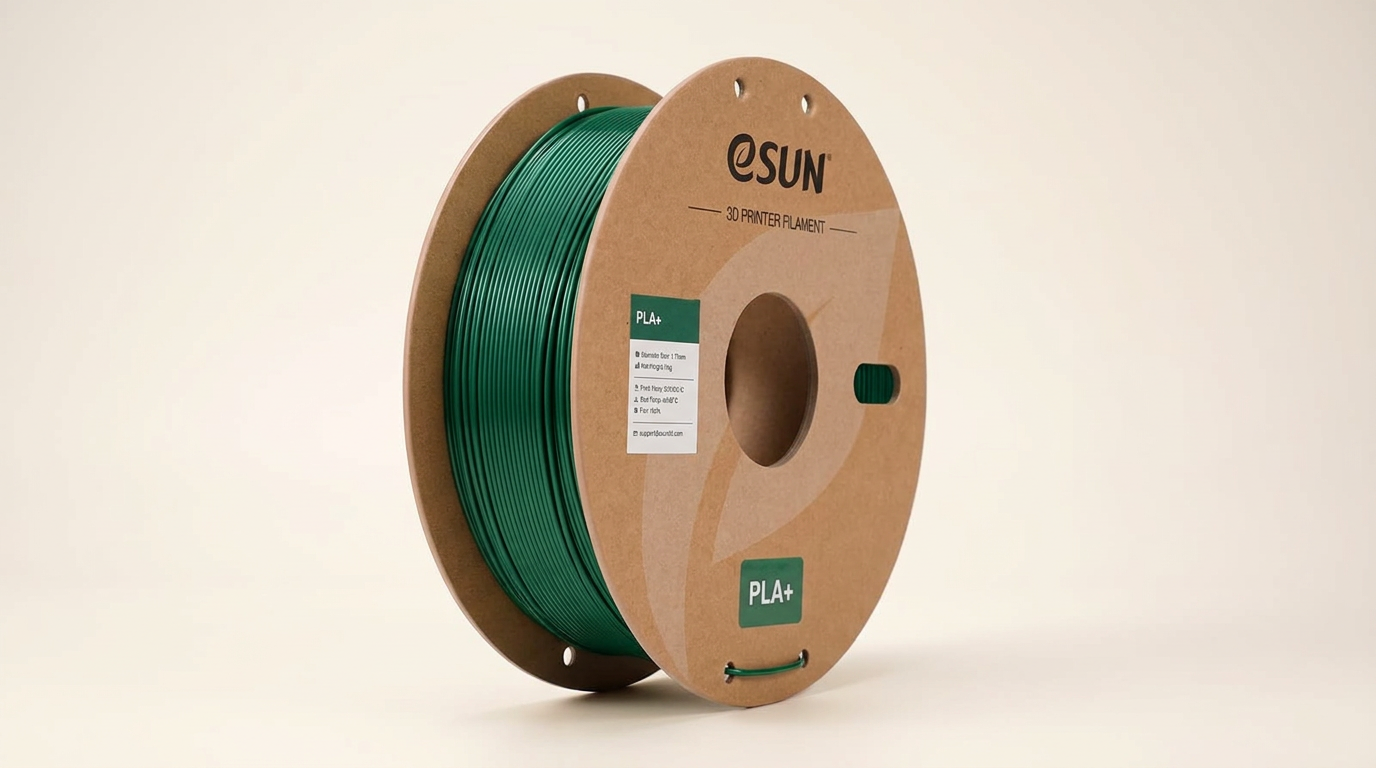
One recurring note pertains to the spool itself. eSUN employs a cardboard spool, an increasingly common choice for sustainability reasons. While many users appreciate this, some have minor quibbles about its handling or compatibility with specific AMS (Automatic Material System) units, though most report it works without issue. The consistent winding on the spool is a benefit, preventing tangles and ensuring smooth material delivery, a crucial factor when printing at speed where any snag can lead to print failure.
Setup & Ease of Use
A significant advantage for the eSUN High Speed PLA+ is its straightforward integration into existing high-speed printer workflows. Owners across various platforms, including Bambu Lab A1/X1/P1P and Creality K1, report that the filament performs well even with generic PLA profiles, although some fine-tuning for temperature may be beneficial. The filament typically arrives vacuum-sealed and dry, mitigating the need for immediate drying before use, which streamlines the setup process.
Users emphasize that successful high-speed printing still relies on fundamental principles, such as a clean print bed. While the filament generally exhibits good adhesion, some long-term users recommend a glue stick for particularly large or complex prints to ensure complete bed bonding. This indicates a "process maturity" expectation: the filament performs well, but it does not completely absolve the user from proper print preparation. Its ability to print immediately "out of the bag" and its low propensity for clogging contribute to a user-friendly experience, minimizing the common frustrations associated with new filament brands.
Performance in Real Use
Performance is where the eSUN High Speed PLA+ truly distinguishes itself. Owners consistently achieve print speeds ranging from 100mm/s on upgraded older machines to the full 300mm/s capabilities of newer high-speed printers without significant loss of quality. The filament handles these speeds with minimal stringing and maintains structural integrity. Crucially, layer adhesion is frequently lauded as excellent, producing strong, functional parts. The enhanced toughness of the PLA+ formulation is often highlighted, with users noting that printed objects feel sturdy and are less prone to breakage.
Print quality, even at speed, remains high, with smooth surfaces and sharp details. Several users specifically mention the lack of visible layer lines, even on intricate models, indicating superior extrusion consistency and cooling performance. While some owners occasionally mention a preference for a more matte finish, the overall aesthetic outcome is well-received. This consistent, high-fidelity output under demanding conditions suggests that the filament delivers on its core promise of enabling rapid, reliable production.
Software & Ecosystem
The eSUN High Speed PLA+ operates primarily within the existing open-source and proprietary slicer ecosystems without requiring specialized software. Users report success using standard PLA or PLA+ profiles in popular slicers like PrusaSlicer, Cura, and Bambu Studio, with minor temperature adjustments often being the only change. This plug-and-play compatibility is a significant advantage, reducing the learning curve and configuration effort for users migrating from other PLA variants.
Its compatibility with various high-speed printer brands, including Bambu Lab and Creality, indicates a broad "printer-agnostic" approach, which is beneficial in a market where manufacturers often push their own brand of filament. The filament's consistent diameter and winding also contribute to smooth feeding in AMS units, expanding its utility within multi-material printing setups. This ease of integration into diverse hardware and software environments underpins its appeal as a versatile, dependable option.
Value & Reliability
The eSUN High Speed PLA+ consistently garners praise for its value proposition. Positioned in the mid-range for filament pricing, typically under $20 per kilogram, it delivers performance comparable to more expensive alternatives. Owners frequently highlight this balance of cost-effectiveness and high-quality output as a primary reason for repeat purchases.
Reliability is another strong theme. Users report minimal issues with clogs, tangles, or brittleness, even after long periods of use. The filament's ability to consistently perform without intervention or print failures translates directly into saved time and material, enhancing its overall value. Many owners consider it a go-to choice for functional parts due to its combination of strength, print quality, and dependable performance. This consistent positive feedback on reliability and affordability establishes the eSUN High Speed PLA+ as a robust, long-term solution for enthusiasts and professionals alike.
Verdict
Buy - This filament provides exceptional reliability and consistent print quality for modern high-speed 3D printers, all at a competitive price point.
This filament is an excellent choice for anyone who owns a high-speed 3D printer, such as a Bambu Lab A1 or Creality K1, and requires a dependable, cost-effective material for both prototyping and functional parts. It serves users who prioritize consistent performance under fast print settings without incurring the higher cost of manufacturer-branded filaments. Those who value enhanced material strength over standard PLA will also find this a suitable option.
Individuals who exclusively print on older, slower machines may not fully leverage the "high speed" benefits, though the PLA+ durability remains. Users with specific aesthetic demands for ultra-matte finishes or exotic material properties might need to explore other specialized filaments. However, for the vast majority of high-speed printing tasks, this eSUN offering is a pragmatic default.
The eSUN High Speed PLA+ successfully navigates the 'performance plateau' of modern 3D printing. As hardware speeds continue to outpace material development, this filament exemplifies the concept of 'optimized mediocrity'-not a flashy innovator, but a material that simply, reliably, and affordably gets the job done at speeds that would cripple lesser filaments. It democratizes rapid prototyping, proving that high-speed reliability doesn't require a premium material tax.
FAQ
More 3D Printing Supplies reviews
SUNLU PETG Filament 4kg Review: The Bulk Workhorse for High-Volume Prints
Deeplee PLA+ 2.0 Filament Review: A Workhorse Material for 3D Printing
FLASHFORGE Rapid PLA: The 'Stealth Performance' Filament
RAMBERY Silk Dual Color PLA Filament Review: Aesthetic Impact for Small Prints
eSUN PLA+ Filament: The Go-To Choice for High-Speed 3D Printers
SUNLU High Speed PETG Filament Review: The 'Dry-First Economy' Advantage
This review is based on real experiences shared by owners in online communities.