
ELEGOO 28BYJ-48 Stepper Motor Kit Review: The Prototype Enabler
This review is based on real experiences shared by owners in online communities.
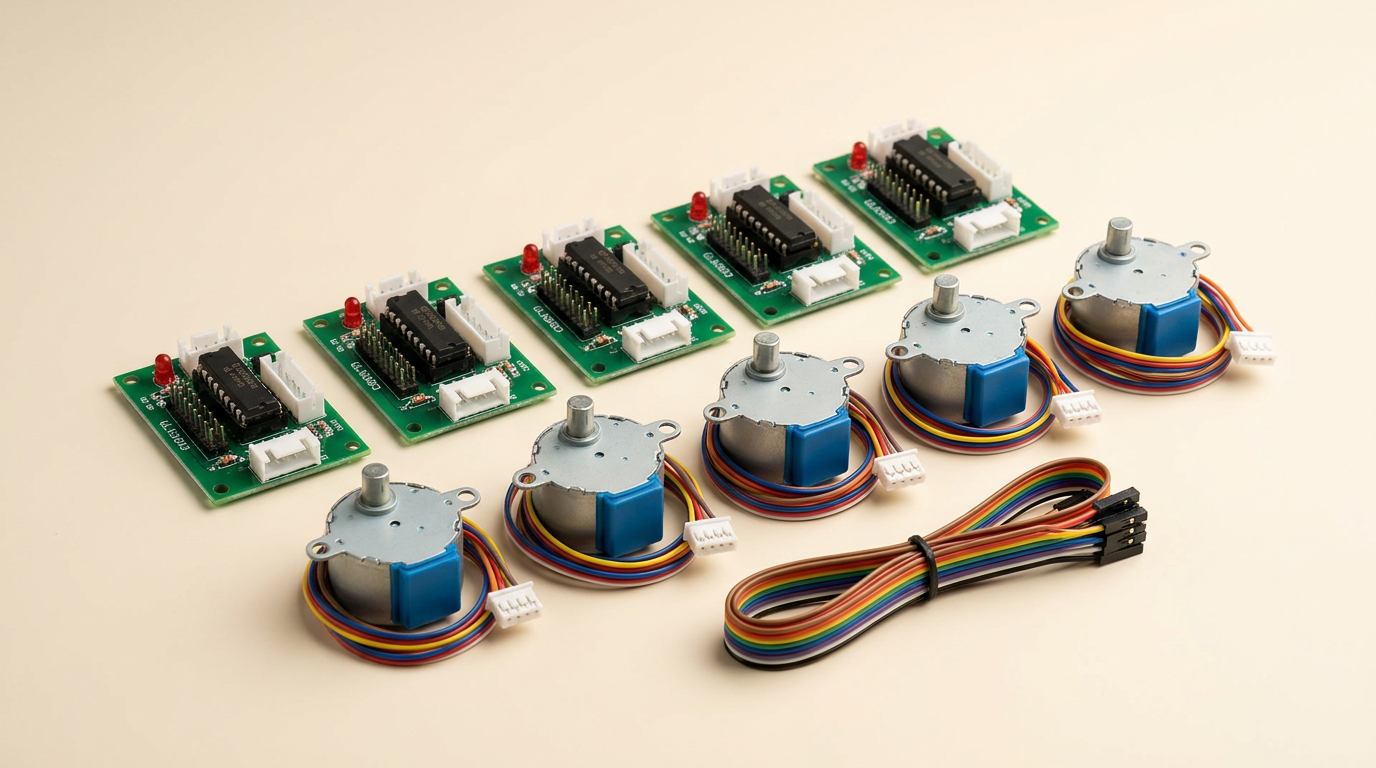
In an era where precision and high-speed motion control often demand significant investment, the ELEGOO 28BYJ-48 stepper motor kit carves out a distinct niche. This five-pack of geared unipolar steppers with matching ULN2003 driver boards does not compete in the realm of industrial automation or high-performance robotics. Instead, it embodies a pragmatic solution for low-stakes, low-torque motion control, particularly for those learning or rapidly prototyping. It presents an interesting counterpoint to the pursuit of absolute performance: sometimes, 'good enough' for experimentation is precisely what's needed.
What many buyers overlook when evaluating such components is their role as a 'learning primitive.' This kit excels not just in its functionality but in its ability to facilitate understanding. Its inherent limitations, moderate torque, low speed, and specific wiring quirks, become pedagogical tools, forcing users to grasp fundamental principles of stepper motor control and power management. For students, hobbyists, and educators, this kit is less about final product deployment and more about iterative development and concept validation at an accessible price point.
What owners love
- + Exceptional value for multiple motor-driver sets
- + Suitable torque for light-duty, low-speed applications
- + ULN2003 drivers simplify microcontroller integration
- + Durable packaging and thoughtful presentation
- + Excellent for learning and prototyping with Arduino/Raspberry Pi
Common complaints
- − Limited speed range; not for high-velocity tasks
- − Prone to heating under extended or heavy loads
- − Requires careful wiring order; not always plug-and-play
- − Minimal included jumper wires for connecting all components
- − Plastic gear train limits long-term durability in some uses
Design & Build
The ELEGOO 28BYJ-48 motors are compact, 5V unipolar geared steppers. Owners consistently report a robust physical construction for their size and cost. Each motor integrates a 1:64 reduction gearbox, contributing to increased output torque and finer step resolution, albeit at the expense of speed. The accompanying ULN2003 driver boards are equally compact and include onboard LEDs to visualize the coil activation sequence, a practical feature for debugging. While the overall aesthetic is functional rather than premium, the inclusion of a plastic storage case and neatly bound motor leads suggests a level of attention to detail not always present in budget components. One notable design characteristic is the use of a plastic gear train, which is a pragmatic choice for cost and weight but introduces a 'durability ceiling' for applications requiring sustained heavy loads or high impact resistance. This design choice underscores the product's role as a prototyping component, where component lifespan might be secondary to immediate utility and cost.
Setup & Ease of Use
Setting up these stepper motors is generally straightforward, particularly for users familiar with microcontroller platforms like Arduino or Raspberry Pi. The ULN2003 driver boards accept direct control signals from GPIO pins, streamlining the interface. Owners frequently cite the availability of extensive online documentation and community support, including example code and wiring diagrams, as a significant asset. However, a recurring theme is the specific wiring order required for optimal performance. Several users note that standard libraries or expected pin sequences may need modification, often involving swapping the middle two input wires (e.g., 8, 10, 9, 11 instead of 8, 9, 10, 11). This minor hurdle, once overcome, unlocks the full functionality. The provided jumper wires are a convenient bonus, though insufficient to connect all five motor-driver sets simultaneously, implying users should anticipate supplementing their wire collection. This can be seen as the 'first-layer cliff' for new users, an initial but surmountable challenge that requires basic troubleshooting skills.
Performance in Real Use
Performance of the ELEGOO 28BYJ-48 kit is consistently described as effective for its intended low-torque, low-speed applications. Users successfully employ these motors for projects like rotating displays, clock mechanisms, and small robotic elements. The gear reduction results in fine angular resolution, with owners reporting approximately 0.079 degrees per full step. This precision makes them suitable for tasks requiring controlled positioning. However, limitations are clear: these motors are not built for speed. Attempts to drive them at higher RPMs often result in buzzing, vibration, or reduced torque. While they can deliver surprising torque for their size, prolonged operation under load, or at higher voltages (e.g., 13.8V for short bursts), can lead to noticeable heat generation in both the motor and the driver chip. Some owners suggest adding a heatsink to the ULN2003 IC for sustained operation, indicating a 'thermal frontier' where standard performance gives way to component stress.
Software & Ecosystem
The ELEGOO 28BYJ-48 benefits significantly from a mature and active open-source ecosystem. Owners consistently highlight strong compatibility with popular microcontroller platforms such as Arduino and Raspberry Pi. Libraries like `AccelStepper.h` are frequently recommended over the default `Stepper.h` for more advanced control and smoother operation, offering half-stepping capabilities that enhance resolution. The availability of schematics and datasheets from ELEGOO is praised, providing essential resources for deeper integration and troubleshooting. This robust software support, coupled with numerous online tutorials and project guides, effectively lowers the barrier to entry for beginners. The modular design, where the ULN2003 board can also function as a general-purpose relay driver, expands the utility beyond just stepper control, showcasing a versatile 'utility multiplier' for makers.
Value & Reliability
The value proposition of the ELEGOO 28BYJ-48 kit is a dominant theme among owners. Offered in the under $20 range for five motor-driver sets, it represents an exceptional cost-to-component ratio. Owners frequently purchase multiple sets for various projects, spares, or educational purposes. Reliability is generally high, with many users reporting all motors in a pack functioning flawlessly out of the box. Occasional issues, such as a missing control board in one instance, were met with swift and thorough customer service from Elegoo, reinforcing brand trust. The inherent durability for hobbyist use, combined with the low replacement cost, minimizes the perceived risk of component failure. This economic accessibility fosters a 'learn-by-breaking' mentality, allowing for experimentation without significant financial consequence, which is crucial for fostering nascent engineering skills.
Verdict
Buy - This kit offers unmatched value for prototyping and educational low-torque motion control.
This ELEGOO kit is an excellent acquisition for hobbyists, students, educators, and anyone embarking on microcontroller-based projects requiring precise, low-speed positioning. Its affordability, coupled with five motor-driver sets, makes it ideal for iterative development and learning fundamental stepper motor principles. Those needing high-speed rotation, significant torque for heavy loads, or continuous operation in harsh environments should look to more industrial-grade solutions, which will naturally come at a significantly higher price point.
The ELEGOO 28BYJ-48 kit is not merely a collection of components; it is an "enabler of iterative design." Its true value lies not in peak performance, but in its dispensability and ease of integration, allowing users to move from concept to physical manifestation quickly and affordably. It democratizes motion control for the individual maker, positioning itself as the unsung hero of countless DIY projects and educational endeavors where the journey of creation is as important as the destination.
FAQ
More 3D Printer Parts & Accessories reviews
YUNHAN Air Filter for Bambu Lab 3D Printers Review

HYHJMISTY 91PCS 3D Printer Tools Kit Review: A Focused Starter Set

Black Magic 3D Printer Adhesion Kit Review: The Applicator Advantage
Fuitnerd 184-Piece 3D Printer Tool Kit Review: Value-Focused Utility
CreatryLab A1/A1 Mini Hotend Review: Budget Reliability for Bambu Labs
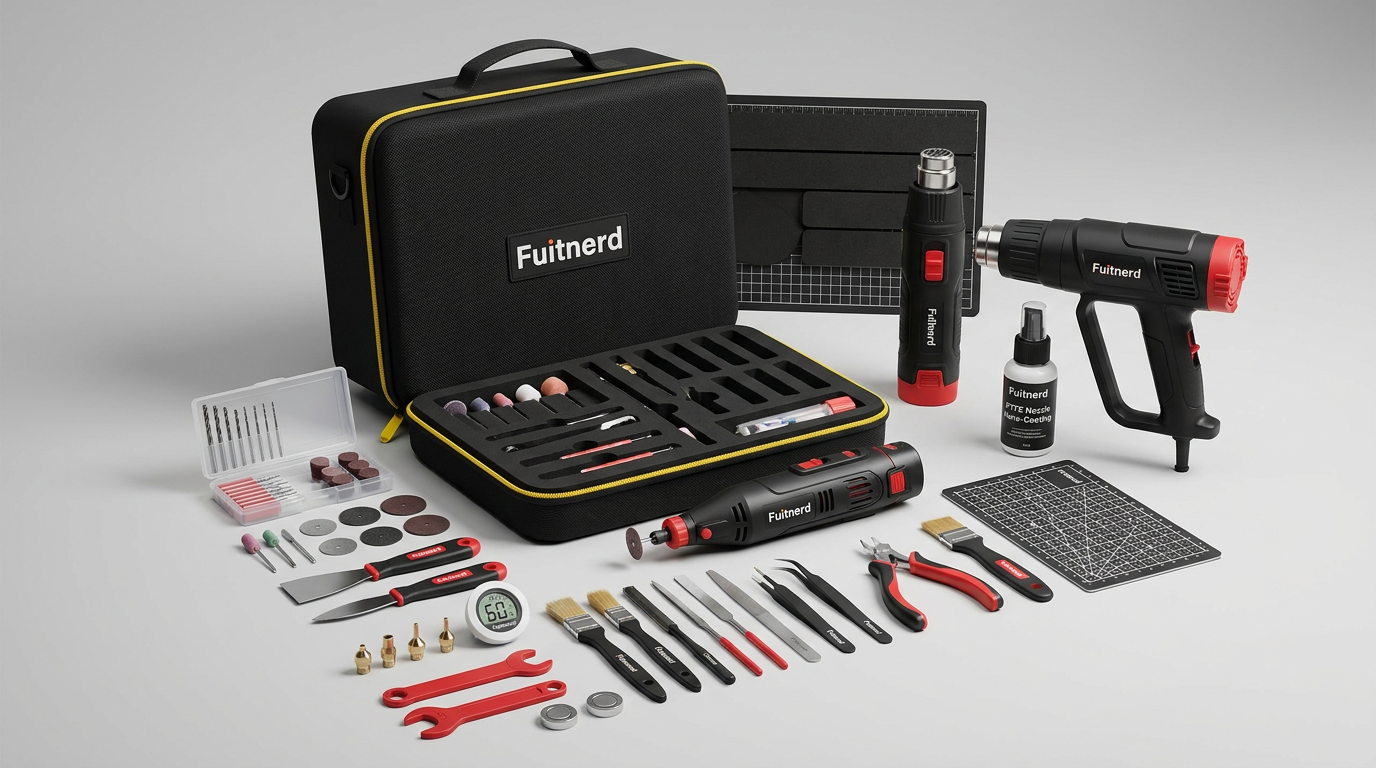
Fuitnerd 142Pcs 3D Printer Tools Kit Review: A Maker's Essential?
This review is based on real experiences shared by owners in online communities.