
EINSTAR Vega 3D Scanner Review: Portable Power, Steep Learning Curve
By AValidReview. An AI-assisted summary of customer feedback, not a hands-on test.
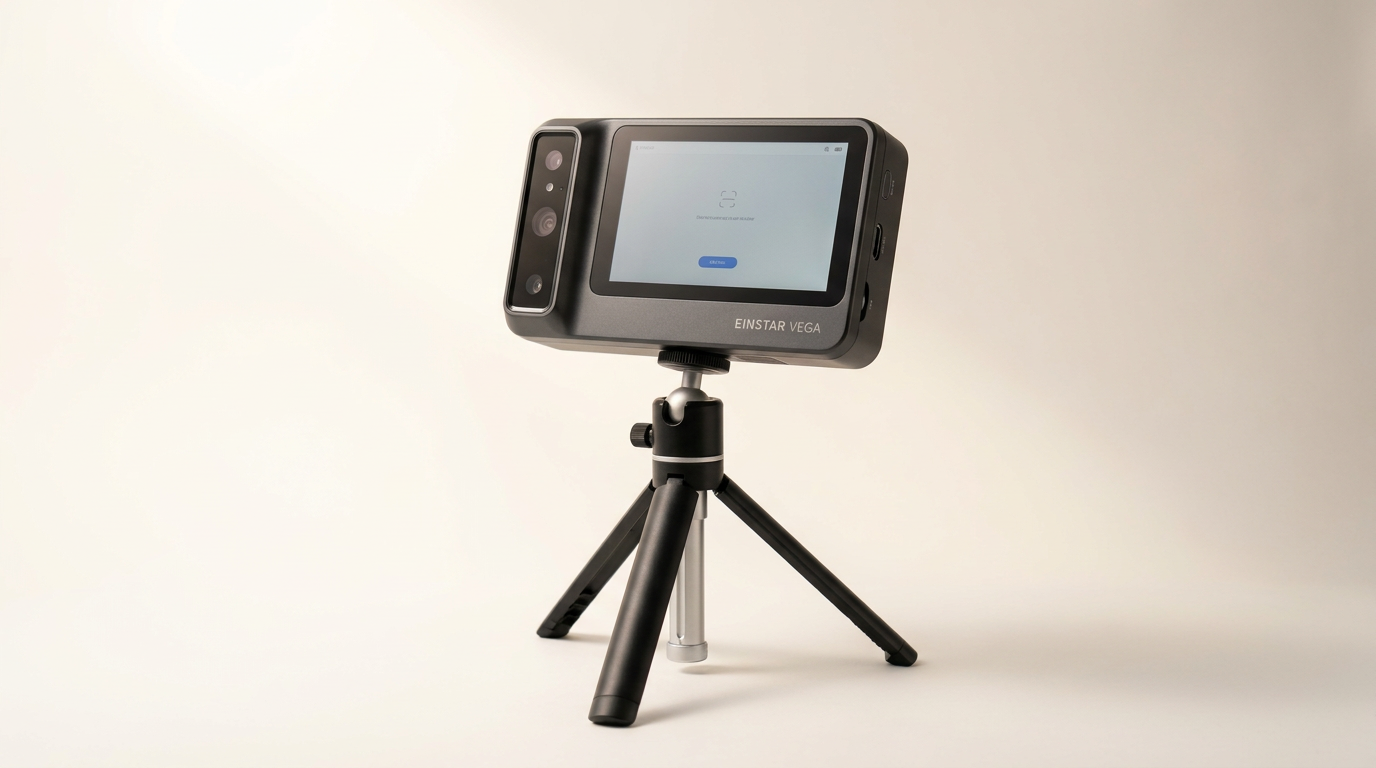
The EINSTAR Vega enters a crowded 3D scanning market with a distinctive proposition: an all-in-one, wireless design that prioritizes portability and immediate feedback. While most professional-grade scanners tether users to a powerful PC, the Vega attempts to untether the scanning process itself, integrating computing power and a display directly into the device. This approach offers significant workflow advantages for specific use cases but introduces its own set of trade-offs.
This integrated design is not without its hidden costs, primarily manifesting as a steeper learning curve for users expecting a plug-and-play experience. The Vega aims to democratize access to advanced 3D capture, but it demands an investment in user skill and technique. Understanding these dynamics is crucial for prospective buyers looking beyond marketing claims to the practical realities of advanced 3D data acquisition.
Our analysis reveals the Vega as a competent tool for those willing to master its intricacies, particularly benefiting field engineers, artists, and educators who value mobility. It represents a subtle shift towards more agile 3D data capture, even if the underlying principles of successful scanning remain constant.
What owners love
- + Integrated all-in-one design enhances portability
- + High level of detail and accurate contour capture
- + Effective outdoor scanning capabilities reported
- + 2K AMOLED touchscreen provides real-time feedback
- + Suitable for a wide range of object sizes (small to large)
- + Wireless operation offers significant workflow flexibility
Common complaints
- − Significant learning curve for optimal results
- − Challenges with reflective, black, or translucent surfaces
- − Requires specific scanning techniques and practice
- − Software can be challenging for new users
- − Reliability concerns raised by one long-term user
- − Processing demands may strain integrated hardware for complex scans
Design & Build
The EINSTAR Vega distinguishes itself with an all-in-one design, integrating scanning hardware, processing, and a 2K AMOLED touch display into a single portable unit. Owners consistently praise this integrated approach for its convenience, eliminating the need to connect to an external PC during scanning sessions. This design facilitates greater mobility and quicker setup, particularly valuable for field use or dynamic environments. The inclusion of VCSEL and MEMS projectors within a single unit underscores its versatility, allowing for both precise short-range and broader long-range scanning. The overall construction feels professional, conveying a sense of advanced engineering rather than a consumer-grade device. One five-star owner described it as feeling "pro level," highlighting its robust physical presence.
Setup & Ease of Use
The Vega presents a classic "skill floor vs. skill ceiling" challenge. While marketed as "beginner-ready" with one-click scanning, owners consistently report a significant learning curve. One long-term user, despite extensive 3D printing and CNC experience, found 3D scanning to be "its own discipline." Success with the Vega depends heavily on mastering scanning technique, understanding lighting, and properly preparing objects, particularly those with difficult surfaces like black, shiny, or translucent materials. The initial setup requires patience, as it is not a plug-and-play device. This suggests that the Vega's "beginner-ready" claims refer more to its simplified form factor than to an intuitive, immediately productive user experience. The "initial frustration tax" is a real barrier for newcomers, necessitating a commitment to learning before achieving consistent, high-quality results.
Performance in Real Use
When users overcome the initial learning curve, the Vega delivers impressive scan quality. Owners report sharp detail capture and accurate representation of object contours, suitable for modeling and 3D printing workflows. The ability to scan both indoors and outdoors effectively, even under direct sunlight due to its infrared light source, broadens its utility significantly. The Vega's dual scanning modes-Fast Mode for larger objects and HD Mode for fine details-provide flexibility. The integrated screen assists real-time alignment and tracking, which is crucial for successful scans. However, the one-star review mentioned difficulty in achieving clean scans across both modes, even for an experienced user, suggesting that hardware limitations or software processing on complex objects can still pose challenges. Despite marketing claims of integrated computing power, the "processing bottleneck" remains a potential point of frustration for intricate or large-scale projects.
Software & Ecosystem
The EINSTAR Vega's software ecosystem is designed to complement its all-in-one hardware, offering features like hybrid alignment, scanning rewind, and coordinate system adjustment. The integrated computing and internal data archiving simplify fieldwork by reducing reliance on external devices. The SHINING 3D Cloud provides 5GB of free storage for data sharing, enhancing collaboration and accessibility. However, the software, like the hardware, demands user proficiency. Several owners emphasize the necessity of spending time to understand the software, indicating that its "pioneer features" still require a degree of technical acumen. The "all-in-one convenience" often comes with the implicit requirement for users to become proficient across both hardware operation and software post-processing, making a seamless, intuitive experience challenging for novices.
Value & Reliability
Priced in the higher tier for prosumer-grade scanners, the EINSTAR Vega represents a significant investment. For users who can navigate its learning curve and leverage its portability, the value proposition is strong. It offers professional-level detail capture in a uniquely mobile package. However, reliability is a notable concern. While many owners express satisfaction with the hardware, one user reported significant durability issues, claiming the device failed after only "5 scans in 5 months," and citing poor customer service. This solitary report, though an outlier, introduces a "longevity lottery" element. For a device costing well north of a thousand dollars, consistent reliability is paramount, and isolated reports of early failure should prompt potential buyers to consider their risk tolerance and support options. The overall value hinges on sustained performance beyond the initial impressive results.
Verdict
Consider - The EINSTAR Vega offers unique portability and capable 3D scanning, but demands significant user investment.
This scanner is best suited for experienced 3D designers, engineers, or educators who require a highly portable, untethered scanning solution and are prepared to dedicate time to mastering its techniques and software. Its all-in-one design and outdoor scanning capabilities make it ideal for fieldwork or situations where a traditional tethered setup is impractical. Users with prior 3D printing or modeling experience will find the learning curve less daunting.
Those expecting a truly "beginner-ready" or "plug-and-play" device should hold off. Novices seeking immediate, effortless results will likely encounter frustration. Users prioritizing maximum scanning precision over portability, or those on a tighter budget who can manage with a tethered system, might find better value elsewhere. The mixed reliability reports also suggest that buyers should consider manufacturer support and warranty coverage.
The Vega highlights a key tension in portable tech: true convenience often extracts a "mastery tax." It's not just a scanner; it's a mobile 3D data acquisition platform that presumes a user's commitment to the craft. This positions it as a specialist tool for the dedicated, rather than a casual accessory for the curious.
FAQ
More 3D Scanners reviews
Revopoint INSPIRE 2 3D Scanner Review: Unpacking the Accessory Echo Chamber

Creality 6mm 3D Scanning Markers Review: Essential Tracking Aid
TOSUKKI 6mm Positioning Targets Review: The Refined Generic Choice

AESUB 3DTOOLS 3D Scanner Spray Review: The 'Evaporative Enabler'
Creality 8-inch Rotating Turntable: A Solid Scanner Accessory

Generic 12 Piece Multi-Angle Markers Review: Essential 3D Scanning Dots
This review is based on real experiences shared by owners in online communities.