
Creality Ender PETG Filament Review: Value for the Volume Printer
By AValidReview. An AI-assisted summary of customer feedback, not a hands-on test.
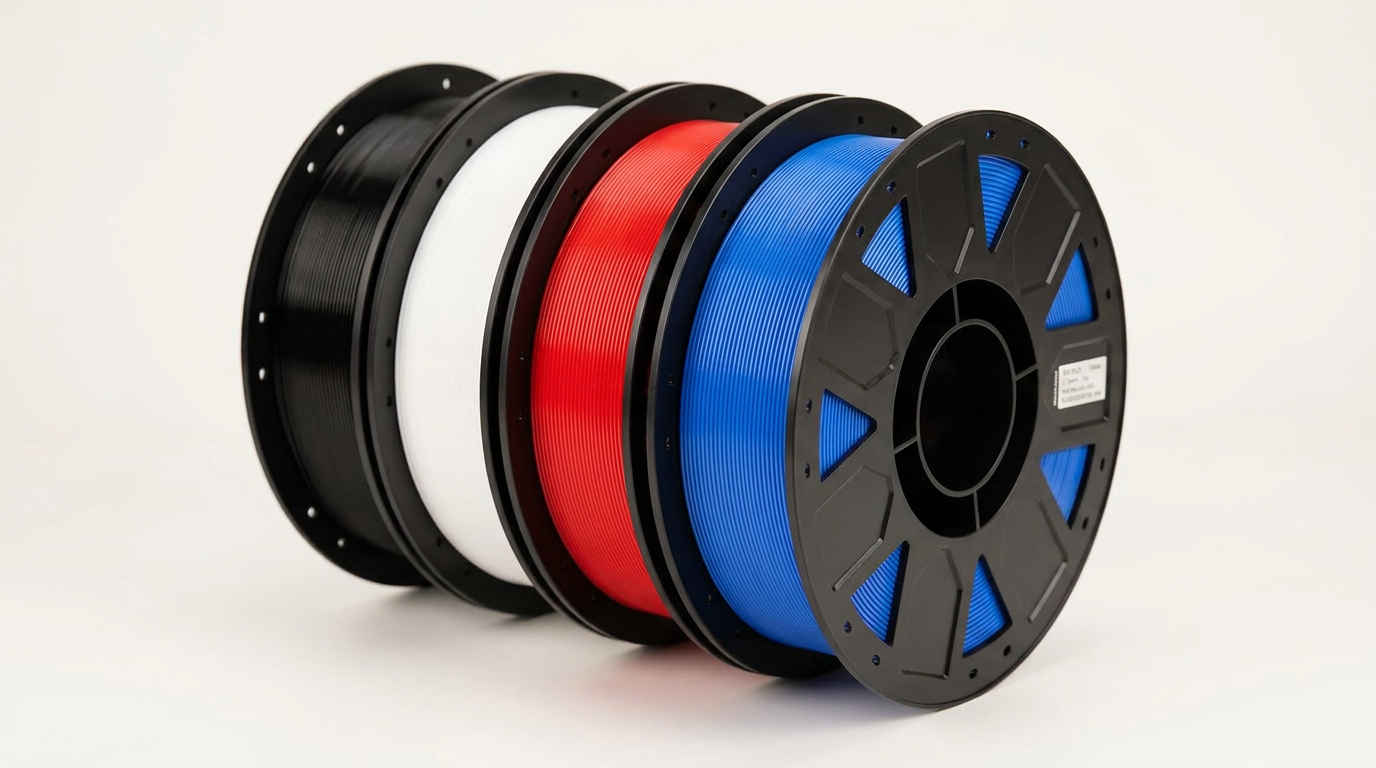
The 3D printing landscape constantly evolves, yet one consistent demand remains: reliable, cost-effective filament for high-volume work. Creality's Ender PETG filament enters this space as a bulk offering, aiming to provide a balance between the material properties of PETG and an accessible price point. While many users prioritize exotic materials or niche colors, the core demand for everyday workhorse filament often gets overlooked. This product squarely targets that overlooked segment.
Unlike boutique brands that focus on highly specialized formulations, Creality approaches PETG from a utility perspective. The four-kilogram bundle signals its intent for users who consume filament regularly, whether for prototyping, functional parts, or general production. The critical question for such an offering is not just print quality in isolation, but how consistently it performs across a large volume of material and diverse projects.
This review evaluates the Ender PETG based on extensive user feedback, scrutinizing its out-of-the-box performance, recurring challenges, and overall value proposition for printers who prioritize throughput without sacrificing fundamental print integrity.
What owners love
- + Consistent print quality for many users
- + Strong layer adhesion and mechanical properties
- + Excellent value for bulk purchases
- + Good compatibility with various FDM printers
- + Arrives well-packaged and moisture-isolated
Common complaints
- − Significant issues with filament tangling and knotting
- − Inconsistent quality control on spooling
- − Reports of frequent clogging for some users
- − Variable bed adhesion experiences
- − Some spools arrived broken or with poor packaging
Design & Build
The Creality Ender PETG comes in standard 1.75mm diameter, often bundled in multi-spool packs designed for high-volume users. Owners generally report that the filament itself exhibits robust material properties, including good impact resistance and flexibility once printed. The black, white, blue, and red colors included in typical bundles offer a basic palette for functional prints. However, a significant concern emerges around the spooling itself; multiple users report receiving spools with severe tangles and knots. This "spooling lottery" means some users experience smooth feeds, while others face constant intervention during prints, leading to failed jobs and wasted material. This inconsistency in manufacturing presentation directly impacts the user experience, despite the material's inherent qualities.
Setup & Ease of Use
For many, the Ender PETG is presented as an easy, out-of-the-box solution. Numerous users describe the filament as printing "just fine" with default PETG settings on a range of printers, including Bambu Labs and Anycubic models. This suggests a reasonably forgiving material profile that does not demand extensive calibration for initial success. Adhesion to the print bed is frequently cited as strong, facilitating reliable first layers. The filament arrives dried and vacuum-sealed, a standard practice that helps prevent moisture-related printing issues from the outset. This initial setup simplicity contributes significantly to its perceived value, particularly for those transitioning to PETG or operating multiple machines.
Performance in Real Use
When successful, the Creality Ender PETG delivers solid print performance. Owners commend its ability to produce good quality prints with strong layer adhesion, noting that finished objects feel sturdy and durable. The material's inherent strength is a recurring positive. However, a divergence in experience surfaces with issues like clogging and inconsistent flow. While many users report zero issues with clogging, a notable minority describes frequent blockages, sometimes within minutes of starting a print. This suggests a variability in the filament's tolerance for different printer setups or possibly localized quality control issues within specific batches. The material's tendency to print with a glossy finish is consistent, and while some appreciate this, others found it "very glossy" and hard to adhere, indicating a preference clash rather than a defect.
Software & Ecosystem
As a filament, the Creality Ender PETG does not have its own "software" or a complex ecosystem beyond its physical interaction with various 3D printers and slicer settings. Its compatibility with "most FDM printers on the market" is a key selling point, and user reports confirm its successful operation on popular machines like Bambu Labs P1S, A1, and Anycubic Kobra S1. The simplicity of using standard PETG profiles as a starting point, followed by minor calibration for optimal results, indicates a low barrier to entry. This broad compatibility aligns with its positioning as a general-purpose, bulk filament suitable for a wide range of hobbyist and prosumer setups, requiring no specialized software adjustments beyond typical slicer parameter tuning.
Value & Reliability
The primary appeal of Creality Ender PETG is its value proposition, particularly for bulk purchases. Many users express satisfaction with the "outstanding price" and consider it a "great deal" for the amount of filament received, often in the range of around $40 for multiple kilograms. This makes it an attractive option for projects requiring substantial material or for users who print frequently. However, the reliability aspect is sharply divided. For every user reporting "zero issues" across dozens of rolls, there is another experiencing "constant tangles" or "clogging issues." This creates a "reliability roulette" where the cost savings are contingent on receiving a consistently spooled, clog-free batch. The 12-month support is a stated benefit, but for immediate print interruptions due to spooling or clogging, the time cost can quickly outweigh the material savings.
Verdict
Consider - This filament offers compelling value for high-volume PETG printing, but requires a tolerance for potential spooling and clogging inconsistencies.
This is a suitable choice for experienced users who prioritize cost-effectiveness for everyday, functional prints and possess the troubleshooting skills to manage occasional spooling issues. Its low per-kilogram price makes it ideal for prototyping or large-scale projects where material consumption is high, and a slight risk of printing interruption is acceptable. Those with well-tuned printers and a willingness to dial in settings for a potentially finicky material will find this package appealing, especially when buying in bulk around the $40 mark.
Conversely, users seeking a truly set-and-forget experience or those new to PETG should hold off. If your workflow cannot accommodate mid-print interventions for tangled filament, or if consistent, flawless prints are paramount without extensive calibration, the variability reported by owners makes this a risky proposition. This product reveals the "bulk budget paradox" in 3D printing consumables: significant cost savings are often accompanied by an unspoken requirement for increased user labor and troubleshooting expertise, effectively externalizing quality control efforts onto the consumer.
FAQ
More 3D Printing Supplies reviews
ACESAY Glow in the Dark PLA+ Review: Novelty With Hidden Costs
Kretrum Glow in the Dark PLA Review: Vivid Color, Subdued Glow
MarsWork Pre-Dried PLA Basic 8x250g Bundle Review
Meuymeu 8-Pack Silk and Glow PLA+ Filament Review
SUNLU 16 Color PLA Filament Bundle Review
ANYCUBIC Multicolor PLA 10KG Review: Budget Bulk Reality
This review is based on real experiences shared by owners in online communities.