
Creality 3.0mm 3D Scanner Markers Review: The Unsung Enabler
By AValidReview. An AI-assisted summary of customer feedback, not a hands-on test.
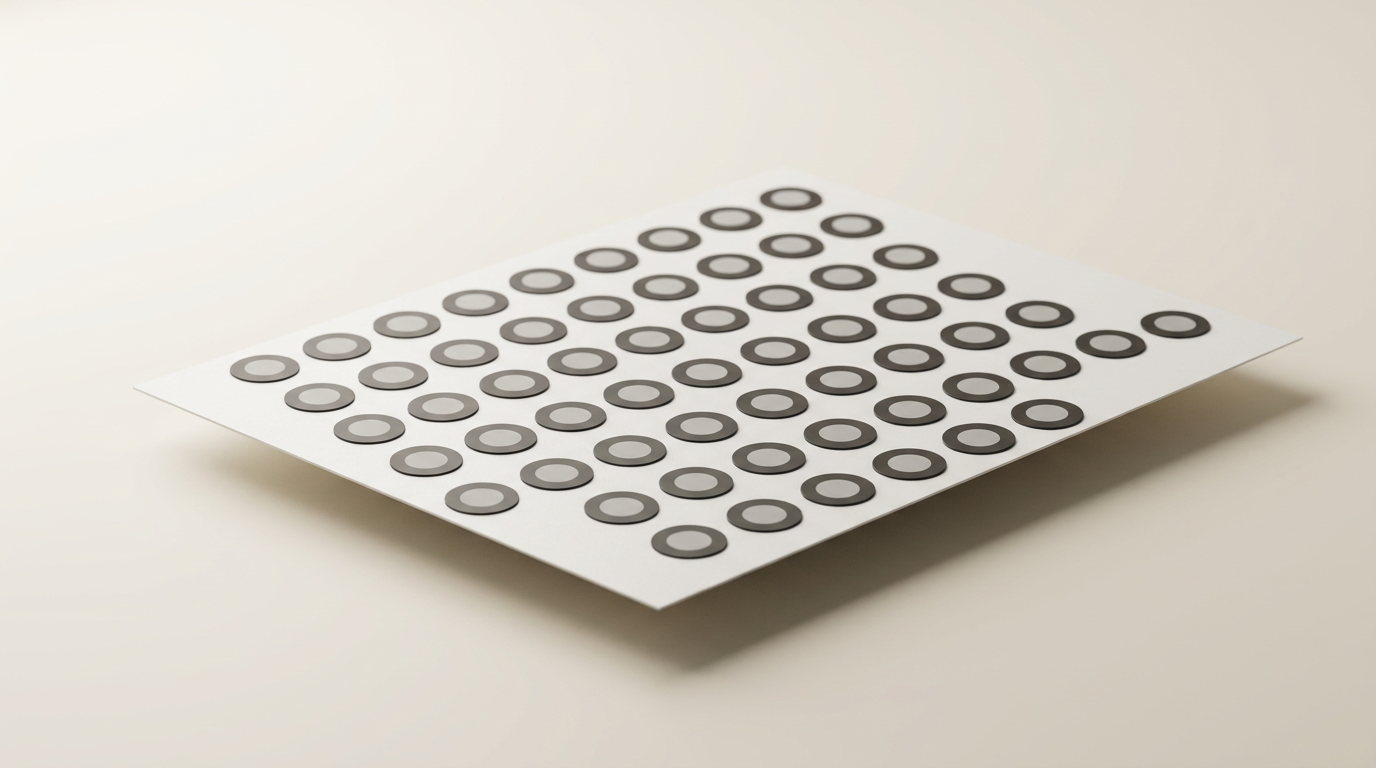
In the quest for high-fidelity 3D scans, significant attention often defaults to scanner hardware and software algorithms. Yet, a frequently overlooked element, the humble tracking marker, can critically dictate project success, particularly when confronting challenging geometries or uniform surfaces. Creality's 3.0mm diffuse reflection markers aim to address this foundational need, promising stable reference points that enhance scanner performance. These markers do not introduce new capabilities to a 3D scanner, but rather unlock the existing potential of a device when its native tracking mechanisms falter.
This specific product exists in a fascinating niche, acting as an essential enabler for scanners that struggle with what we might call the "featurelessness tax"-the performance penalty incurred when scanning objects devoid of distinct textures or edges. While seemingly simple, the design and material science behind a good tracking marker are critical. This review examines how Creality's offering performs in practical scanning scenarios, assessing its effectiveness as a fundamental tool rather than a flashy upgrade.
What owners love
- + Significantly improves tracking stability on difficult surfaces
- + Excellent diffuse reflection prevents glare and artifacts
- + Adheres firmly but removes cleanly without residue
- + Versatile compatibility with many 3D scanner brands
- + Appropriate 3.0mm size for diverse object scales
Common complaints
- − Inconsistent performance with some non-Creality scanner models
- − Smaller size may not suit all scanning applications
- − Some owners find performance less reliable than larger alternatives
Design & Build
The Creality 3.0mm markers feature a design optimized for optical tracking. Owners consistently report excellent diffuse reflection, a critical attribute that prevents glare and ensures scanners register a clear, consistent reference point. This diffuse quality is key to avoiding scan artifacts, a common problem with overly reflective or glossy markers. The markers adhere firmly to a range of surfaces, including plastic and metal, yet peel off cleanly without leaving sticky residue. This balance between adhesion and clean removal speaks to a well-engineered adhesive layer, allowing for repeated use on various objects without surface damage or cleanup.
The 3.0mm diameter represents a practical compromise, suitable for both intricate details and moderately sized objects. This size choice is strategic; it is large enough for reliable detection by most handheld scanners, but small enough to minimize occlusion when scanning complex geometries with tight curves or sharp edges. This prevents the marker from inadvertently obscuring critical surface data, a common pitfall with larger tracking dots.
Setup & Ease of Use
Applying these markers is straightforward: users peel them from the sheet and place them on the object to be scanned. The product's value proposition includes its ease of use. Owners highlight the straightforward application and removal process, noting the markers' ability to peel from the sheets without tearing and detach from scanned objects without hassle. The lack of residue post-removal is a recurring positive, minimizing post-processing time. This user-friendly characteristic is particularly important for an accessory designed to enhance, not complicate, the scanning workflow.
While simple, proper marker placement significantly impacts scanner performance. The markers act as discrete reference points, requiring sufficient distribution across an object to provide the scanner with continuous tracking data. This often involves strategic placement on featureless areas or regions prone to tracking loss, transforming a challenging scan into a stable, manageable process.
Performance in Real Use
In operation, these Creality markers address a core challenge of 3D scanning: maintaining consistent tracking on difficult surfaces. Owners frequently cite improved stability when scanning objects with plain, glossy, dark, or otherwise featureless geometries. The markers provide necessary reference points, preventing the scanner from losing its positional lock. This is particularly valuable for professional applications involving mechanical parts, jewelry, automotive components, or intricate curved surfaces where geometry or texture alone proves insufficient for reliable tracking.
However, performance is not universally consistent across all scanner ecosystems. While many users achieve excellent results with Creality's own scanners and other major brands, some owners report mixed results with specific non-Creality models. One user noted that a 3D Makerpro scanner registered the markers indistinctly, and another experienced glitching and tracking loss with a Metropoint Inspire 2. This suggests a "scanner handshake" variability, where the optical system or proprietary algorithms of certain scanners may not fully optimize for Creality's specific reflective properties or size, introducing a variable success rate beyond Creality's direct influence.
Software & Ecosystem
As passive reference points, these markers do not directly interact with scanner software in the same way an active sensor would. Their impact is indirect but profound: they enable the software's tracking algorithms to function optimally. When a scanner's software struggles to find sufficient feature data on an object, the markers provide distinct, detectable points that the algorithm can lock onto. This stability translates directly into cleaner scan data and reduced post-processing effort.
The compatibility claims extend beyond Creality's own devices, with owners using them successfully across various brands. This broad compatibility makes them a versatile choice for users operating in multi-scanner environments. However, as noted in performance, the consistency of this compatibility can vary, underscoring that while the markers themselves are effective, their integration into diverse scanner ecosystems is ultimately dependent on how individual scanner hardware and software interpret their visual signature.
Value & Reliability
With 840 dots per pack, the Creality 3.0mm markers offer substantial value for their price point, which typically falls under $20. For users frequently undertaking 3D scanning projects, this quantity ensures a long operational period before replenishment. The reliability stems from their consistent performance in providing stable tracking for most popular scanners and their robust adhesive properties.
Several long-term users attest to their durability, highlighting that the markers maintain their reflective properties and adhesive strength across multiple uses and varied surfaces. This longevity and quantity contribute to a low operational cost per scan, making them an economical yet essential accessory. The overall reliability for many users suggests that, when properly detected by a scanner, these markers deliver on their promise of improved scanning efficiency and data quality.
Verdict
Buy - These markers offer significant functional improvement for 3D scanner stability at a low cost.
These Creality 3.0mm markers are an excellent acquisition for any 3D scanner owner who routinely encounters scanning challenges with featureless, glossy, or dark objects. They are a near-essential accessory for Creality scanner users, and generally reliable for most other major brands. Those with niche or less common scanners should exercise a degree of caution, as compatibility is not universally guaranteed. If your scanning workflow frequently involves difficult surfaces, these markers provide an indispensable assist for around $15-20.
This product exemplifies the "understated utility" principle in peripheral tech. These markers are not glamorous, but they address a critical vulnerability in the 3D scanning process. They represent a fundamental component of achieving predictable results, allowing users to overcome the inherent limitations of optical tracking systems on challenging surfaces without investing in more expensive scanning hardware. Their true value lies in how they quietly enable rather than overtly enhance, acting as a foundational element for consistent, high-quality data capture.
FAQ
More 3D Scanners reviews
Revopoint INSPIRE 2 3D Scanner Review: Unpacking the Accessory Echo Chamber
Creality 6mm 3D Scanning Markers Review: Essential Tracking Aid
TOSUKKI 6mm Positioning Targets Review: The Refined Generic Choice
AESUB 3DTOOLS 3D Scanner Spray Review: The 'Evaporative Enabler'
Creality 8-inch Rotating Turntable: A Solid Scanner Accessory

Generic 12 Piece Multi-Angle Markers Review: Essential 3D Scanning Dots
This review is based on real experiences shared by owners in online communities.