
Bambu Lab PLA Filament Review: The Smart Choice for Bambu Printers
This review is based on real experiences shared by owners in online communities.
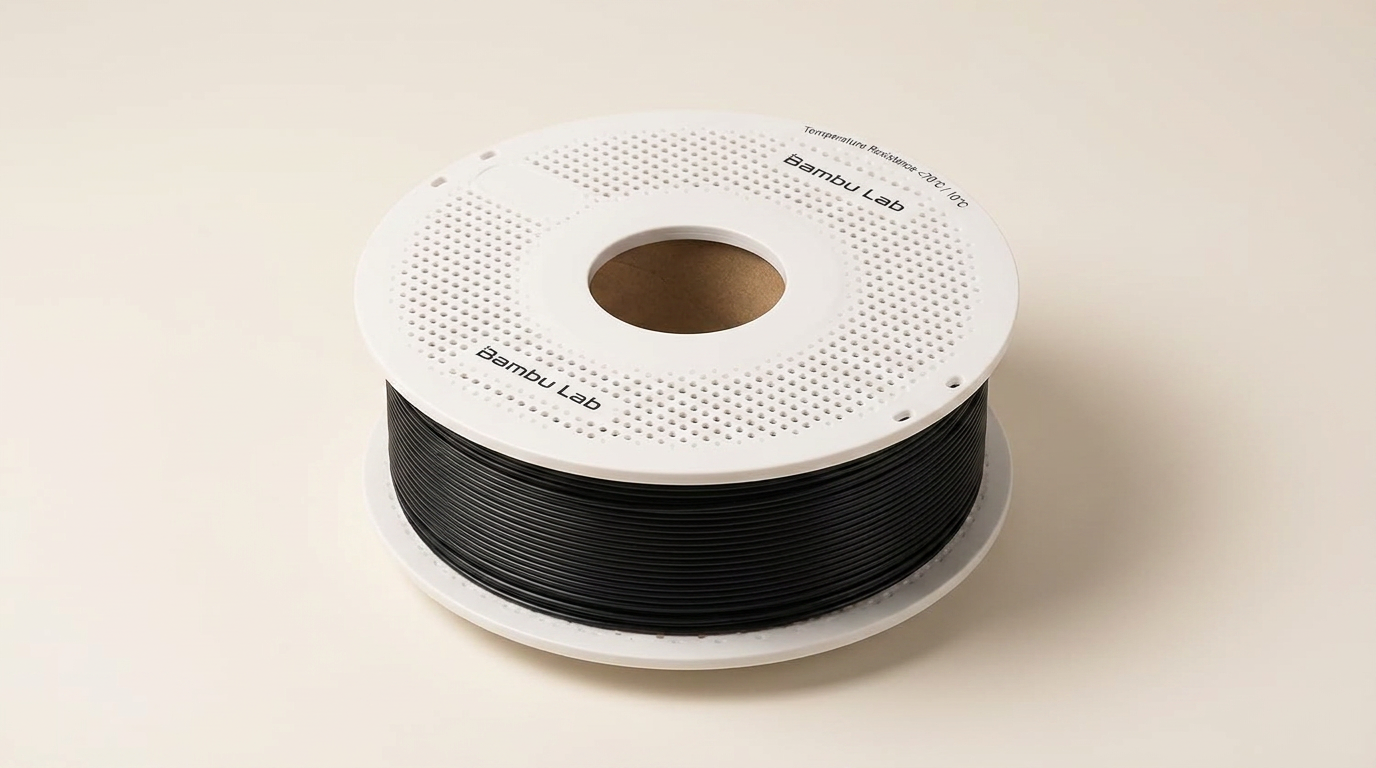
In the crowded 3D printing filament market, Bambu Lab's proprietary PLA occupies a distinct niche, not merely as another material option but as a core component of its printer ecosystem. Unlike generic filaments vying for universal compatibility, this product leans into a closed-loop philosophy, offering an integrated experience that prioritizes machine-specific performance over broad market appeal. This approach, while potentially limiting in flexibility, presents a compelling argument for users invested in the Bambu Lab platform.
Most filament purchases are driven by material properties and price. However, Bambu Lab injects an additional layer of consideration: the 'ecosystem premium.' This isn't just about filament; it's about optimizing an entire printing workflow. Owners consistently highlight its seamless integration with Bambu Lab's Automatic Material System (AMS) and printers, suggesting that its primary value proposition lies not just in the material itself, but in the operational efficiencies it unlocks within a specific hardware environment.
This review evaluates whether Bambu Lab's PLA filament justifies its position within this proprietary ecosystem, examining its print quality, ease of use, and overall reliability as reported by actual users. We'll explore if the convenience of its RFID tagging and guaranteed compatibility translate into a tangible advantage for Bambu printer owners, or if the 'ecosystem premium' is merely a cost of admission to a specific brand experience.
What owners love
- + Seamless integration and RFID auto-detection with Bambu Lab printers/AMS
- + Consistent diameter and reliable extrusion reduce common print failures
- + High print quality with smooth surfaces and good layer adhesion
- + Reusable spool design promotes waste reduction
- + Tangle-free winding and robust feeding reported by users
Common complaints
- − Higher price point compared to generic PLA alternatives
- − Packaging does not offer protection against moisture for long-term storage
- − Availability can be constrained by supply chain or regional factors
- − Value proposition diminished if not used within the Bambu Lab ecosystem
Design & Build
Bambu Lab's PLA filament, packaged on a proprietary reusable spool, signals a commitment to its ecosystem. The spool itself is designed for the AMS system, ensuring proper fit and reliable feeding. Owners frequently praise the filament's consistent winding, noting an absence of tangles and brittleness, which are common issues with lower-quality filaments. The stated +/- 0.03 mm diameter accuracy is a key specification, and user experiences affirm its practical benefit in stable extrusion. This precision contributes to the product's overall reliability, reducing potential print failures that often stem from inconsistent filament dimensions. The 'reusable spool' concept, while environmentally conscious, also functions as a brand lock-in mechanism, encouraging re-purchase of Bambu Lab's refills rather than third-party spools.
Setup & Ease of Use
The setup experience with Bambu Lab PLA filament is exceptionally straightforward, particularly within its intended ecosystem. The included RFID tag is central to this ease, allowing Bambu Lab printers, especially those with an AMS, to automatically detect filament type, color, and remaining quantity. This 'plug and play' functionality eliminates manual configuration steps, which owners frequently highlight as a significant convenience. Users describe the loading process as easy, with smooth feeding into the AMS or direct extruder. This automation significantly lowers the barrier to entry for new users and streamlines workflow for experienced ones, fulfilling the promise of a no-mess, tangle-free experience. This integration represents a design philosophy that optimizes for speed and user convenience within its own hardware.
Performance in Real Use
In day-to-day operation, Bambu Lab PLA delivers on its promise of consistent print quality. Owners frequently report smooth, high-quality prints with good layer adhesion and a deep, even black finish. The material's reliability in preventing clogs and tangles is a recurring theme, suggesting effective diameter control and filament consistency. Whether on an X1C, P1S, or A1, the filament performs predictably with standard settings, a testament to its tight manufacturing tolerances. This dependable performance minimizes wasted prints and troubleshooting time, allowing users to focus on design and iteration. The 'print fidelity' demonstrated by this filament reinforces the idea that an optimized material choice directly impacts the success rate of complex prints.
Software & Ecosystem
The integration of Bambu Lab PLA with the company's AMS and Bambu Studio software defines its unique value proposition. The RFID tag is more than a convenience; it is the linchpin of the 'Smart Filament System.' This system automatically configures printer settings, monitors filament usage, and even prevents potential printing errors by identifying incorrect material profiles. Owners consistently praise this seamless interaction, noting how it simplifies multi-color printing and material management. This level of hardware-software synergy distinguishes Bambu Lab filament from competitors, creating a cohesive user experience that transcends mere material properties. The RFID feature acts as a 'digital handshake' between consumable and machine, enhancing print reliability and user confidence.
Value & Reliability
While priced higher than many generic PLA options, owners frequently perceive Bambu Lab PLA as a 'great value' due to its reliability and the absence of printing issues. The avoidance of wasted prints from clogs, tangles, or inconsistent extrusion often offsets the initial cost difference. Users report running entire rolls without issues, underscoring its consistency. The overall reliability translates into more successful prints and less frustration, a benefit that many users prioritize over marginal cost savings. The reusable spool contributes to long-term value, as subsequent purchases can be for 'refills' at a potentially lower cost, though the initial investment remains higher than competing brands around $20 or less. The 'reliability dividend' this filament offers is a direct consequence of its tightly controlled manufacturing and ecosystem integration.
Verdict
Buy - For Bambu Lab printer owners, this filament offers unparalleled integration and reliability.
This filament is a strong recommendation for anyone operating a Bambu Lab 3D printer, particularly those utilizing the AMS. The seamless integration, RFID auto-detection, and consistent print performance justify its price point, which generally sits in the mid-to-high $20 range. Users prioritize reliability and a frustration-free printing experience over marginal cost savings will find significant value. Those who primarily use other printer brands or seek the absolute lowest cost per kilogram will find less compelling reasons to invest, as the core benefits are tied directly to the Bambu Lab ecosystem.
Bambu Lab's filament embodies the 'Ecosystem Efficiency' model: a premium placed on integrated performance rather than raw material cost. It's not just plastic; it's a component designed to minimize friction within a specific hardware and software environment. This approach signals a shift towards curated, brand-specific consumables in 3D printing, a strategy that, while limiting choice, optimizes the entire user journey.
FAQ
More 3D Printing Supplies reviews
ANYCUBIC PLA Filament Refill Review: Smart Spooling
ALECPEA 3D Print Glue Review: Precision Bonding for Makers
EONO3D Matte 95A TPU Review: The Layer-Hiding Flexible
SUNLU Matte Bone White PLA Filament Review: A Budget Workhorse
Fuitnerd Filament Storage Box: An Accessible Dry Storage Solution
SUNLU PLA+2.0 Filament Refill: An Unspooled Advantage for 3D Printing
This review is based on real experiences shared by owners in online communities.