
ANYCUBIC PLA Filament Review: Reliable Gray for Prototyping Projects
This review is based on real experiences shared by owners in online communities.
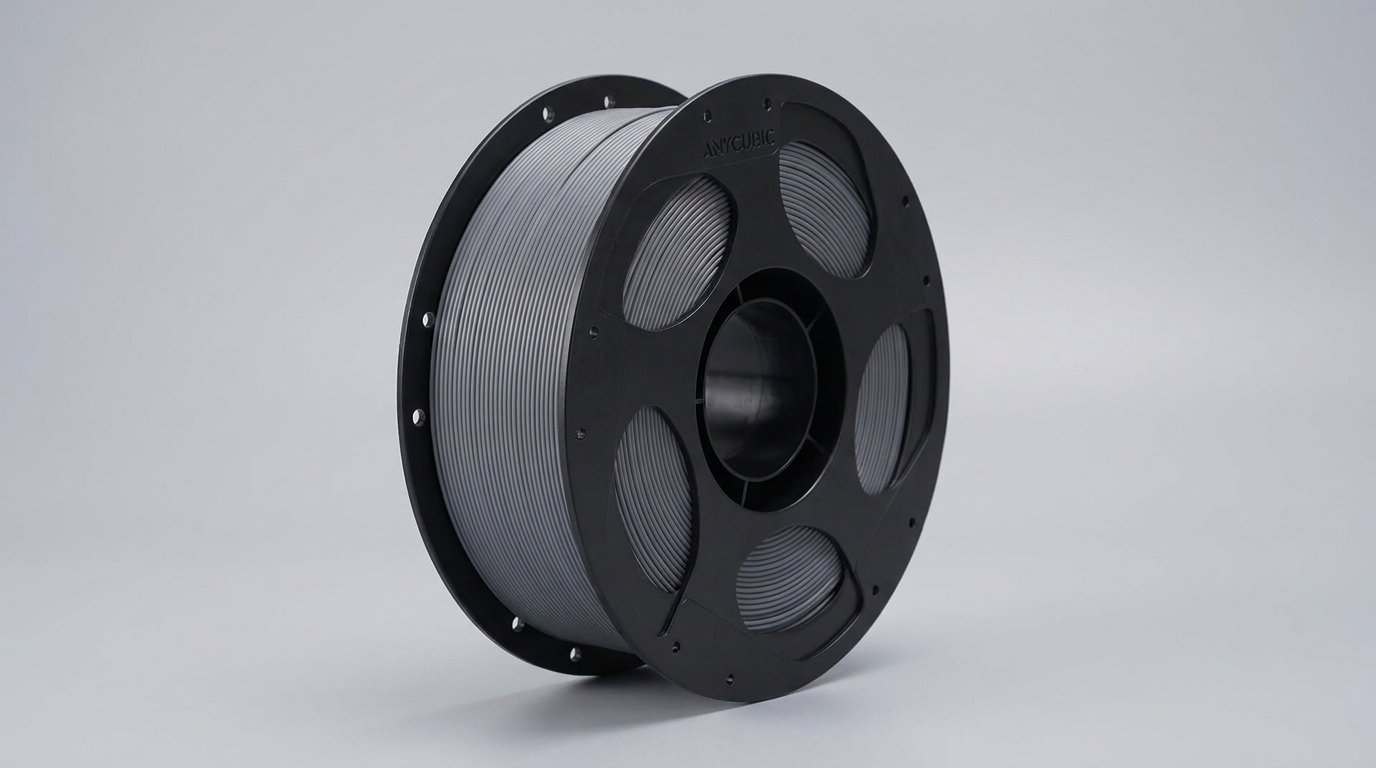
In a 3D printing market often defined by rapid innovation and specialized materials, the humble PLA filament remains the workhorse. Many manufacturers focus on differentiating through exotic performance claims or ultra-premium finishes. However, Anycubic's PLA filament in Texture Grey carves out a niche by prioritizing a different metric: the *Reliability Index*. This concept measures how consistently and without drama a product performs the fundamental task it was designed for, minimizing frustration and maximizing output, rather than chasing peak aesthetic or mechanical properties.
This approach becomes particularly valuable for users who engage in frequent, utilitarian printing tasks. For those producing prototypes, shop aids, or functional parts where the primary goal is consistent form and dimension rather than ultimate strength or visual spectacle, an affordable and undemanding filament is a strategic asset. The Texture Grey variant, in particular, offers a forgiving aesthetic that masks minor imperfections, further enhancing its suitability for iterative design work and general utility.
Our analysis of owner feedback reveals a product that largely adheres to this principle, delivering dependable performance for a specific segment of the 3D printing community. While it may not satisfy those pushing the boundaries of miniature detail or high-stress applications, its consistent behavior and approachable price point make it a strong contender for everyday printing needs, embodying a "get-the-job-done" ethos.
What owners love
- + Consistent print quality with smooth layers and good adhesion
- + Affordable price point for general printing and prototyping
- + Minimal stringing and clogs reported by most users
- + Neatly wound spools prevent tangling during printing
- + Effective for larger projects and functional parts
Common complaints
- − Sporadic instances of brittleness, particularly for small, detailed prints
- − Inconsistent diameter/winding reported in isolated batches
- − May require temperature adjustments for optimal bed adhesion
- − Not ideal for highly delicate or miniature models
- − One-off reports of poor packaging or loose winding
Design & Build
The Anycubic PLA filament is produced with a 1.75mm diameter, promoting compatibility across various printers. While the manufacturer specifies a +/- 0.02mm dimensional accuracy, owners report this consistency generally holds. The 'Texture Grey' color is frequently praised for its aesthetic, providing a subtle appearance suitable for prototypes and functional items. The spool design usually facilitates smooth feeding, with many users noting neat winding that prevents tangles. However, some isolated instances highlight variability in spool winding, describing it as 'loose' or 'poorly packaged,' which can lead to feed issues. This inconsistency, though not widespread, suggests a potential area for tighter quality control in manufacturing batches.
Setup & Ease of Use
This filament aims for a straightforward printing experience. Many users report it feeds well and handles standard PLA temperature ranges without extensive calibration, working effectively on common printers like the Ender 3 and Bambu A1 Mini. The vacuum-sealed packaging with desiccant suggests an effort to maintain dryness, critical for print quality. However, a concept we term the *First-Print Forgiveness Factor* comes into play here. While many filaments claim to be easy, the Anycubic PLA generally lives up to this, requiring minimal fuss for initial successful prints. Even when issues like poor bed adhesion or stringing arose, a common problem with any new filament, owners were often able to resolve them with standard temperature adjustments or by reaching out to customer support for suggested settings. This indicates a filament that is responsive to common tuning practices rather than demanding highly specialized profiles.
Performance in Real Use
In day-to-day operation, the Anycubic PLA typically delivers strong performance for its intended market segment. Owners consistently report smooth flow, good layer adhesion, and clean prints with minimal stringing. It is frequently chosen for prototypes, shop projects, and general utility items where functionality and reliable form are paramount. The 'Texture Grey' is often cited as a good color choice that helps mask minor print artifacts. However, a significant caveat surfaces regarding its suitability for fine detail work or small miniatures. Several users, including one who initially gave a low rating before updating it, found it brittle for such applications, indicating a *Material Rigidity Ceiling*. This ceiling defines the point at which the filament's inherent physical characteristics become a limiting factor for intricate geometries, making it better suited for larger, more robust designs. For these larger projects, however, its reliability often shines.
Software & Ecosystem
As a raw material, filament integrates with existing slicer software and 3D printer ecosystems. Anycubic mentions intelligent identification chips for their ACE Pro printer, suggesting a future-oriented integration strategy, but for the majority of users, this PLA functions as a universal material. The filament itself does not introduce specific software requirements beyond standard slicer profiles for PLA. The positive feedback regarding its compatibility with various 3D printers, including popular models from other brands, underscores its 'agnostic' nature. This broad compatibility contributes to what we identify as the *Universal Utility Advantage*: a product's ability to perform reliably across a diverse installed base, reducing the need for brand-specific hardware or software optimizations, thereby simplifying the user experience and widening its appeal.
Value & Reliability
Value and reliability often intersect with this filament. Priced in the relatively affordable range, owners frequently commend its performance for the cost. The recurring themes of 'good quality, good price' and 'worth it' indicate a strong perceived value. For many, it has become a 'go-to' filament for everyday needs. The high number of positive reviews, often highlighting its dependability for consistent results, supports this. While occasional quality control issues regarding diameter consistency or spool winding appear, these seem to be isolated incidents rather than pervasive problems. The notable responsive customer service from Anycubic in addressing these issues has also reinforced positive sentiment, turning potential negative experiences into positive ones and showing a commitment to maintaining its reputation as a reliable brand in the budget filament category.
Verdict
Buy - This filament provides a highly dependable and cost-effective option for general 3D printing tasks and prototyping.
This filament is an excellent choice for hobbyists and professionals who primarily print larger functional parts, prototypes, or utilitarian objects. Its consistent performance, smooth printing characteristics, and good layer adhesion make it a smart purchase in the sub-$20 price bracket. Those requiring specialized filaments for extremely fine detail, miniature figurines, or applications demanding high impact strength might find it less suitable. Individuals with a lower tolerance for occasional batch-specific inconsistencies should also proceed with caution, though customer support appears responsive.
This Anycubic PLA thrives as a prime example of a *Workhorse Filament*. It's not designed to win awards for exotic finishes or groundbreaking strength, but rather to minimize friction and maximize uptime for the vast majority of 3D printing projects. Its true value lies in its predictable, understated performance that allows users to focus on their designs and prints, rather than troubleshooting the material itself. It represents a mature stage for commodity PLA where the defining feature isn't peak performance, but rather the quiet confidence of consistent, unspectacular reliability.
FAQ
More 3D Printing Supplies reviews
FLASHFORGE Rapid PLA: The 'Stealth Performance' Filament
RAMBERY Silk Dual Color PLA Filament Review: Aesthetic Impact for Small Prints
eSUN PLA+ Filament: The Go-To Choice for High-Speed 3D Printers
SUNLU High Speed PETG Filament Review: The 'Dry-First Economy' Advantage
ERYONE Silk Filament PLA+ Review: The Glossy Aesthetic Standard
ELEGOO Matte PLA Filament Bundle Review: A Premium Material on a Budget
This review is based on real experiences shared by owners in online communities.