
3DMakerpro Fox Review: A Promising Scan, a Frustrating Reality
By AValidReview. An AI-assisted summary of customer feedback, not a hands-on test.
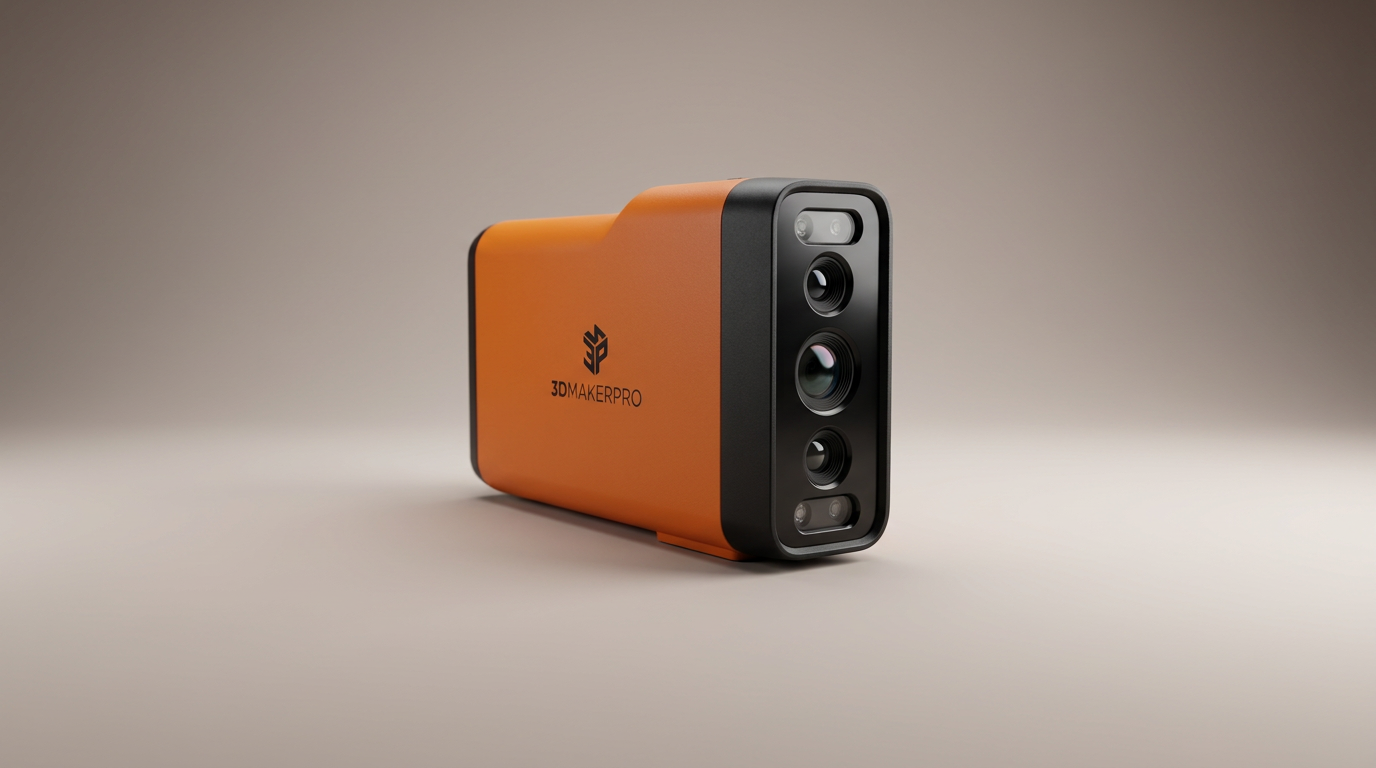
The 3D scanning market, once a niche dominated by professional-grade equipment, has seen a recent surge in more accessible offerings. The 3DMakerpro Fox positions itself squarely in this entry-level segment, promising high accuracy and user-friendly operation at a competitive price. Its manufacturer touts 0.07mm accuracy and markerless AI visual tracking, aiming to democratize detailed 3D capture for hobbyists and makers.
However, the reality of entry-level 3D scanning often presents a "first-layer cliff," where the initial promise of ease-of-use meets the intricate demands of scanning technique and software complexity. While the Fox delivers on some hardware fronts, owner experiences consistently reveal that achieving reliable results demands a significant investment in time, patience, and system resources. This scanner is not a plug-and-play solution, but rather a gateway product requiring commitment to master its particular eccentricities.
Our assessment indicates that the Fox represents a specific type of value proposition: strong core scanning hardware bundled with an ecosystem that introduces substantial friction. Understanding this inherent trade-off is crucial for prospective buyers navigating the advertised capabilities against the lived experience reported by users.
What owners love
- + Hardware feels robust and well-built for its price point.
- + Capable of capturing impressive detail and exporting clean meshes.
- + Markerless AI tracking works well on many medium-sized objects.
- + Easy physical setup of the scanner unit.
- + Compact and lightweight design enhances portability.
Common complaints
- − Significant learning curve and fussy about scanning conditions.
- − Software is often frustrating, buggy, or difficult to install.
- − Demands a powerful computer with a dedicated graphics card.
- − Struggles with shiny, dark, or transparent objects.
- − Customer support is frequently reported as unhelpful or difficult to access.
Design & Build
The 3DMakerpro Fox presents a physically well-engineered product. Owners frequently praise its robust feel, noting that the scanner itself is light, compact, and comfortable to hold during extended use. The industrial design is generally appreciated, with several users highlighting its portability and stable performance even in less-than-ideal field conditions. The power plug design receives specific mention for its international adaptability, suggesting thoughtful consideration for a diverse user base. While some feedback indicates the plastic components might feel inexpensive, the consensus points to a build quality that exceeds expectations for its price, feeling more substantial than typical phone-app based solutions.
Setup & Ease of Use
Initial hardware setup for the Fox is straightforward, with many owners reporting a simple connection process. However, this apparent ease quickly gives way to a steep learning curve that defines the "user commitment tax" for this device. While the included manual turntable is a welcome addition, achieving successful scans manually requires considerable practice. The scanner exhibits significant sensitivity to object distance, ambient lighting, and surface characteristics. Many users report extensive trial and error to dial in scanning technique, often necessitating a stable mount for consistent results. Despite claims of user-friendly operation, the process is far from intuitive for beginners, often requiring a dedicated effort to understand the nuances of successful data capture.
Performance in Real Use
When technique and environmental factors align, the 3DMakerpro Fox can deliver impressive results for its category. Owners report good detail capture, particularly on smaller parts, and the ability to produce usable models for 3D printing. The markerless AI visual tracking is a notable feature, often praised for its ability to maintain scan registration without physical markers on medium-sized objects. However, the performance is inconsistent. The scanner frequently struggles with shiny, dark, or very thin objects, leading to tracking loss and incomplete data. These limitations mean that the advertised 0.07mm accuracy is achievable, but only under highly controlled conditions and with practiced execution, representing a gap between theoretical capability and practical accessibility.
Software & Ecosystem
The hardware's potential is frequently undermined by its software, JMStudio. While intended to be an integrated solution for scanning, editing, and optimizing, it emerges as a primary point of frustration for many users. Common complaints include difficult installation, frequent crashes, a restrictive preview area, and a general lack of intuitiveness. A significant hurdle is the high computational demand; owners consistently report the need for a mid-tier gaming rig with a robust graphics card, effectively establishing a "hardware gate" for successful operation. This requirement is often understated in product descriptions, surprising users who might pair an entry-level scanner with a standard workstation. The software experience, more than the scanner itself, dictates the product's overall usability.
Value & Reliability
At its price point, typically in the sub-$300 range, the Fox represents a compelling hardware offering. The physical scanner feels well-made, and its core capability of capturing detailed geometry is present. However, the value proposition erodes significantly when considering the total cost of ownership, which includes the required powerful computer, the time investment for learning, and the frustrations stemming from software issues and poor support. Reliability is a recurring concern, not due to hardware failure, but from the inability to consistently produce usable scans. The promised "24-hour support" is often described as automated or unhelpful, leaving users to troubleshoot complex software and scanning technique issues independently. This lack of robust support for a product with a steep learning curve significantly detracts from its overall value.
Verdict
Hold Off - The 3DMakerpro Fox's strong hardware is consistently undermined by its challenging software and steep learning curve.
This scanner is for the patient and technically inclined hobbyist who already owns a powerful computer and enjoys solving complex setup issues. If you are prepared to invest significant time in mastering its eccentricities and troubleshooting software, it offers a glimpse into detailed 3D scanning at an accessible price, likely under $300. It is a tool for those who view the process of learning and refinement as part of the hobby itself, rather than expecting immediate, seamless results.
Conversely, anyone seeking a truly easy-to-use, plug-and-play scanning solution should skip the Fox. Beginners without a powerful dedicated graphics card, or those expecting reliable support and intuitive software, will find it a source of frustration. The promise of entry-level accessibility belies a reality that demands an enthusiast's dedication. This product exemplifies the market's ongoing struggle to bridge the gap between affordable 3D scanning hardware and the complex software ecosystems required to make it truly useful for the masses.
FAQ
More 3D Scanners reviews
Revopoint INSPIRE 2 3D Scanner Review: Unpacking the Accessory Echo Chamber
Creality 6mm 3D Scanning Markers Review: Essential Tracking Aid
TOSUKKI 6mm Positioning Targets Review: The Refined Generic Choice
AESUB 3DTOOLS 3D Scanner Spray Review: The 'Evaporative Enabler'
Creality 8-inch Rotating Turntable: A Solid Scanner Accessory

Generic 12 Piece Multi-Angle Markers Review: Essential 3D Scanning Dots
This review is based on real experiences shared by owners in online communities.