
SUNLU PETG Filament Review: The Workhorse for Everyday 3D Printing
This review is based on real experiences shared by owners in online communities.
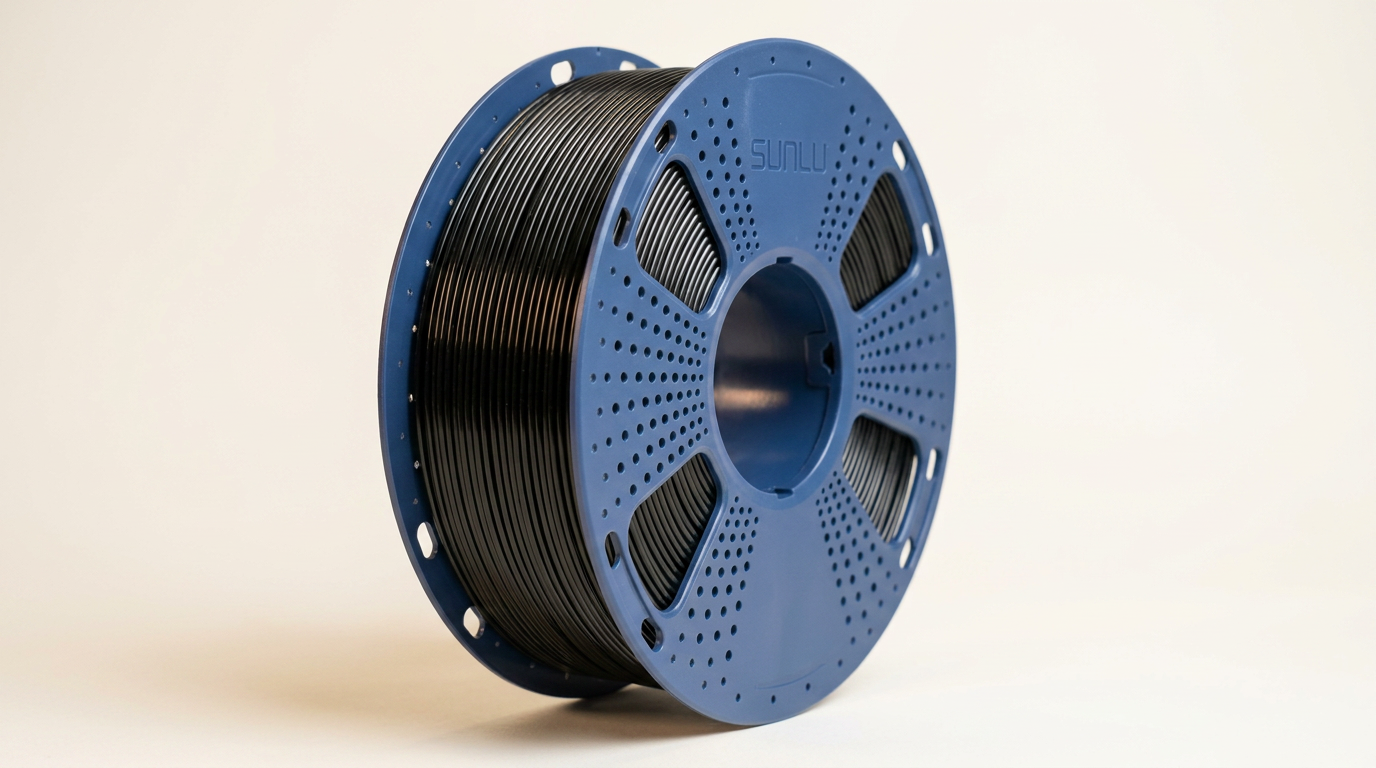
In the crowded landscape of 3D printing filaments, PETG has carved out a niche as a versatile material, offering a balance of strength and ease of use that positions it between PLA and ABS. For many enthusiasts and professionals, however, finding a PETG that consistently delivers without a premium price tag remains a perennial challenge. SUNLU's PETG filament aims to fill this gap, positioning itself as a reliable, affordable option.
This filament enters a market where consistency is often sacrificed for cost. The question for many makers is whether a budget-conscious PETG can truly stand up to rigorous demands for functional prints, or if it represents a false economy. We examine whether SUNLU PETG successfully bridges this divide, providing tangible value for everyday printing needs.
Our assessment focuses on its performance in typical use cases and how it stacks up against more expensive alternatives, drawing insights from long-term user experiences. The goal is to determine if this filament offers a genuine solution for those seeking durability and print quality without financial strain, or if its affordability comes with hidden operational costs.
What owners love
- + Consistent print quality and strong layer adhesion
- + Lower stringing compared to many other PETG brands
- + Excellent value for its performance
- + Good mechanical properties, including strength and flex
- + Wide compatibility with various FDM printers
- + Reusable spools for filament refills
Common complaints
- − Finish can be glossy, which some users may not prefer
- − Requires proper temperature calibration for optimal results
- − Minor stringing may still occur, needing post-processing
- − Some users prefer to dry filament even if vacuum-sealed
Design & Build
SUNLU PETG filament arrives vacuum-sealed, a standard practice intended to mitigate moisture absorption. Owners consistently report this packaging is effective in preserving material quality during transit. The filament itself measures 1.75mm, with a claimed dimensional accuracy of +/-0.02 mm. This tight tolerance is a critical factor for consistent extrusion and print reliability across a range of FDM printers. Several owners commend the filament's consistent diameter and neat winding on the spool, which prevents tangles and snags during printing. A notable design choice is the inclusion of reusable spools, a practical feature for those who purchase filament refills and aim to reduce waste. This reflects a 'lifecycle thinking' approach often overlooked in budget brands.
Setup & Ease of Use
Setting up SUNLU PETG for printing generally proves straightforward, though some calibration is necessary, particularly for new users or those transitioning from other materials. While SUNLU recommends specific nozzle (240-260°C) and bed (60-70°C) temperatures, owners frequently emphasize the need to fine-tune these settings to achieve optimal results, especially for layer adhesion and surface finish. For Bambu Lab printer users, the availability of pre-set profiles for SUNLU filament simplifies the process significantly, often allowing for 'out of the box' successful prints. This profile compatibility is a critical 'adoption accelerator' for a brand in an increasingly sophisticated printer ecosystem. While the filament is generally described as ready to use, a few long-term users mention the proactive step of drying the filament regardless of packaging, a common practice to ensure peak performance with hygroscopic materials like PETG.
Performance in Real Use
In functional applications, SUNLU PETG consistently delivers strong, durable prints. Owners frequently highlight its excellent layer adhesion, contributing to robust structural integrity in finished parts. This makes it suitable for projects requiring additional strength and impact resistance, such as tools, props, and functional components. A recurring positive theme is the filament's reduced stringing compared to other PETG brands. While some minor stringing can still occur, it is often minimal and easily addressed with slight adjustments or post-processing. The finish tends to be glossy, particularly when printed at higher temperatures or slower speeds, a characteristic some users appreciate for aesthetics, while others note its deviation from a matte preference. The ability for temperature to dramatically alter the finish between matte (cooler) and glossy (hotter) introduces a 'surface texture leverage point' for creative users. The material also exhibits a degree of flex, which enhances its toughness without becoming overly brittle, a key advantage for items subjected to stress.
Software & Ecosystem
SUNLU's integration into the broader 3D printing ecosystem is facilitated by its compatibility with a wide range of FDM printers and the availability of specific profiles for popular machines like those from Bambu Lab. This minimizes the learning curve and configuration effort for many users, allowing them to leverage the filament's characteristics without extensive custom profile creation. The lack of proprietary software or complex brand-specific settings promotes broad usability. This 'open-source compatibility dividend' allows the filament to be integrated easily into existing workflows, rather than demanding extensive new setup or learning.
Value & Reliability
The primary selling point for SUNLU PETG is its strong value proposition. Owners consistently place it on par with, or even superior to, more expensive name-brand filaments in terms of quality and performance. This makes it an attractive option for those seeking high-quality results without the premium price. The reliability extends to consistent feeding and extrusion, with several long-term users reporting problem-free use across multiple rolls. This balance of quality and affordability establishes SUNLU PETG as a reliable 'cost-to-performance leader' within its segment, offering a compelling argument for its adoption as a primary printing material for various projects. Its dependable nature and competitive pricing create a strong incentive for repeat purchases, cementing its status as a go-to choice for many.
Verdict
Buy - SUNLU PETG filament offers an exceptional balance of print quality, mechanical strength, and value.
This filament is an excellent choice for 3D printer owners seeking a reliable, high-performance PETG without the expense of premium brands. It is particularly well-suited for those printing functional parts, prototypes, or items requiring good layer adhesion and durability. Users with Bambu Lab printers will find it easy to integrate, benefiting from pre-established profiles. For its price, which often falls well under $20, it delivers consistent results that rival much more expensive options.
However, users who prioritize a specific matte finish or are unwilling to engage in minor temperature calibration might look elsewhere. While stringing is minimal, it may still require slight adjustments or post-processing for perfectionists. The SUNLU PETG asserts itself as a prime example of 'commodity excellence' in 3D printing materials. It eschews brand cachet for repeatable, practical performance, showing that fundamental material science and manufacturing consistency, not marketing, deliver true value in the maker community.
FAQ
More 3D Printing Supplies reviews
RAMBERY Silk Dual Color PLA Filament Review: Aesthetic Impact for Small Prints
eSUN PLA+ Filament: The Go-To Choice for High-Speed 3D Printers
SUNLU High Speed PETG Filament Review: The 'Dry-First Economy' Advantage
ERYONE Silk Filament PLA+ Review: The Glossy Aesthetic Standard
ELEGOO Matte PLA Filament Bundle Review: A Premium Material on a Budget
ELEGOO PLA Plus Filament Review: The Workhorse White
This review is based on real experiences shared by owners in online communities.