
SUNLU High Speed PETG Filament Review: The 'Dry-First Economy' Advantage
This review is based on real experiences shared by owners in online communities.
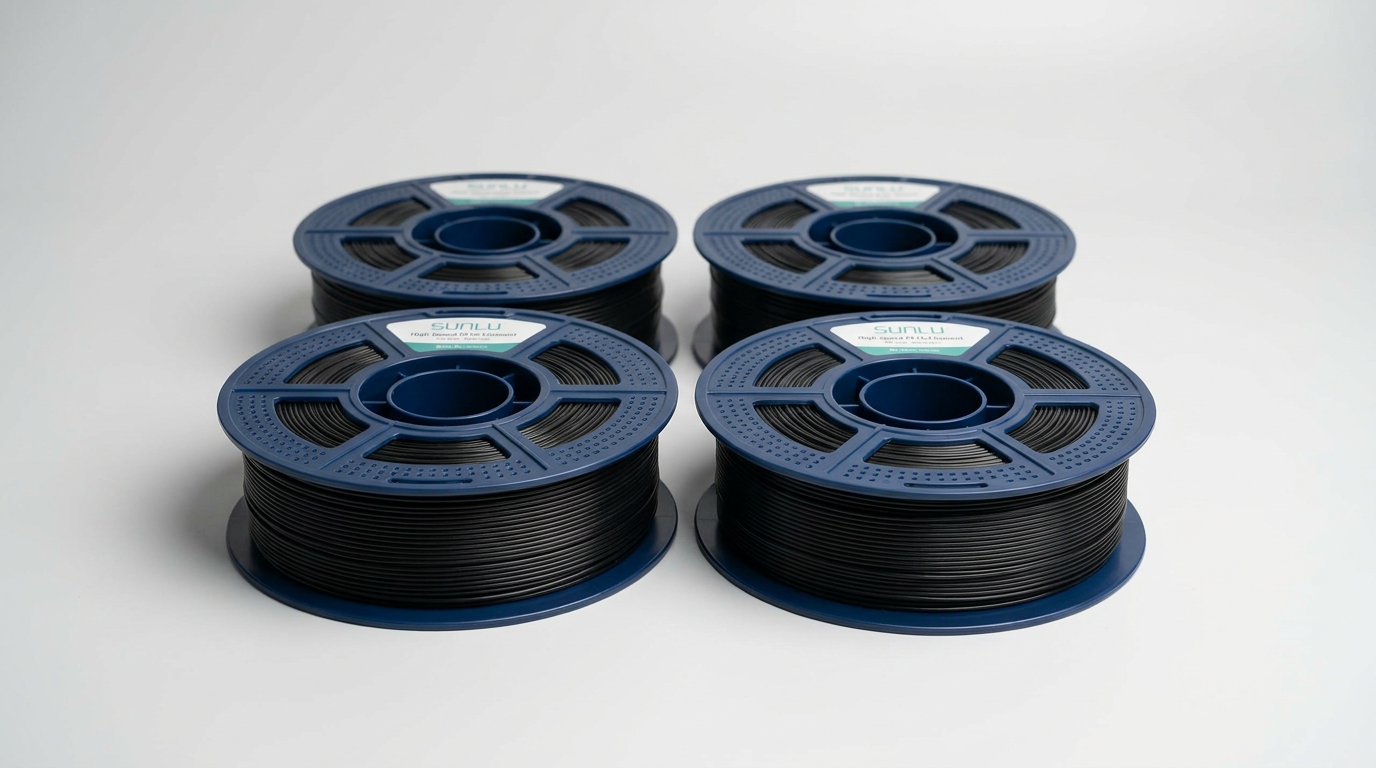
The 3D printing landscape increasingly values speed without sacrificing material integrity. SUNLU's High Speed PETG filament bundle positions itself squarely in this emerging segment, offering a material that promises both rapid production and the enhanced durability of PETG. This product is not just another filament; it represents a specific market philosophy: the 'Dry-First Economy', where significant cost savings and performance are unlocked by a simple, often overlooked, user preprocessing step.
Most commodity filaments present a trade-off: affordability often implies variability or a need for extensive tuning. SUNLU aims to disrupt this by delivering PETG at a price point typically associated with less demanding materials, while pushing speeds previously reserved for specialized, premium blends. The success of this approach hinges entirely on user willingness to invest in proper filament care, transforming a potential bottleneck into a significant advantage.
This bundle therefore warrants examination not just on its raw material properties, but on its capacity to deliver consistent results within a user workflow that prioritizes filament drying. We assess whether its value proposition truly materializes for the practical 3D printer operator, especially those running newer, faster machines.
What owners love
- + Delivers high-speed printing performance when properly dried
- + Provides excellent value, especially in multi-spool bundles
- + Offers strong layer adhesion and good overall print quality
- + Produces a desirable matte finish, reducing plastic sheen
- + Offers durability and strength for functional parts
Common complaints
- − Highly susceptible to moisture, requiring mandatory drying
- − Some spools may arrive with compromised vacuum seals
- − Colors may not precisely match online representations
- − Can still exhibit stringing if not adequately dried or settings unoptimized
- − Spools occasionally warp due to vacuum packing
Design & Build
SUNLU's High Speed PETG filament adheres to the standard 1.75mm diameter, wound on conventional spools. Owners consistently report that the spools are neatly wound, which is critical for preventing tangles and ensuring smooth feeding during long prints. The primary differentiating factor in its material design is its enhanced fluidity, engineered to support print speeds up to 600mm/s. This is a direct response to the demand from modern, high-velocity printers. The filament itself offers a matte finish, a notable aesthetic departure from the often glossy appearance of traditional PETG. This ‘low-sheen’ characteristic is a subtle design choice that elevates the final appearance of printed objects, moving them away from a 'plastic toy' look towards a more refined, professional finish. However, the physical integrity of the packaging is a recurring theme; several owners note instances where the vacuum seals failed, and some plastic spools arrived warped, suggesting a potential weakness in the overall product journey from factory to user.
Setup & Ease of Use
Despite its 'easy PETG' billing, the SUNLU High Speed PETG requires a distinct initial setup consideration: mandatory drying. This is the product's primary 'first-layer cliff'-the critical initial step that determines overall print success. Many owners emphasize drying new rolls for 6-12 hours at 65°C, even if the vacuum seal appears intact, before the first print. This preparatory step is not optional but foundational to achieving the advertised high-speed performance and mitigating issues like stringing and blobbing. Once properly dried and with dialed-in settings, users report it prints with ease, often rivaling PLA's printability but offering PETG's mechanical advantages. For users accustomed to printing straight from the package, this drying requirement represents a workflow adjustment, but one that is consistently rewarded with superior results. The manufacturer's detailed temperature recommendations for various speeds are helpful, guiding users through the necessary nozzle temperature adjustments as print speeds increase.
Performance in Real Use
When correctly prepared, this PETG delivers on its high-speed promise. Owners using advanced printers like the Bambu Lab A1 Mini or Creality K1 Max report excellent results, achieving fast print times without compromising layer adhesion or structural integrity. The filament exhibits good toughness and impact strength, making it suitable for functional parts, tools, and durable prototypes. However, the 'moisture tax' is a constant undercurrent in performance; undried filament leads to predictable issues such as stringing, popping, and surface defects, especially on longer prints. The matte finish is consistently praised for giving prints a premium, less plastic-like appearance. While colors are generally well-received, some users note that specific colors, like pink, can be less vibrant or more translucent than marketing images suggest. This suggests a minor 'color consistency delta' that buyers should anticipate, especially for aesthetic projects where precise color matching is critical.
Software & Ecosystem
This filament operates within the broader 3D printing software ecosystem, primarily interacting with slicer programs like PrusaSlicer, Cura, or Bambu Studio. Its 'high speed' designation means it is particularly well-suited for modern printers optimized for faster kinematics and acceleration, often managed by Klipper firmware or proprietary high-speed systems. Owners report success with various machine types, from modified Ender 3s to advanced Bambu Lab printers, highlighting its adaptability across different hardware platforms. The critical software interaction involves tuning print profiles; users must adjust nozzle temperatures based on print speed, bed temperature (typically 70-80°C), and retraction settings to minimize stringing once the filament is dry. This indicates the filament, while capable, still relies on the user's proficiency in slicer configuration to unlock its full potential. The lack of proprietary software or a locked ecosystem is a positive, allowing broad compatibility.
Value & Reliability
The SUNLU High Speed PETG offers exceptional value, particularly in its 4KG bundle configuration. Owners consistently cite its affordability as a primary draw, often comparing its performance favorably to more expensive brands. This positions it as a 'cost-per-kilogram champion' for users willing to manage its moisture sensitivity. Reliability is directly tied to this moisture management; while some spools may arrive with compromised vacuum seals, a proactive drying regimen ensures consistent, problem-free printing. Users report minimal issues with tangling, clogs, or diameter variance after drying, contributing to a high level of print success. For those who embrace the 'Dry-First Economy' mindset, this filament provides a reliable, cost-effective solution for producing durable, functional prints at elevated speeds, making it a frequent 'go-to' or 'daily driver' for many enthusiasts and small business operators.
Verdict
Buy - This SUNLU High Speed PETG offers outstanding value and performance, provided users commit to proper filament drying.
This filament is an excellent choice for experienced 3D printer users and those with newer, high-speed machines who are prepared to integrate filament drying into their workflow. Its low cost, robust mechanical properties, and ability to print quickly make it ideal for functional parts, rapid prototyping, and production environments where cost-efficiency is paramount. Those new to 3D printing or unwilling to manage filament dryness may find it frustrating. If you frequently print with undried filament or prefer absolute 'print-straight-out-of-the-box' convenience, you should look elsewhere, potentially at a higher price point.
The SUNLU High Speed PETG effectively formalizes a 'dry-first' approach to affordable performance, revealing that for a minor upfront investment in a dryer and a shift in workflow, users can access premium speed and durability without paying a premium price. It doesn't just sell filament; it sells a paradigm of proactive material management, challenging the notion that high-speed materials must inherently be expensive. This product is not just good for its price; it's a testament to the value created when users fully engage with the material's requirements, transforming a perceived weakness into its greatest strength.
FAQ
More 3D Printing Supplies reviews
ERYONE Silk Filament PLA+ Review: The Glossy Aesthetic Standard
ELEGOO Matte PLA Filament Bundle Review: A Premium Material on a Budget
ELEGOO PLA Plus Filament Review: The Workhorse White
eSUN PLA Basic Filament Review: A Workhorse for 3D Printing
SUNLU PLA Plus Filament Review: The Workhorse for Everyday 3D Printing
Kretrum 3Doodler Start+ Refills: Expanding Creative Horizons
This review is based on real experiences shared by owners in online communities.