MYNT3D Junior2 PCL Filament Review: Safe Creativity for Young Makers
This review is based on real experiences shared by owners in online communities.
The ubiquity of consumer 3D printing often overshadows a critical segment: safe, accessible tools for younger users. While adult-oriented FDM printers and high-temp 3D pens dominate the market, products like the MYNT3D Junior2 PCL filament address a fundamental safety concern, offering a distinct advantage that merits consideration. This low-temperature material redefines the entry point into 3D creation, prioritizing user protection over raw material strength or precision.
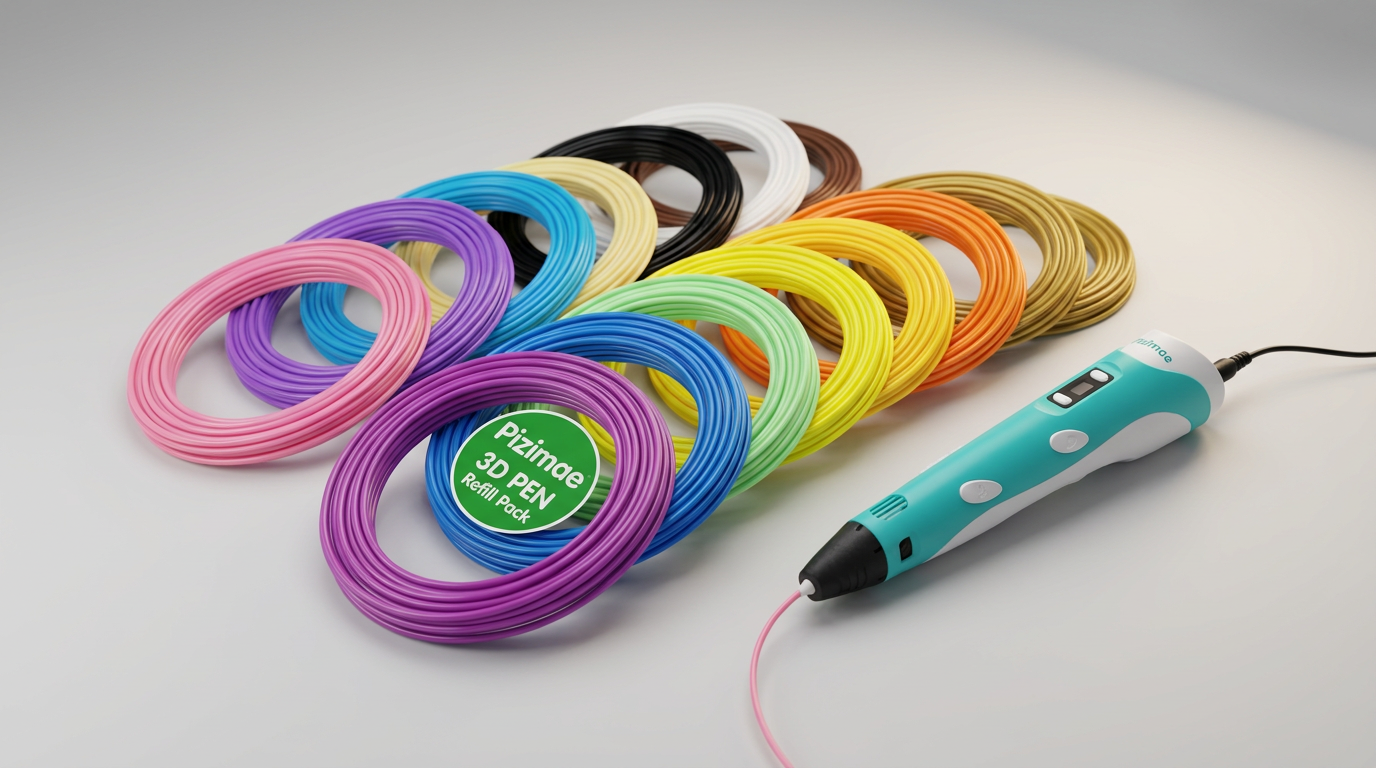
This PCL filament refill pack caters specifically to devices designed for this safer, cooler operation. Its primary appeal lies not just in its vibrant palette, but in its material science: PCL plastic melts at temperatures significantly lower than common PLA or ABS, drastically reducing burn risk. For parents and educators, this translates directly into peace of mind, transforming what can be a hazardous activity into a supervised, yet largely worry-free, creative outlet.
Our analysis reveals this filament occupies a crucial niche, enabling what we term the "Curiosity Gateway"- a low-stakes, high-engagement introduction to 3D design that minimizes barriers to entry. It's a strategic move away from performance metrics and towards user experience, especially for nascent creators.
What owners love
- + Significantly lower melting point enhances safety for young users
- + Vibrant 12-color assortment fuels creative expression
- + PCL material avoids common filament clogging issues
- + Each color is individually packaged for organized storage
- + Generous 196-foot total length provides ample material
- + Universal compatibility with standard 1.75mm low-temp 3D pens
Common complaints
- − PCL material has inherent limitations compared to PLA or ABS
- − Lower temperature limits complex structural applications
- − Not suitable for high-temperature 3D pens
- − Relatively shorter individual color lengths may require frequent changes
Design & Build
The MYNT3D Junior2 PCL filament is specifically engineered for low-temperature operation. Unlike higher-temperature plastics like PLA or ABS, PCL (Polycaprolactone) melts at approximately 60-90°C. This lower thermal threshold is a deliberate design choice, dictating both the material's safety profile and its structural characteristics. Owners consistently highlight this low melting point as the primary advantage, noting the extruded plastic is only warm to the touch, not scalding. This design reduces the "Burn Risk Quotient," a critical factor for products aimed at children, prioritizing immediate user safety over the material's ultimate mechanical properties.
The filament arrives in 12 distinct colors, each coiled and individually wrapped. This organizational consideration ensures colors remain separate and untangled, streamlining the creative process. The 1.75mm diameter is precisely manufactured to ensure consistent flow through compatible pens, avoiding common issues like clogging or inconsistent extrusion. While the overall length of 196 feet is substantial, individual color lengths are around 16 feet, a trade-off for the diverse palette offered.
Setup & Ease of Use
Setting up this PCL filament involves straightforward loading into a compatible 1.75mm low-temperature 3D pen, such as the MYNT3D Junior2 or My First 3D Pen. Owners report a smooth loading process, attributed to the uniform diameter of the filament strands. The low melting temperature of PCL ensures quick heating and readiness for use, minimizing waiting times. This characteristic supports the product's role as a "First Contact Tool" for 3D creation, where instant gratification and minimal friction are key to sustained engagement.
Once loaded, the pen extrudes material reliably. The low-temperature operation means less stringing and fewer clogs, as the material is less prone to overheating within the pen's nozzle. This consistent performance removes a significant hurdle for beginners, allowing them to focus on the creative act rather than troubleshooting equipment. The intuitive nature of PCL, combined with a compatible pen, makes the entire process accessible to users as young as 12, according to parental feedback.
Performance in Real Use
In practical application, the MYNT3D Junior2 PCL filament performs as intended: reliably and safely within its low-temperature operational parameters. Owners praise the vibrant colors, noting they are true to promotional images and contribute significantly to artistic outcomes. The material extrudes smoothly, forming consistent lines and allowing for detailed work within the constraints of a 3D pen. The "Tactile Feedback Loop" is excellent; users can directly feel the material cooling, providing immediate cues for manipulation and structural integrity as they build.
However, it is crucial to manage expectations regarding material properties. PCL is softer and has a lower glass transition temperature than PLA or ABS. This means creations will be less rigid and durable than those made with higher-performance filaments. While ideal for learning and artistic expression, it is not suited for functional parts requiring structural strength or heat resistance. This trade-off is inherent to the safety-first design philosophy and should be understood by prospective users.
Software & Ecosystem
As a filament refill, this product does not incorporate proprietary software. Its ecosystem compatibility centers on hardware: specifically, 1.75mm low-temperature 3D pens. This universal compatibility simplifies the user experience, as owners are not locked into a particular brand of pen. The focus remains on the physical interaction and creative output rather than digital interfaces. This allows for a more direct, hands-on learning experience that avoids the complexities often associated with software-driven 3D design.
The simplicity of this approach reinforces its accessibility for younger users or those new to 3D creation. It encourages exploration and experimentation through direct material manipulation, rather than abstract digital modeling. This positions the filament as a tool that democratizes 3D creativity, making it a tangible, immediate experience without requiring extensive software proficiency.
Value & Reliability
The MYNT3D Junior2 PCL filament presents a strong value proposition for its target audience. Owners consistently report satisfaction with the quantity of filament provided, considering 196 total feet a generous supply for sustained creative activity. The consistent performance-low temperature, clog-free operation, and vibrant colors-contributes to its reliability. This reliability is paramount for products aimed at beginners, as frustration with unreliable materials can quickly disengage new users. The product's consistent melting and extrusion profile minimize such frustrations.
Given its specialized low-temperature application, the value is best assessed against other PCL filaments rather than general-purpose PLA or ABS. For low-temperature 3D pens, it serves as a cost-effective and dependable choice that supports long hours of creative play. The safety benefits inherent in PCL further enhance its perceived value, offering peace of mind that offsets any material performance limitations compared to industrial-grade filaments.
Verdict
Strong Buy - This PCL filament pack delivers exceptional safety and creative potential for low-temperature 3D pen users.
This is an ideal purchase for parents, educators, or hobbyists seeking a safe and reliable filament for beginner-friendly 3D pens like the MYNT3D Junior2 or My First 3D Pen. If your priority is a low-risk, high-engagement entry point into 3D creation, particularly for younger users, the vibrant colors and low-temperature operation make this an excellent choice. Those who require structural integrity, high-temperature resistance, or advanced material properties for functional prototypes should look towards higher-performance filaments like PLA or ABS, which operate in a different thermal category.
This PCL filament reinforces the concept of "Designed Compromise"- it strategically trades mechanical strength for an unparalleled safety profile. It understands that for a significant segment of the market, particularly nascent creators, the most valuable attribute of a 3D medium is its accessibility and safety, not its ultimate tensile strength. It’s a foundational product for nurturing early interest in additive manufacturing, sidestepping the complexities that often deter beginners.
FAQ
More 3D Printing Pens reviews
SCRIB3D Advanced 3D Printing Pen Review: Beyond the Hobbyist
MYNT3D Super 3D Pen Review: A Low-Cost Creative Gateway
MYNT3D Professional Printing 3D Pen Review: Precision for Play
Lebakort Storage Case Review: An Essential 3Doodler Pen Companion
RLSOCO 3D Printing Pen Case Review: Beyond the Printer
KEZIGLOW 3D Pen Filament: A Safe and Vibrant Option for Young Artists
This review is based on real experiences shared by owners in online communities.