
6/12 Popcorn Pens 3D Relief Art Pen Review: Novelty Flaws
By AValidReview. An AI-assisted summary of customer feedback, not a hands-on test.
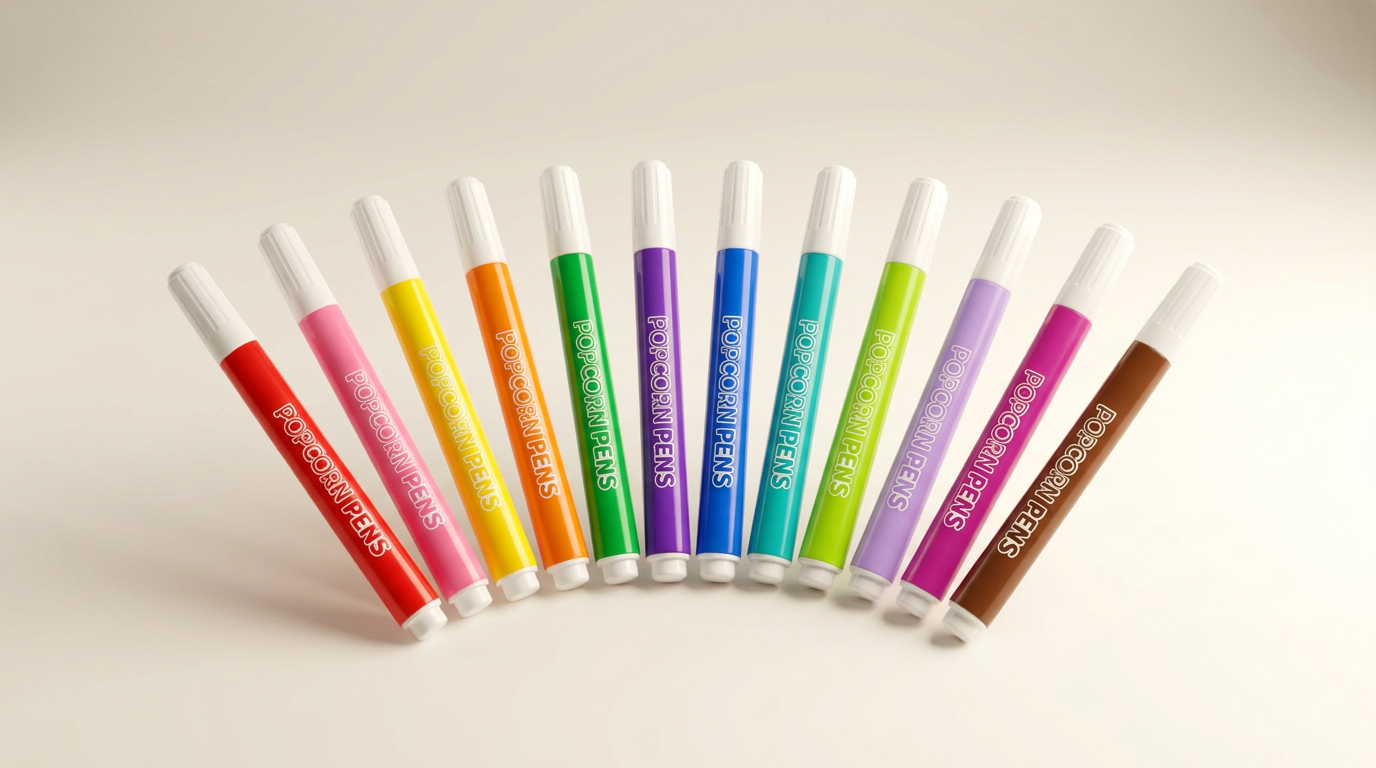
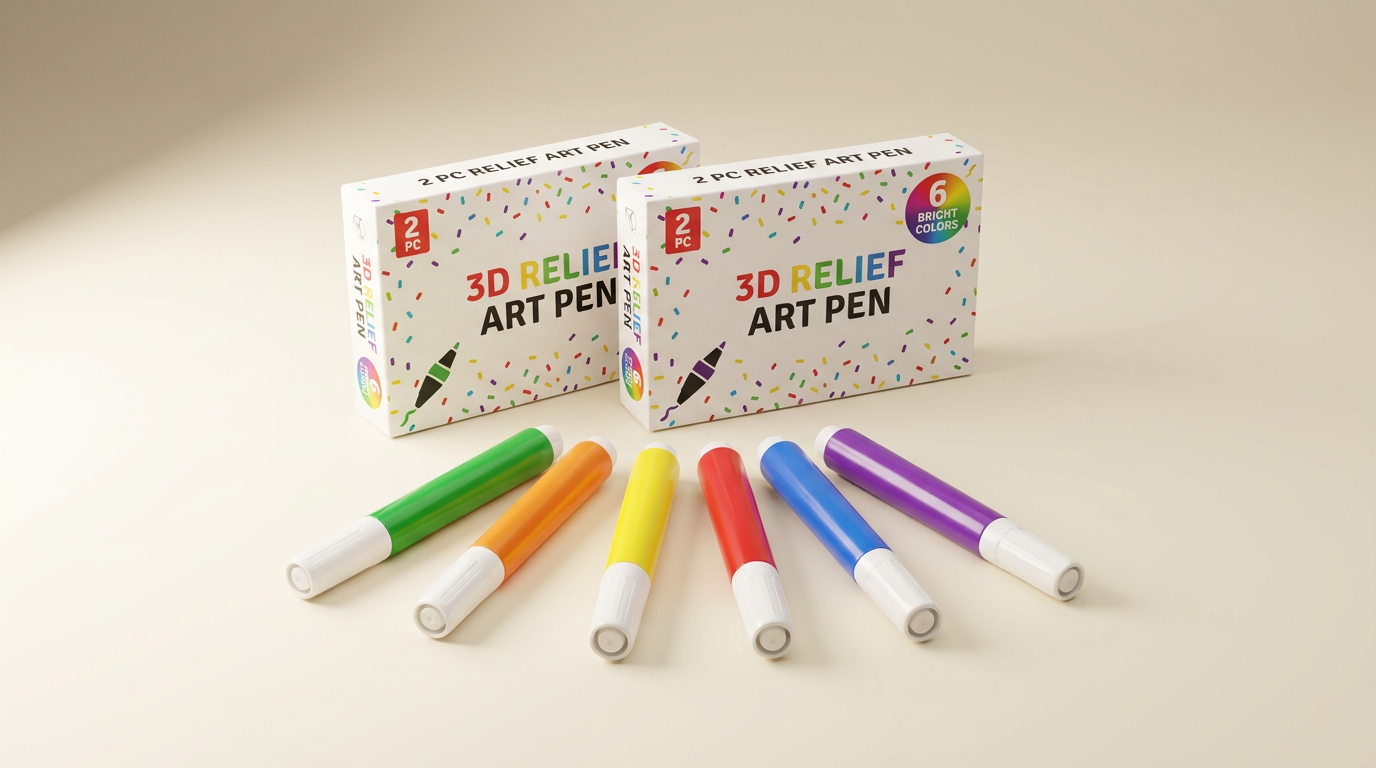
Novelty craft tools frequently slip into high-tech catalog categories by borrowing the vocabulary of rapid prototyping. The Generic 12-piece Popcorn Pens set is filed under additive manufacturing and 3D printing pens, yet it is fundamentally a chemical puff-paint marker meant to swell under thermal heat. On paper, it promises tactile, raised relief art from an ordinary marker barrel. In practice, it exposes what we call the category misdirection trap: an analog novelty disguised as technical gear that lacks even the most basic manufacturing quality control.
Craft tools aimed at children should offer predictable friction, yet owner experiences with this set split cleanly down the middle. Half find a delightful afternoon activity that keeps children occupied with greeting cards, while the other half encounter ruptured casings, ruined furniture, and unresponsive ink. The core issue is not simply variance in user patience; it is an unforgiving packaging design paired with incomplete operating directions.
Selling in the under-$20 range, this kit taxes buyers with what we term the video illusion tax. Buyers expect the effortless, peelable dimensional sculptures seen across short-form promotional videos. What arrives is a temperamental liquid formulation sealed behind hidden plastic barriers, demanding aggressive physical force and kitchen appliances to achieve even modest relief.
What owners love
- + Bright, saturated ink colors that engage children
- + Novel puffy texture when thermal activation succeeds
- + Suitable for custom greeting cards and decorative paper crafts
- + Fluid ink flow once internal barriers are cleared
Common complaints
- − Omission of critical internal seal removal instructions
- − Dangerous cap resistance that leads to explosive paint spills
- − Standard hair dryers frequently fail to trigger expansion
- − Ink bonds permanently to paper instead of peeling cleanly as advertised
Design & Build
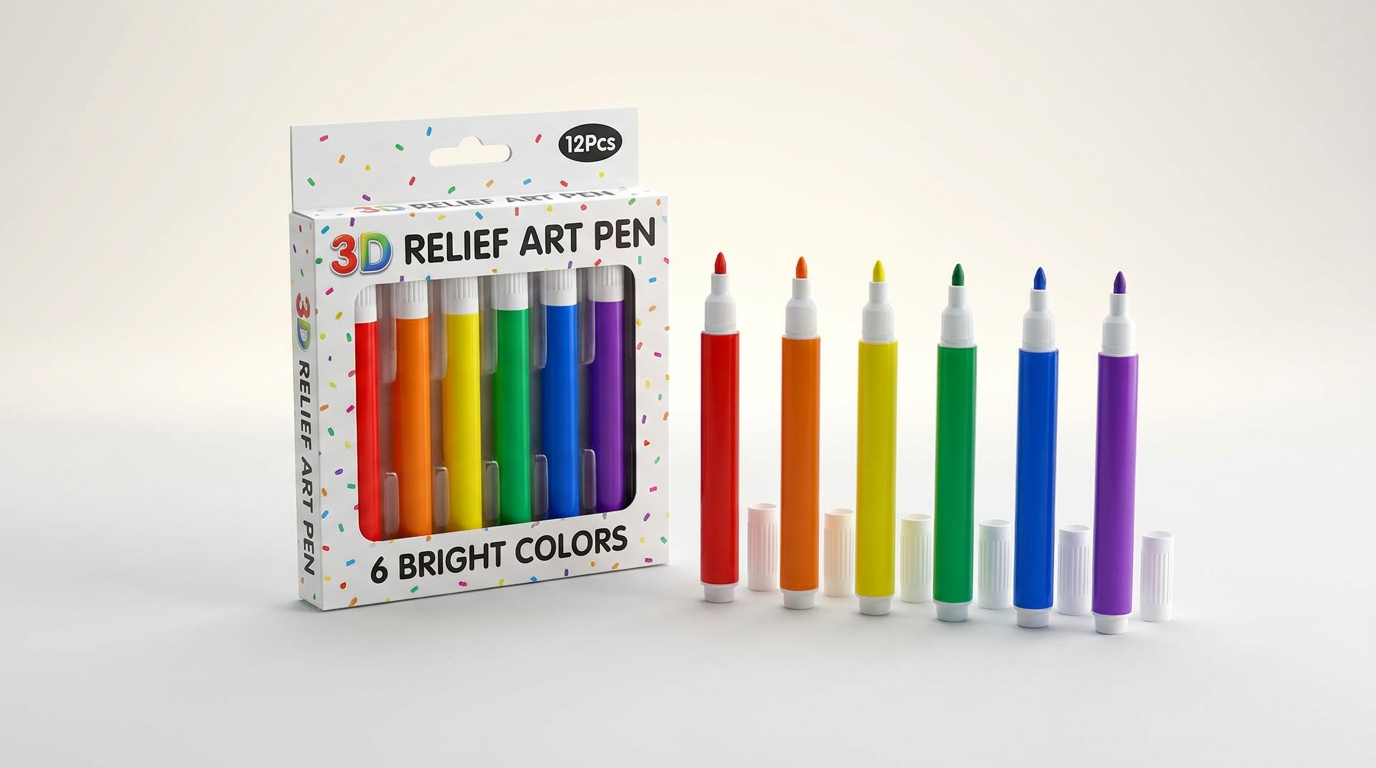
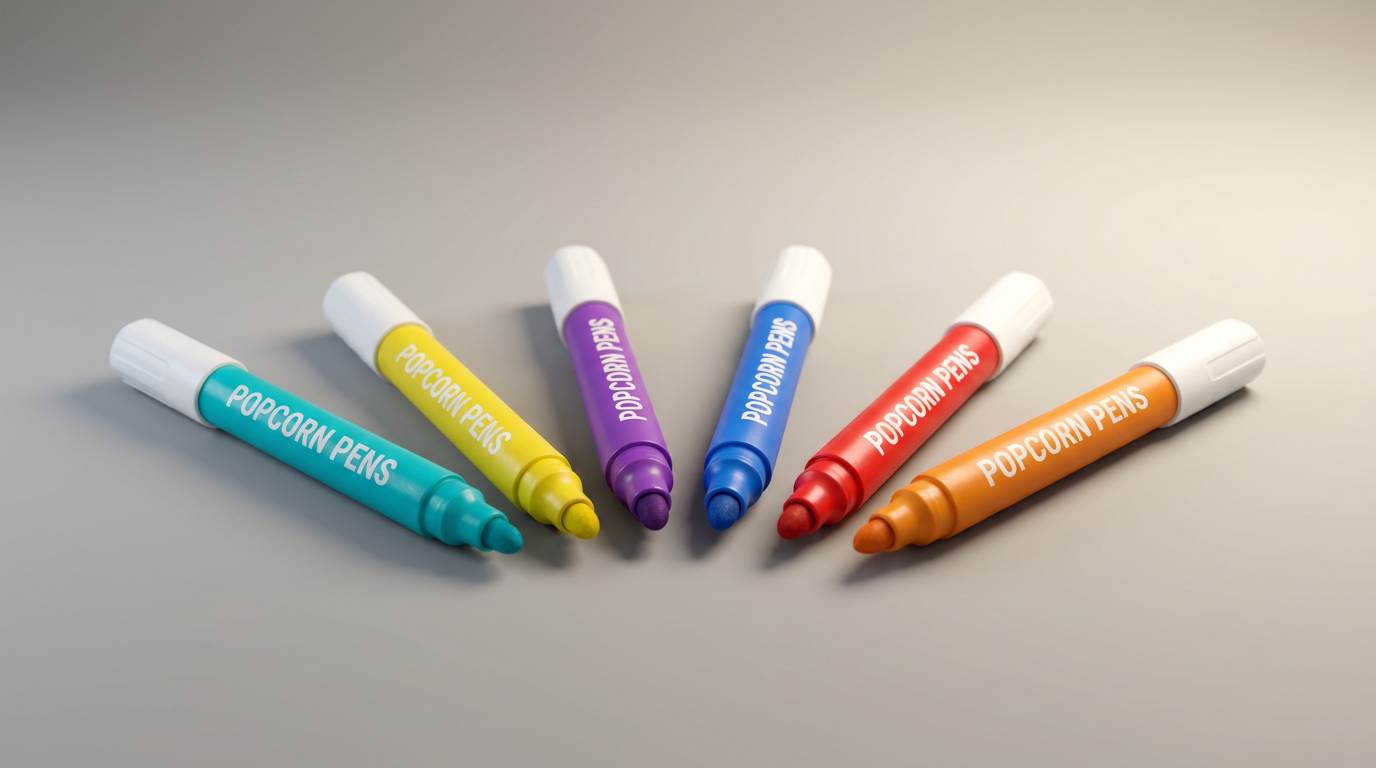
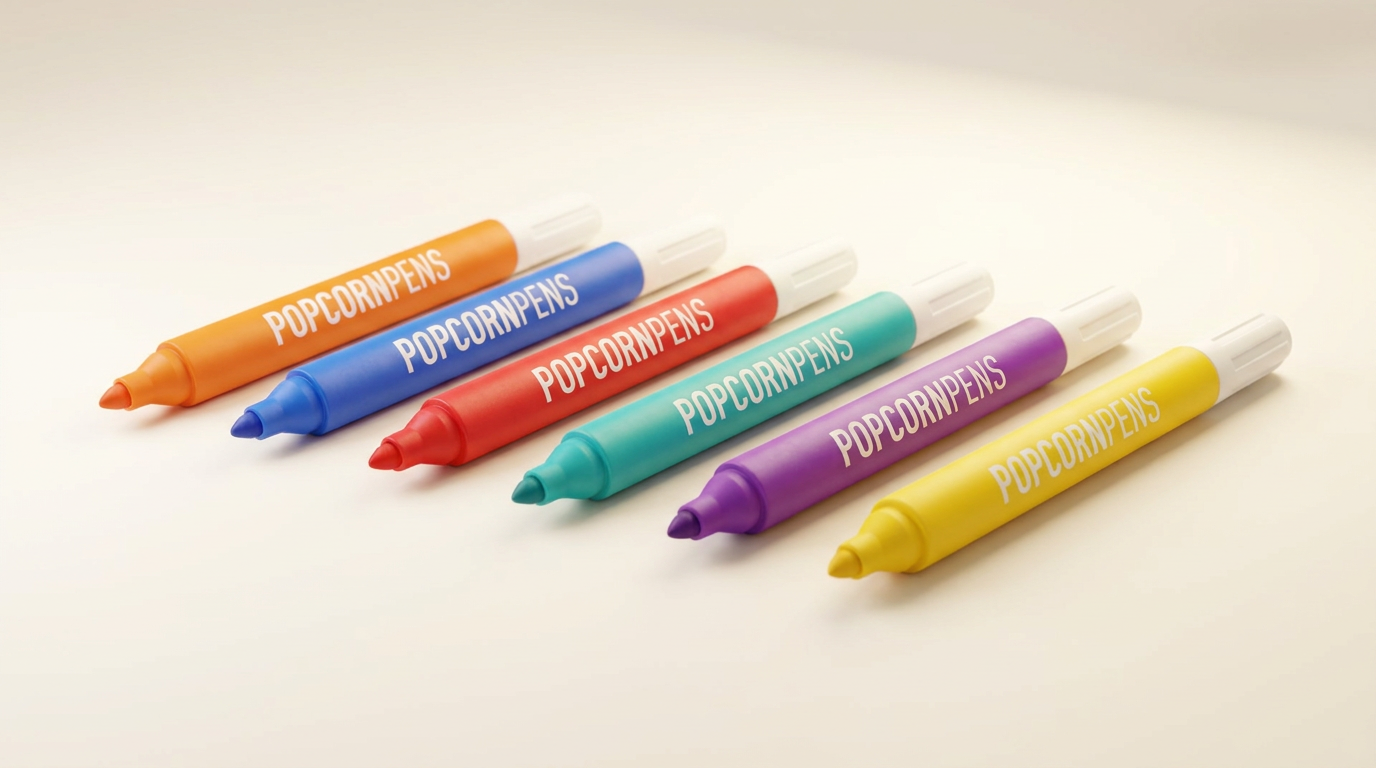
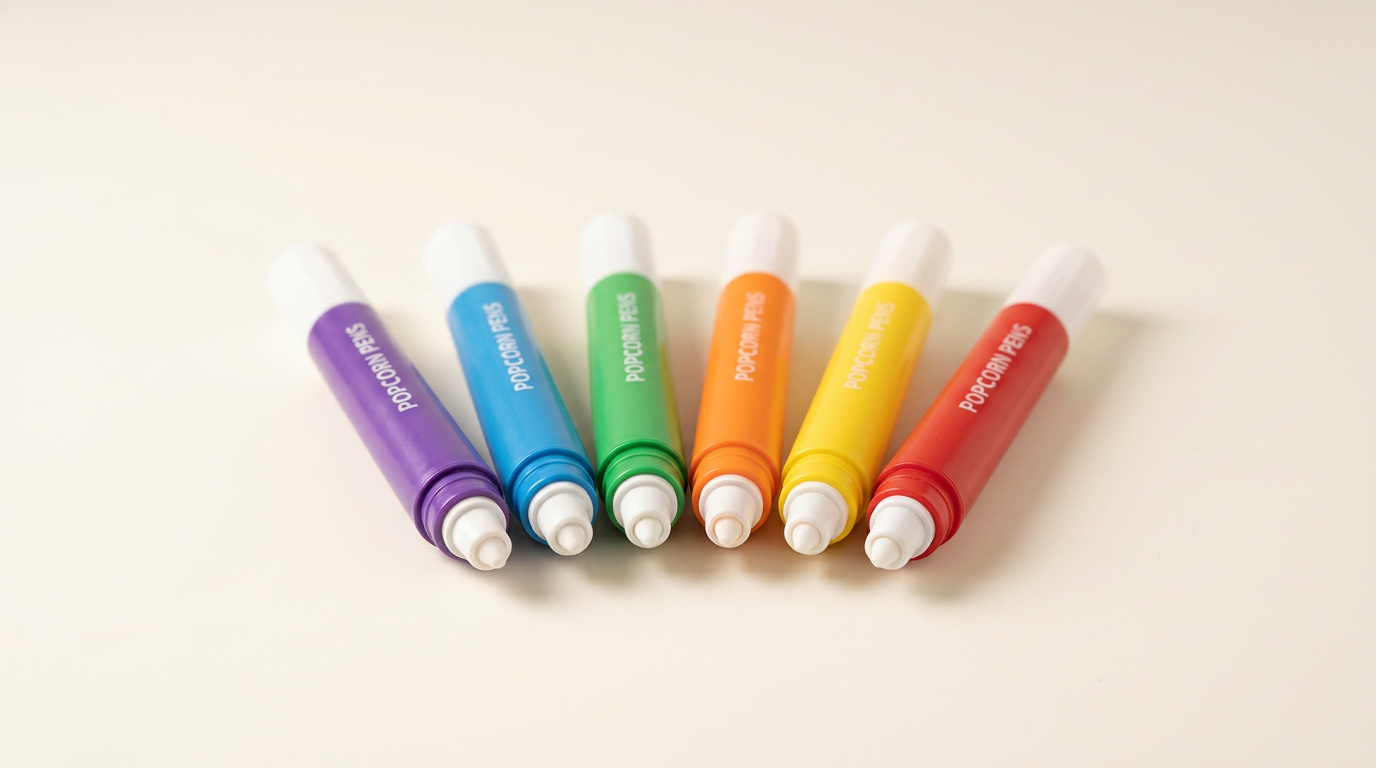
At first glance, the Popcorn Pen resembles a standard squirt marker with a tapered nozzle and plastic body. The chassis is lightweight, relying on thin-walled plastic that yields under squeezing pressure to propel the viscous ink outward. However, the mechanical tolerance around the cap assembly represents a severe design hazard that we call the seal trap. The pen incorporates an unadvertised inner safety plug nested beneath the removable nozzle tip. Because the exterior cap fits with excessive, uneven friction, owners attempting to pull the cap off frequently compress the pliable reservoir body. In documented instances, this sudden release ruptures the container, discharging pressurized paint across walls, rugs, and furniture. A craft tool intended for home use should never convert standard opening torque into an explosive spill hazard.
Setup & Ease of Use
The onboarding process for this product is essentially broken due to absent documentation. Standard consumer logic assumes one uncaps a marker and begins drawing. With these pens, that approach yields zero ink flow. To make the pens functional, a user must unscrew the primary collar, extract the fine-line drawing nozzle, pry loose a microscopic internal transport plug, and reassemble the unit before squeezing. None of these sequential steps appear on the packaging or enclosed inserts. Leaving users to reverse-engineer basic fluid delivery creates immediate frustration. For parents handing these pens directly to children, the omission transforms a simple weekend project into an immediate troubleshooting chore.
Performance in Real Use
Once ink reaches the paper, the experience hinges on what we identify as the activation gap: the wide divide between claimed chemical behavior and real-world thermal response. The manufacturer instructs users to dry their artwork with a common household hair dryer to expand the ink into a raised, popcorn-like foam. In hands-on use, standard blow dryers routinely fail to produce sufficient concentrated heat to trigger the foaming agent, leaving behind flat, tacky liquid lines. Frustrated owners have resorted to placing their paper projects into microwave ovens to finally achieve thermal expansion. While microwaves do produce the dimensional puffy effect, heating wet chemical craft ink inside a food preparation appliance is an absurd user workaround. Furthermore, the resulting foam permanently adheres to pulp fibers, disproving marketing materials that imply the dried art can be peeled away like silicone stickers.
Software & Ecosystem
While categorized within industrial additive manufacturing alongside automated 3D printing pens, this product offers zero software, firmware, or hardware ecosystem. Its presence in digital technical catalogs is an artifact of search-engine indexing rather than genuine technical capability. The only ecosystem surrounding the product is a network of viral social video advertisements that demonstrate idealized, heavily edited craft workflows. When a physical product relies entirely on external thermal appliances like hair dryers or microwaves to function, the absence of clear thermal guidelines (such as minimum wattage, operating distance, or exposure duration) leaves users guessing through expensive trial and error.
Value & Reliability
Priced in the budget-friendly $10 to $20 bracket for a 12-pack, the product appears economical on its face. If every pen functioned out of the box with predictable blow-dryer expansion, it would serve as an acceptable stocking stuffer. Yet the value calculation falls apart under the weight of catastrophic failure rates. When a budget marker set carries a tangible risk of spraying permanent pigment over living room upholstery, the true cost includes dry cleaning or wall repainting. With half of surveyed users reporting total failure or property damage, the quality control variance is simply too wide to justify the low entry price.
Verdict
Stay Away - Unreliable heat activation and severe cap defects that cause paint explosions make these pens an unacceptable craft room hazard.
This set is theoretically tolerable only for adult hobbyists who understand how to dismantle miniature plastic plugs with pliers outdoors and are willing to experiment with alternative heating elements. It has no place in hands-off children craft sessions or casual family settings.
Parents and educators looking for safe, dimensional art tools should stick to established puffy fabric paints or authentic entry-level 3D pens that use low-heat plastic filaments. The Popcorn Pen is a textbook case of viral novelty marketing outrunning basic container manufacturing: when a product requires kitchen microwave intervention to work and risks coating your walls in paint just to open it, the novelty evaporates immediately.
FAQ
More 3D Printing Pens reviews
This review is based on real experiences shared by owners in online communities.