
Generic 3D Relief Popcorn Art Pens Review
By AValidReview. An AI-assisted summary of customer feedback, not a hands-on test.
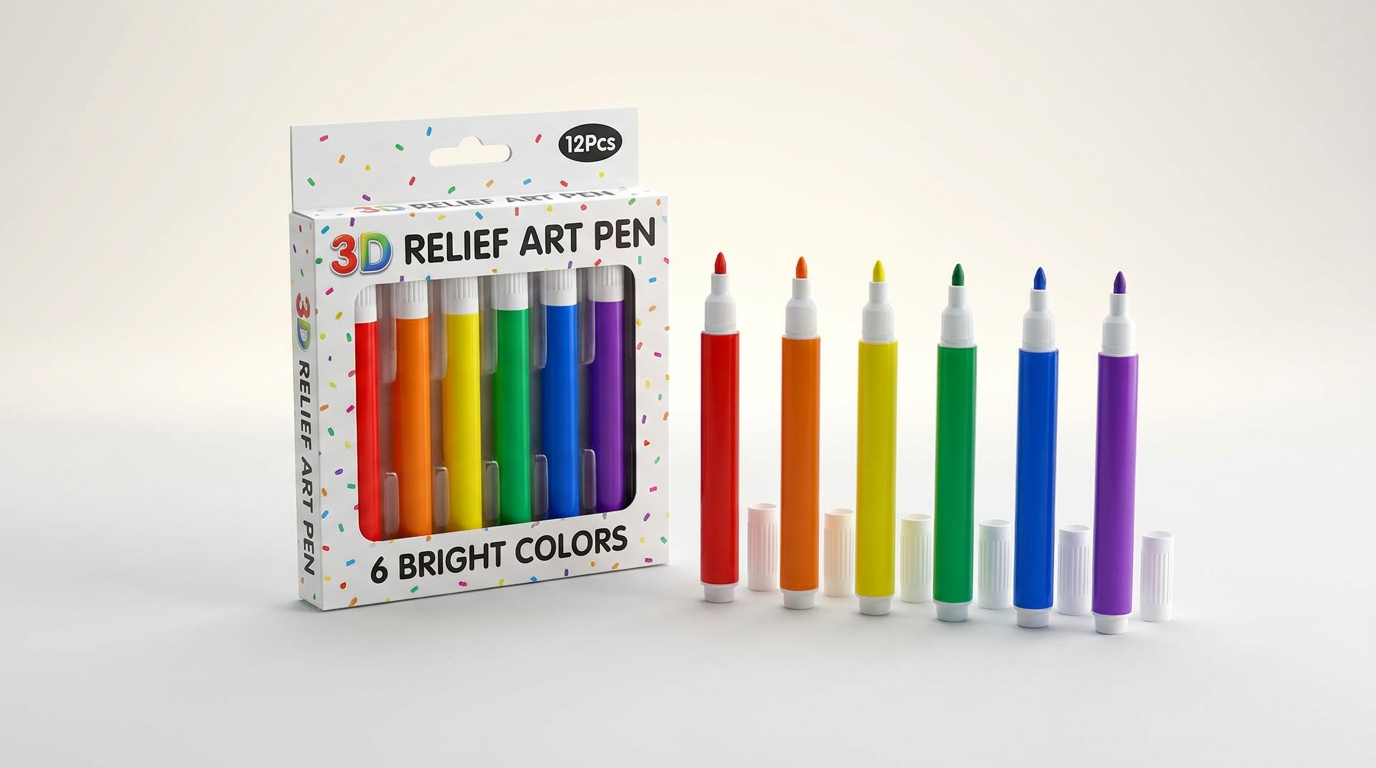
The craft market frequently trades on sensory novelty, and few concepts promise instant gratification quite like puffy ink. The Generic 3D Relief Popcorn Art Pens arrive under the guise of an entry-level additive crafting tool, promising that standard drawings will puff into tactile, popcorn-textured relief art when exposed to a simple hairdryer or heater. It is an enticing pitch for parents, educators, and hobbyists looking for a quick tactile creative experience without investing in true thermoplastic 3D pens.
Yet this product serves as a textbook example of category baiting, where low-cost liquid craft pens are misfiled into technical additive manufacturing categories to capture curiosity clicks. What buyers actually unbox are basic squeeze tubes filled with pigmented fluid that must undergo an expansion phase to deliver on their central promise. When an art tool stakes its entire identity on a mechanical phase change, anything less than distinct physical expansion renders it obsolete right out of the box.
In our evaluation based on user experiences, that central promise collapses immediately. Across hands-on use, the promised dimensional transformation simply fails to manifest, leaving behind nothing more than flat, unremarkable liquid paint that sets like standard school supplies.
What owners love
- + Six distinct colors included in the pack
- + Squeeze barrel format is simple for small hands to grasp
- + Water-based formulation washes out of fabric easily
- + Requires no heated nozzles or melting plastic
Common complaints
- − Fails to expand or puff up when heated
- − Dries flat exactly like ordinary tempera paint
- − Misleadingly categorized alongside genuine 3D printing pens
- − Thermal activation instructions do not produce advertised results
Design & Build
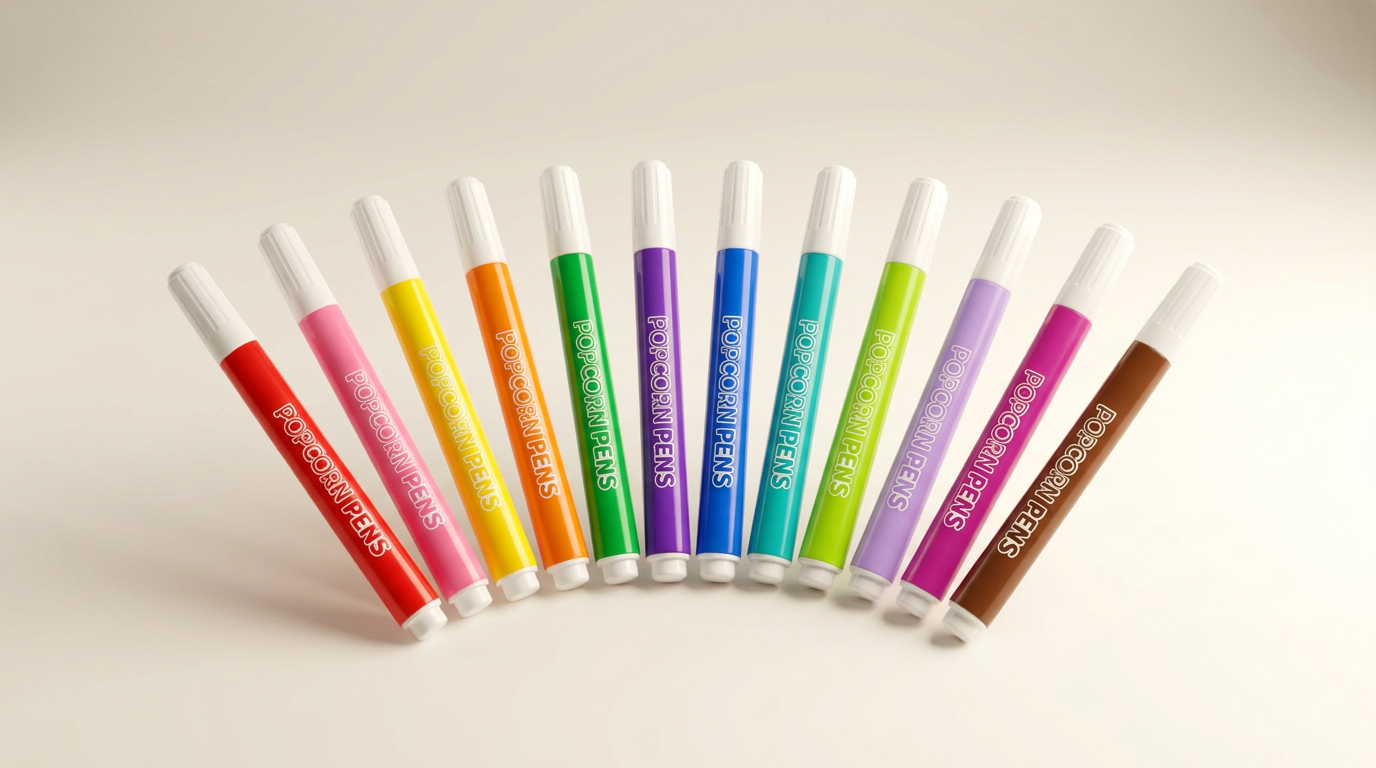
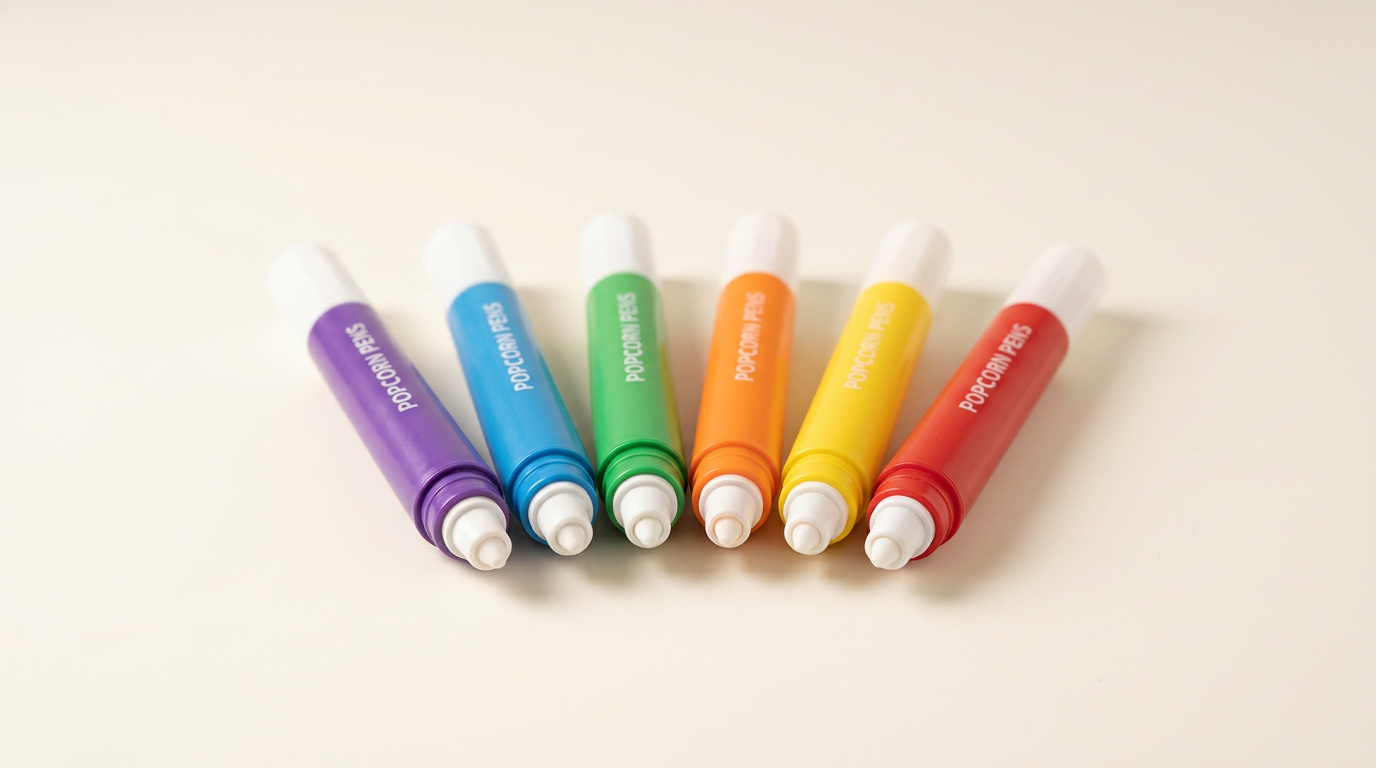
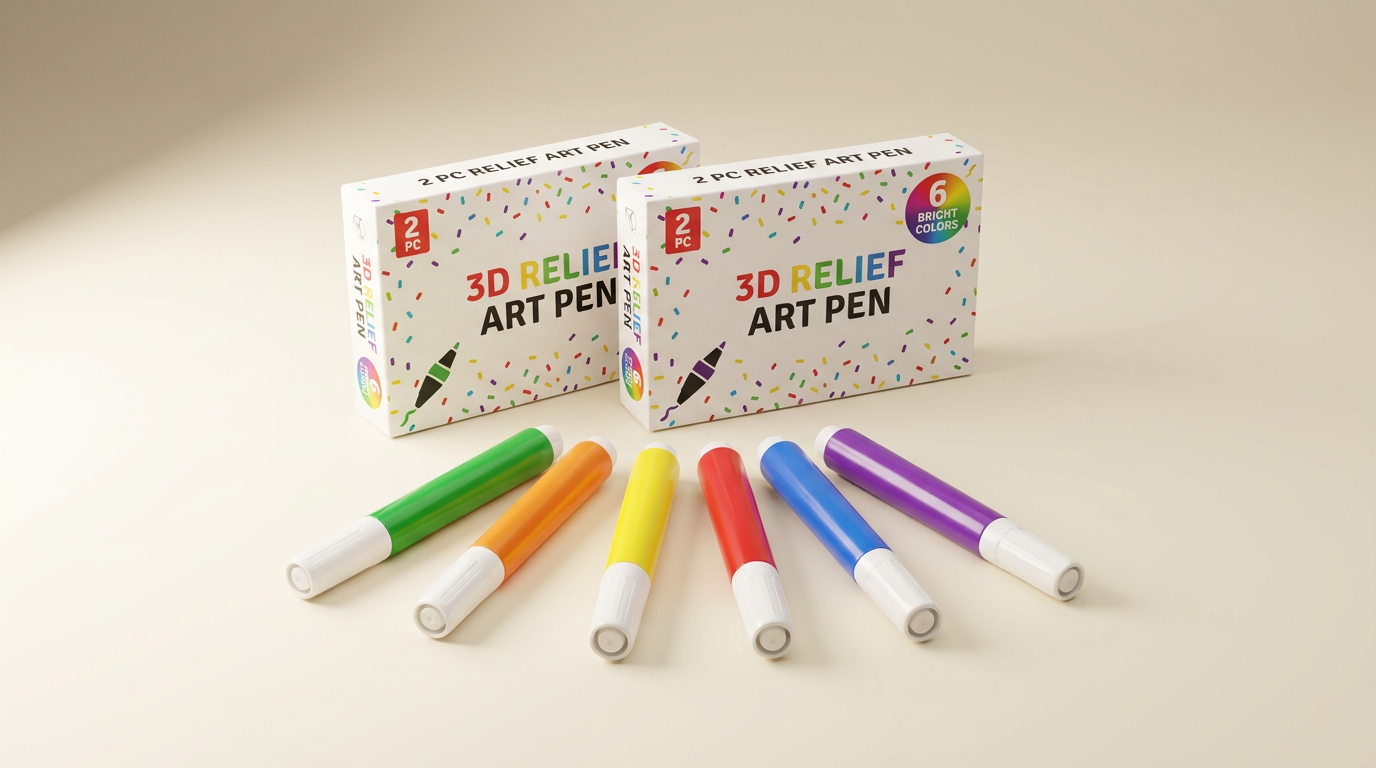
At first glance, the pack delivers twelve compact plastic squeeze pens divided across six primary and secondary colors. The physical construction relies on standard flexible barrels paired with narrow applicator tips. There are no electronic heating elements, cables, or motorized feeds here; despite being indexed alongside additive manufacturing tools, this is entirely manual stationery. The form factor is inherently accessible for children, requiring only basic grip strength to dispense fluid onto paper, cardboard, or greeting cards. However, the nozzle precision is basic, often laying down inconsistent beads of fluid rather than sharp, controlled lines. This creates an immediate friction point between the fine detailing shown in promotional media and the broad liquid deposits these applicators actually produce.
Setup & Ease of Use
Getting started is theoretically straightforward: apply the liquid to flat paper, then introduce heat using a high-setting hairdryer or localized radiant source to trigger the foaming agent. The process is completely passive compared to genuine additive tools, requiring zero calibration, temperature staging, or consumable loading. However, this workflow introduces what we call the activation tax, where the burden of completing the manufacturing process is pushed entirely onto the end user's household appliances. Squeeze-to-draw dynamics are messy, and the liquid tends to pool unpredictably, making uniform heat distribution nearly impossible without blowing wet pigment across the page with high-velocity blow dryers.
Performance in Real Use
Performance is where the product entirely detaches from its marketing claims. The defining feature, a heat-activated volumetric expansion that transforms wet strokes into popcorn-like foam, simply does not happen. Owners report that following the included heating protocols to the letter, applying direct hairdryer heat for multiple minutes, yields zero dimensional change. Instead of bubbling upward into a tactile 3D relief, the wet ink merely evaporates and sets as a thin, glossy, two-dimensional coat. The internal chemical blowing agent either degrades prior to delivery or is present in such trace amounts that it cannot overcome the surface tension of the carrier fluid. You are left with ordinary wet paint that behaves like standard craft wash.
Software & Ecosystem
Because this craft set contains no electronics, motors, or firmware, there is zero software ecosystem to navigate. The product relies solely on analog application and third-party household appliances for thermal activation. This stands in sharp contrast to true 3D printing pens that regulate tip temperatures and extrusion rates to freeze molten polymers in open air. Placing these pens within additive manufacturing categories reflects a broader marketplace taxonomy failure, tricking shoppers searching for entry-level prototyping tools into buying standard novelty craft fluid that requires separate drying appliances to do anything at all.
Value & Reliability
Priced in the cheap sub-$20 bracket, the financial risk is technically minimal, but the practical value proposition is almost non-existent. A craft supply that fails to deliver on its single distinguishing gimmick leaves the buyer with low-grade liquid colorants that underperform compared to ordinary markers or tempera pots in the same price tier. Reliability is compromised at the chemical formulation level; when multiple batches fail to produce any volumetric expansion under heat, the problem is not user error but a defective core formula. Paying for specialty textured ink and receiving ordinary flat-drying paint represents poor economy, regardless of how low the initial outlay sits.
Verdict
Stay Away - Fails completely to achieve its core heat-activated 3D effect, drying as ordinary flat paint.
This set is ostensibly designed for parents, teachers, and young crafters seeking an easy tactile craft experience without handling hot thermoplastic filaments. However, because the thermal expansion formula consistently fails to puff, there is no demographic that will be satisfied with the results.
Anyone seeking dimensional line work should skip this entirely and purchase legitimate low-temperature 3D printing pens or dedicated fabric puff paints that have verified chemical track records. Investing even a modest sum under $20 into these pens is an exercise in disappointment for children and adults alike.
Ultimately, these pens demonstrate the illusion of tactile novelty in cheap marketplace crafts, where standard water-based pigment is rebranded with dynamic claims it cannot back up. When a specialty craft tool dries flat under direct heat, it ceases to be a 3D art tool and becomes an overpriced chore for your hair dryer.
FAQ
More 3D Printing Pens reviews
This review is based on real experiences shared by owners in online communities.