
FIMXSD 300PCS 3D Scanner Markers Review: The Unsung Anchors of Scan Accuracy
This review is based on real experiences shared by owners in online communities.
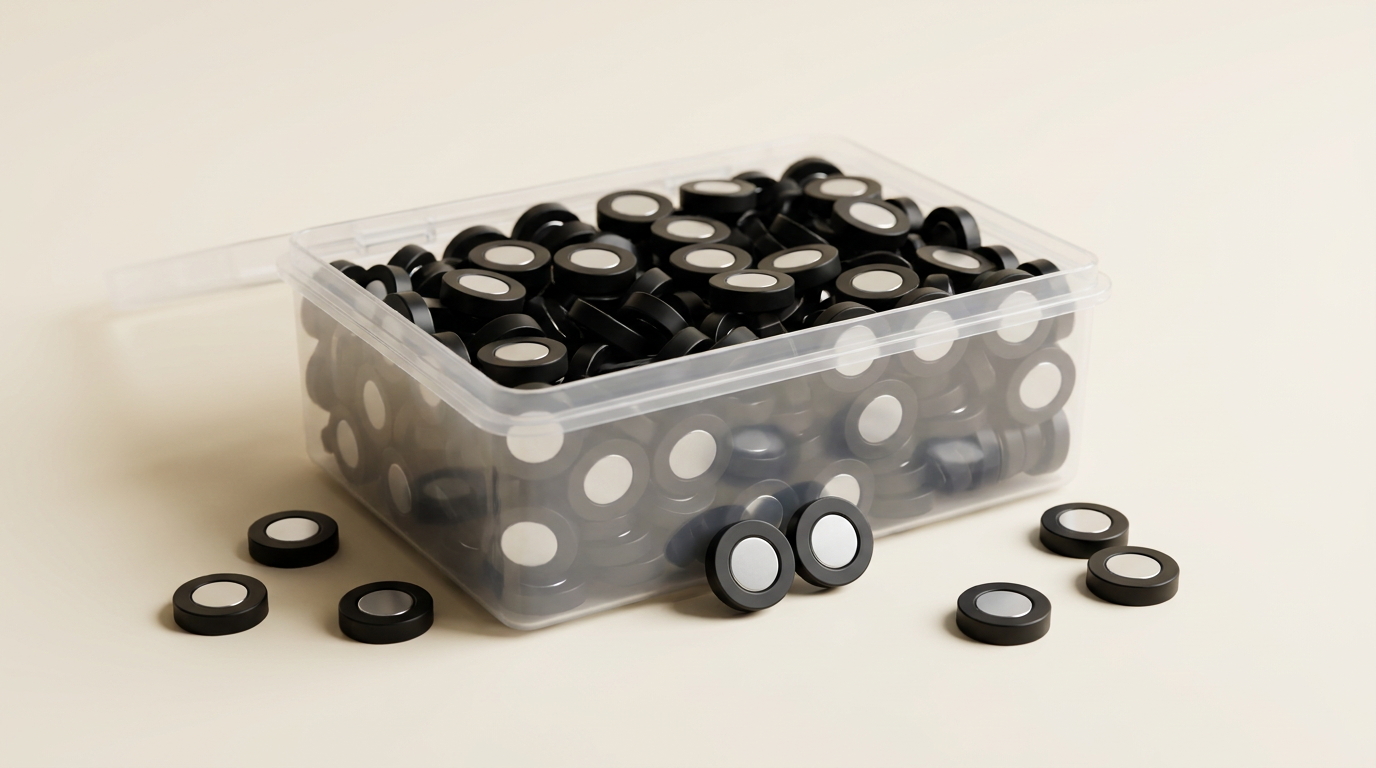
In the pursuit of perfect 3D scans, much attention focuses on the scanner hardware itself-its resolution, laser type, and software. Yet, often overlooked is the foundational element that underpins accurate tracking and stitching: the reference markers. The FIMXSD 300PCS 3D Scanner Markers represent a fundamental component of the scanning workflow, operating in the background but critical to the final output.
These magnetic markers promise reusability and high reflectivity for enhanced scan registration. They aim to solve the persistent problem of scan drift and data misalignment, a challenge that plagues both hobbyists and industrial professionals alike. This review examines whether these small, discrete points deliver on their promise, providing the necessary stability without introducing new complications.
What owners love
- + Firmly adheres to metallic surfaces
- + Leaves no residue upon removal
- + Reusable for multiple projects
- + Supports stable scan registration
- + Arrives well-packaged in an organizer
Common complaints
- − Limited magnetic adhesion to non-metallic objects
- − Requires manual placement for each scan
- − Diffuse reflection is standard, not exceptional
Design & Build
The FIMXSD 3D Scanner Markers feature a dual-material construction: a soft magnetic base and a high-contrast reflective surface. Measuring 6.0 mm inner and 10 mm outer diameter, their size is suitable for capturing fine details without overwhelming the scanned object. Owners consistently report that the markers arrive neatly organized in a clear plastic box, a small but significant detail for managing a product comprised of 300 individual pieces. The magnetic material allows for reliable attachment to ferrous surfaces, avoiding the adhesive fatigue common with sticker-based alternatives. This design implicitly addresses what we term the 'Fidelity Fade' inherent to single-use markers, where each reapplication risks reduced adhesion and uneven placement, ultimately degrading scan quality.
Setup & Ease of Use
Integrating these markers into a scanning workflow is straightforward. Users simply place them directly onto the metallic surface to be scanned. Their magnetic nature facilitates quick application and repositioning without the fuss of adhesive backing. Removal is equally simple, leaving no residue behind. This ease of use is a direct counterpoint to the operational friction introduced by traditional spray-on or sticker markers, which demand additional cleaning steps or inventory management. For objects without metallic properties, these markers necessitate an intermediate step, such as applying a metallic foil, which adds a layer of complexity not present with adhesive markers.
Performance in Real Use
The primary function of these markers is to provide consistent reference points for 3D scanners, enhancing tracking stability and accuracy. Owners report that the markers successfully 'stuck to what I stuck them to,' indicating reliable adherence during scanning sessions. The black-and-white diffuse reflective pattern is designed to maximize contrast for both white light and laser scanners. While the markers perform their basic function, the real-world impact on scan precision is largely dependent on the scanner's own capabilities and the user's placement strategy. The benefit is more about consistent tracking than a dramatic resolution boost, offering what we identify as 'Scan Anchoring Stability' by reducing data drift over complex geometries.
Software & Ecosystem
As passive components, these magnetic markers do not interact directly with scanning software. Their utility is purely physical, providing optical reference points that the scanner's internal algorithms interpret. They are broadly compatible across various 3D scanning software environments because they operate on fundamental principles of contrast and reflection, rather than proprietary digital protocols. This universal compatibility ensures they integrate seamlessly into existing setups without requiring specific drivers or software updates. Their value lies in their foundational support for the scanner's ecosystem, rather than being an active part of it.
Value & Reliability
Priced around $27 for 300 pieces, these FIMXSD markers represent a cost-effective solution for repetitive scanning tasks. Their reusability significantly extends their lifespan compared to disposable adhesive markers, reducing ongoing material costs. The robust magnetic adhesion, as reported by users, contributes to their reliability in active use. The potential for 'Value Multiplier' emerges from their reusability; a single investment supports numerous projects, contrasting with the continuous expenditure on consumables. The long-term reliability hinges on the durability of the magnetic material and the reflective coating, neither of which owners have raised concerns about to date.
Verdict
Consider - For users with frequent 3D scanning needs on metallic objects, these markers offer a practical and reusable solution.
This product is best suited for those performing regular 3D scans of metal parts, particularly in contexts like reverse engineering, quality control, or product development where objects can be easily placed on a metallic surface. Hobbyists using entry-level scanners will find the cost-effectiveness appealing for repeated projects. Conversely, users primarily scanning non-metallic objects, or those requiring highly precise placement over complex, non-ferrous geometries, may find the magnetic attachment limiting.
The FIMXSD markers underscore a critical, yet often unstated, truth about 3D scanning: the best hardware is only as good as its weakest link in the data acquisition chain. These markers provide a solid, foundational link, demonstrating that sometimes, the most effective advancements are in the tools that ensure consistent performance of existing technology, not just new technological breakthroughs. They are a quiet testament to the enduring power of practical, physical solutions in a digital-first world.
FAQ
More 3D Scanners reviews
Creality 8-inch Rotating Turntable: A Solid Scanner Accessory

Generic 12 Piece Multi-Angle Markers Review: Essential 3D Scanning Dots
3DMakerpro Moose Standard Review: High Detail for the Serious Hobbyist
EinScan SE V2 Review: Precision for Dedicated 3D Modelers
Honeywell Voyager 1452g Review: A Kit That Falls Short
Matter and Form Three Review: Precision 3D Scanning Reimagined
This review is based on real experiences shared by owners in online communities.