
TECBEARS PLA Filament Review: A Practical Choice for Everyday 3D Printing
This review is based on real experiences shared by owners in online communities.
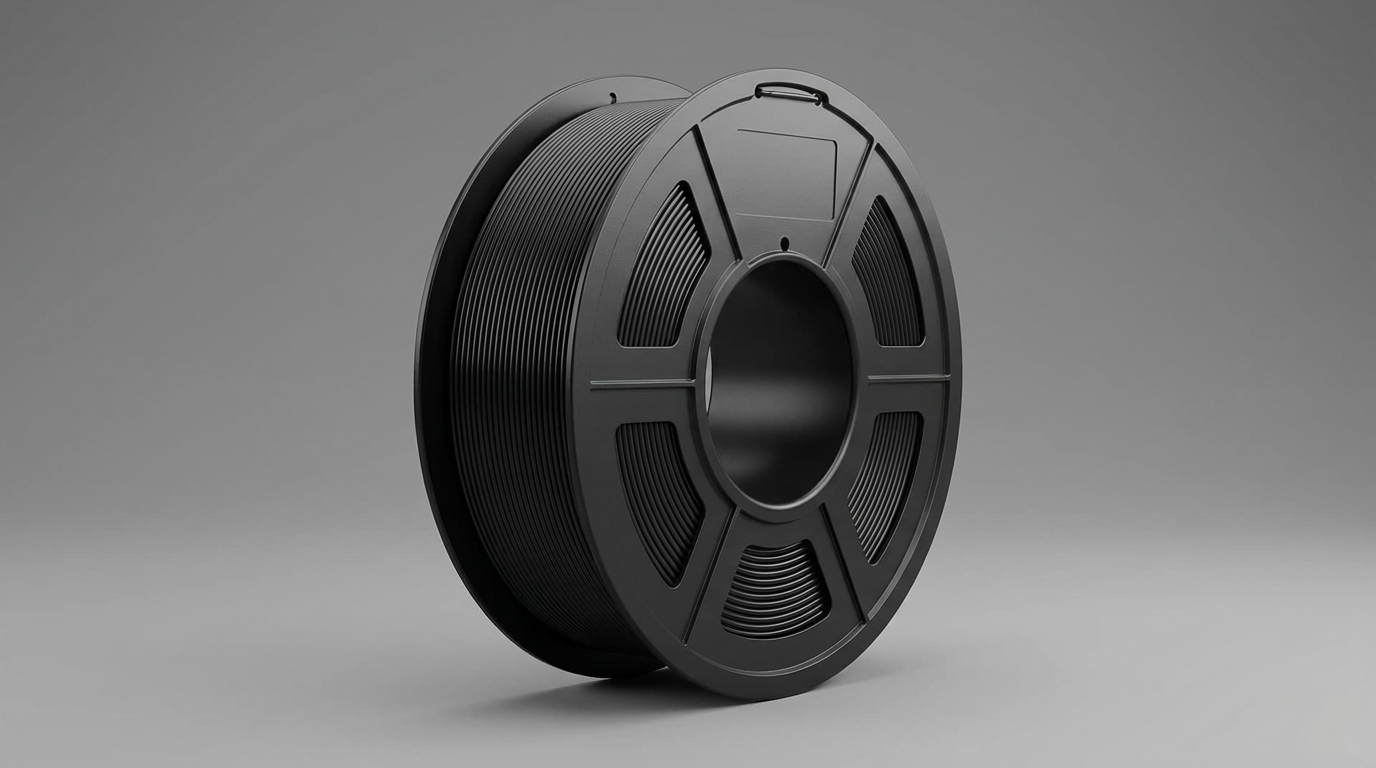
The market for FDM 3D printing filament often categorizes products by extreme ends: premium, high-performance offerings or budget options with inherent compromises. TECBEARS PLA filament, however, occupies a less-discussed but highly practical middle ground. It frequently appears as a default choice, the "go-to" for many users who prioritize consistent, unexceptional output without the higher costs of flagship brands. This positions it not as a revolutionary material, but as a reliable workhorse capable of delivering satisfactory results for a wide range of projects.
This review evaluates TECBEARS PLA 1.75mm based on extensive user experiences. We examine its print performance, adherence characteristics, and overall reliability, dissecting what makes it a frequent re-purchase for some, and a source of occasional frustration for others.
Our analysis reveals TECBEARS as a representative of the "good enough" filament category. It provides a baseline of quality that often exceeds its price point, making it suitable for hobbyists and makers who require consistent performance for functional prints, prototypes, and decorative items where ultimate material properties are not the primary concern.
What owners love
- + Consistently delivers good print quality for its price.
- + Strong bed adhesion when settings are dialed in.
- + Relatively low odor during printing.
- + Affordable, offering good value for money.
- + Works well across various FDM 3D printer models.
- + Available in a range of colors, though not extensively wide.
Common complaints
- − Occasional reports of tangles or poor winding mid-spool.
- − Some users find it more brittle than other brands.
- − Potential for initial adhesion issues requiring temperature adjustments.
- − Limited color selection compared to premium brands.
- − Durability concerns over long-term biodegradability for some applications.
Design & Build
TECBEARS PLA arrives on a standard plastic spool, vacuum-sealed with desiccant, which is a common and expected presentation for filament in this category. The material itself is a standard PLA (Polylactic Acid) with a stated dimensional accuracy of +/- 0.02 mm. Owners frequently comment on the appealing colors, noting a slight sheen on some black variants that can mimic a metallic finish. The spools adhere to common dimensions, facilitating compatibility with most FDM printers, though some users with specific setups, such as Bambu Lab's AMS, note that the larger center hole may prevent direct use with certain accessories like re-spoolers or desiccant posts. The physical properties of the filament itself are generally described as adequate, though some users perceive it as slightly more brittle than other brands. This observation introduces the 'flexibility trade-off,' where the material's inherent stiffness, while beneficial for geometric stability, may increase susceptibility to snapping under tension or tight bends.
Setup & Ease of Use
Initial setup with TECBEARS PLA generally mirrors that of other PLA filaments. However, owner feedback reveals a recurring theme: new users or those switching from other brands often need to fine-tune their printer settings. Recommended extrusion temperatures are 200°C - 230°C and bed temperatures 50°C - 65°C. Many users report excellent results around 200°C for the nozzle and 50°C for the bed, with specific adjustments sometimes required for initial layer adhesion. For example, some successfully use 210°C nozzle and 70°C bed temperatures, especially on glass surfaces, to overcome initial peeling. This tuning process, while not unique to TECBEARS, suggests an initial learning curve that is slightly elevated compared to 'plug-and-play' filaments. The occasional reports of spools with mild tangles, particularly mid-roll, highlight a 'spool integrity lottery' where mechanical winding inconsistencies may sporadically interrupt prints, requiring user intervention.
Performance in Real Use
Once dialed in, TECBEARS PLA generally performs well for general 3D printing tasks. Users consistently report good layer adhesion, minimal stringing, and clean prints. The material adheres reliably to various print surfaces, including PEI and BuildTak, often requiring slightly higher bed temperatures than the lower end of the recommended range to ensure consistent first-layer stick. The 'print fidelity curve' for this filament indicates that while it may not produce the absolute sharpest details or most flawless surfaces straight out of the box, with calibration, it achieves results that satisfy the majority of hobbyist and functional printing demands. Odor during printing is noted as low, contributing to a better user environment. Despite positive experiences, some long-term users recount instances of entire rolls being off-spec or exhibiting issues like brittleness, underscoring that quality control, while generally good, is not infallible. These anomalies mean that occasional 'bad batch' experiences are part of the landscape for budget-conscious filaments, necessitating a degree of user patience and troubleshooting.
Software & Ecosystem
TECBEARS PLA operates within the standard FDM 3D printing ecosystem, meaning it is compatible with most FDM printers and common slicing software like Cura or PrusaSlicer. Its open-source nature, being a generic PLA, means it does not require proprietary software or specialized profiles. Users often start with generic PLA profiles and make minor adjustments to temperature and retraction settings to optimize performance on their specific machine. The wide compatibility is a significant advantage, allowing users to integrate it seamlessly into existing workflows without significant hardware or software changes. The primary adjustments revolve around the physical extrusion and cooling, confirming that this filament acts as a predictable baseline, allowing users to focus on print design rather than exotic material handling. Compatibility with specialized systems like the Bambu Lab AMS is possible, though the spool design may require minor user modifications or adapters for optimal functionality.
Value & Reliability
TECBEARS PLA stands out primarily for its value proposition, typically selling at a price point well under $20 per kilogram. This affordability, combined with generally consistent printing results, positions it as a reliable option for bulk printing or for projects where cost-effectiveness is a key driver. Many owners testify to purchasing multiple rolls, with some having processed dozens, indicating a high rate of re-purchase. The long-term reliability exhibits some variability; while most experiences are positive, a minority report a "Jekyll and Hyde" characteristic, where an occasional roll or even a portion of a roll might present unexpected challenges like extreme brittleness or tangles. This suggests a 'batch variation lottery,' where the overall product reliability is high, but isolated incidents can occur. For its price, however, owners often find that the occasional troubleshooting is a worthwhile trade-off for the savings and satisfactory output it provides.
Verdict
Buy - TECBEARS PLA offers a commendable balance of print quality and affordability for everyday 3D printing.
This filament is an excellent choice for hobbyists, educators, or anyone requiring a cost-effective material for functional prototypes, general decorative objects, or bulk printing. At its price point, typically under $20 per spool, it repeatedly delivers satisfactory results across a range of FDM printers. Users comfortable with minor temperature and bed adhesion adjustments will find it a reliable workhorse. Those expecting the absolute highest print fidelity, specialized material properties, or entirely struggle-free mid-roll winding should consider more premium options. For the vast majority of common 3D printing tasks, TECBEARS presents a compelling economic proposition.
What many buyers miss about TECBEARS PLA is its true market position not as a budget disruptor, but as the quintessential 'default mode' filament. It sets the functional baseline against which other value-oriented filaments are often unconsciously measured. It succeeds by being consistently good enough, revealing that for many users, the pursuit of marginal gains in print quality or exotic material properties is often secondary to reliable, economical output for iterative design and everyday creation.
FAQ
More 3D Printing Supplies reviews
FLASHFORGE Rapid PLA: The 'Stealth Performance' Filament
RAMBERY Silk Dual Color PLA Filament Review: Aesthetic Impact for Small Prints
eSUN PLA+ Filament: The Go-To Choice for High-Speed 3D Printers
SUNLU High Speed PETG Filament Review: The 'Dry-First Economy' Advantage
ERYONE Silk Filament PLA+ Review: The Glossy Aesthetic Standard
ELEGOO Matte PLA Filament Bundle Review: A Premium Material on a Budget
This review is based on real experiences shared by owners in online communities.