
QIDI Q2 3D Printer Review: High-Temp Power at a Consumer Price
This review is based on real experiences shared by owners in online communities.
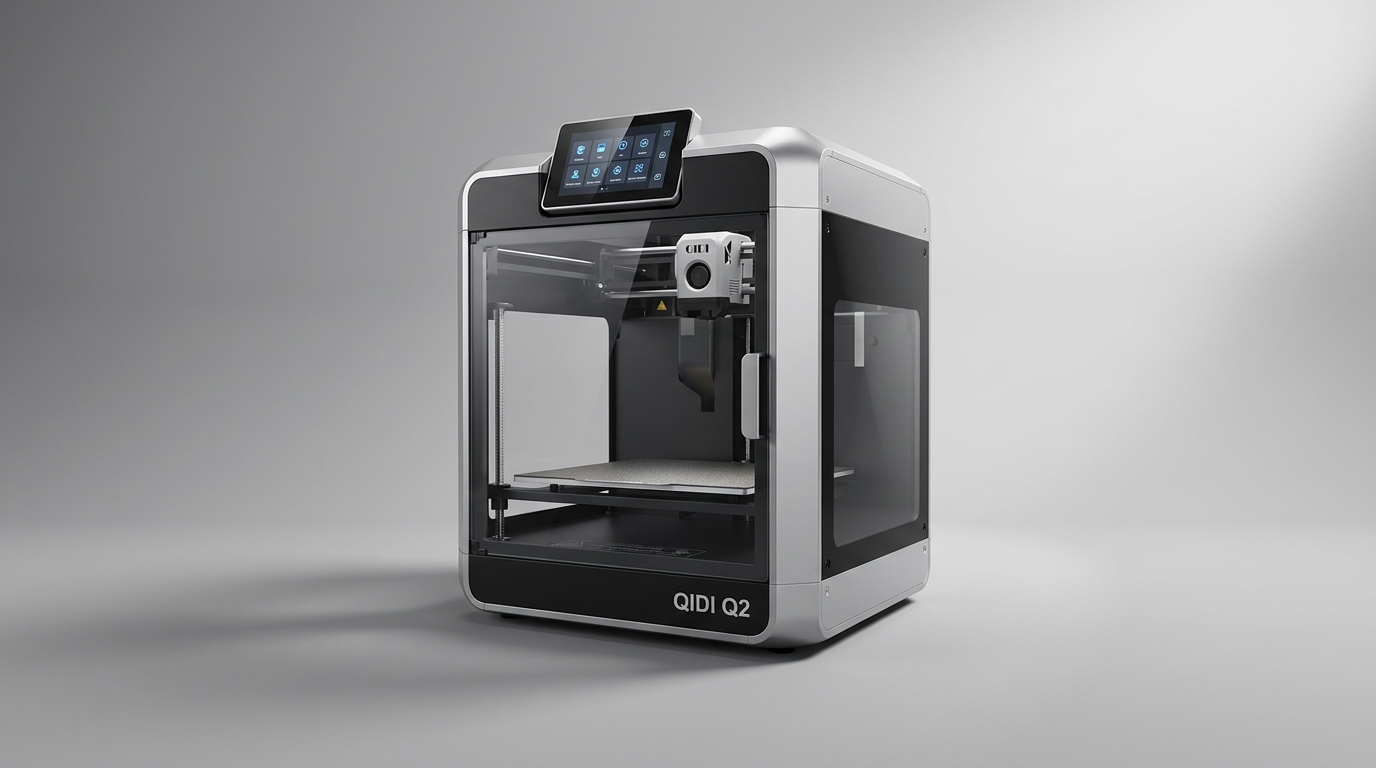
While most desktop CoreXY machines compete on flashy speed figures and multi-color trinkets, the QIDI Q2 stakes its claim on active thermal parity. In a category where enclosed chambers typically rely on residual heat from the build plate, QIDI brings a dedicated 65-degree Celsius PTC chamber heater and a 370-degree Celsius hotend down to the roughly $500 price band. That single engineering choice shifts the machine out of the toy category and into genuine small-shop manufacturing.
This is a deliberate alternative for buyers suffering from walled-garden fatigue. Rather than locking users behind proprietary cloud platforms and closed firmware, the Q2 runs on Klipper and pairs natively with OrcaSlicer. It targets the pragmatic fabricator who cares less about slick mobile notifications and more about printing dimensionally accurate nylon, polycarbonate, and carbon-fiber composites without catastrophic edge warping.
However, unlocking high-temp engineering capability at this price point requires what we call the technician's compact. Owners consistently find that while the core motion system and thermal hardware punch far above their class, the out-of-the-box experience has rough edges. Between packaging vulnerabilities and minor extruder maintenance, this is a tool built for people who are comfortable turning a hex key when duty calls.
What owners love
- + Dedicated 65-degree Celsius heated chamber prevents warping on ABS and ASA
- + High-temperature 370-degree nozzle handles technical and abrasive filaments
- + Open Klipper foundation avoids closed cloud ecosystems
- + Generous 270 x 270 mm build plate offers more working area than rivals
- + Fast, responsive customer support replaces damaged components without friction
Common complaints
- − High incidence of LCD screens arriving cracked during transit
- − Included paper manual is unhelpful compared to community video guides
- − Clearing extruder jams requires mechanical disassembly and patience
- − Lacks the zero-effort appliance polish of mainstream consumer brands
Design & Build
The QIDI Q2 is built on a rigid, all-metal CoreXY frame encased in an insulated, flame-retardant outer shell. Its headline hardware features are rare in this price bracket: linear rails on critical axes, an upgraded 1.5GT belt system designed to suppress fine vibration artifacts, and an integrated carbon and HEPA filtration setup. The 270 x 270 mm build volume provides a noticeable step up in usable surface area over the standard 256 mm square beds common to competitors, giving larger functional brackets and enclosures breathing room.
Yet the physical execution reveals an obvious quality-control blind spot in shipping preparation. A conspicuous number of owners report receiving their printers with cracked LCD touchscreens straight out of the crate. While the internal steel skeleton and motion system arrive intact, the exterior display mount appears vulnerable to rough handling in transit. The printer also requires an early self-printed modification: printing a top-lid riser is essentially mandatory to prevent the PTFE guide tube from rubbing against the glass roof during tall prints.
Setup & Ease of Use
Unboxing the Q2 is physically straightforward because the unit ships mostly pre-assembled, but the onboarding documentation leaves much to be desired. The included paper booklet is notoriously thin on practical detail; owners across the board advise skipping it entirely in favor of community teardowns and manufacturer video guides. Once plugged in, the automated calibration routines take over smoothly. The nozzle itself doubles as the bed-leveling probe, eliminating the offset drift that often plagues separate inductive or optical sensors.
Day-to-day operation strikes a middle ground between consumer simplicity and industrial utility. First-layer adhesion on the textured build plate is remarkably consistent, sticking aggressively when the chamber is hot and releasing cleanly once cool. However, when things go wrong, the machine demands user participation. Clearing a sheared piece of filament from the internal drive gears or disassembling a clogged hotend involves real wrench work. It is not an intimidating process for experienced makers, but beginners who expect an invisible, hands-off appliance will face a learning curve.
Performance in Real Use
Where the QIDI Q2 decisively earns its keep is in its thermal discipline. In passive chambers, large ABS and ASA prints frequently pull away from the bed due to internal draft stresses. The Q2's active 65-degree chamber heater completely changes the physics of the print, keeping ambient air hot enough to virtually eliminate delamination and warping on technical materials. Users running PETG-CF, polycarbonate blends, and high-temp nylon report flat, dimensionally reliable parts straight off the plate.
The advertised 600 mm/s print speeds are mechanically possible, but pushing the machine to its absolute velocity limit induces noise and surface compromises. Experienced owners routinely dial volumetric speeds back to moderate thresholds, prioritizing layer strength and pristine surface finishes over headline sprint times. Even at conservative settings, the machine runs circles around older bed-slingers while producing dense, structurally sound functional parts.
Software & Ecosystem
QIDI's decision to embrace open-source roots pays massive dividends in daily workflow. The Q2 runs a full implementation of Klipper, meaning users are not beholden to proprietary slicing algorithms or locked-down cloud servers. It integrates directly with OrcaSlicer, allowing power users to tune pressure advance, input shaping, and thermal ramps with surgical precision. For workshops that restrict internet-connected cameras and third-party cloud services for security reasons, local-network control via LAN is a massive structural advantage.
For multi-material workflows, the machine pairs with the external QIDI Box, which handles automatic spool changes and active drying. While the dry-while-print capability is invaluable for hygroscopic technical materials like nylon and PETG, multi-spool routing introduces additional mechanical failure points. Owners note that thin or brittle filaments can occasionally snap within the feeder tubes, necessitating manual teardowns of the feeder modules to clear obstructions.
Value & Reliability
Priced in the competitive $450 to $500 range, the QIDI Q2 offers an unmatched ratio of thermal capability to cost. No other machine in this pricing band provides an actively heated chamber and high-temp extrusion without aftermarket modifications. Long-term owners log hundreds of print hours across commercial prototyping jobs with minimal mechanical degradation, treating the machine as an unattended factory unit.
The standout factor in the Q2's reliability profile is QIDI's customer support operation. In an industry where budget printer support often means weeks of automated email loops, QIDI's technicians are remarkably proactive. When owners report the aforementioned cracked screens, jammed hotends, or fan failures, support agents routinely diagnose the problem via email and air-mail replacement assemblies without friction. You are buying into a system where minor hardware faults are acknowledged and swiftly remedied with free parts rather than bureaucratic denials.
Verdict
Buy - The QIDI Q2 delivers genuine industrial material capability and open firmware at roughly $500, provided you accept a hands-on approach to hardware maintenance.
This printer is tailor-made for functional makers, engineers, and small-batch fabricators who need to run ABS, ASA, and carbon-fiber blends without the warping penalties of passive enclosures. If you value open Klipper software, local-network control, and an expansive 270 mm bed, it is one of the most capable tools currently on the market. Those who want a purely ornamental multi-color appliance, or who recoil at the idea of taking an extruder apart to clear a jam, should look toward more insulated consumer brands instead.
The QIDI Q2 represents a necessary counter-movement in additive manufacturing: it rejects the appliance-first philosophy that trades repairability and material freedom for a shiny, locked-down mobile app. It does not hide its mechanical nature behind plastic veneers. It expects you to understand your tool, and in return, it produces functional engineering components that costlier machines still struggle to print reliably.
FAQ
More 3D Printers reviews
Flashforge Adventurer 5M Smooth PC Plate Review
FLASHFORGE Creator 5 Pro Review: Multi-Toolhead Efficiency
HP OfficeJet Pro 9135 Review: Two Trays and a Tight Leash
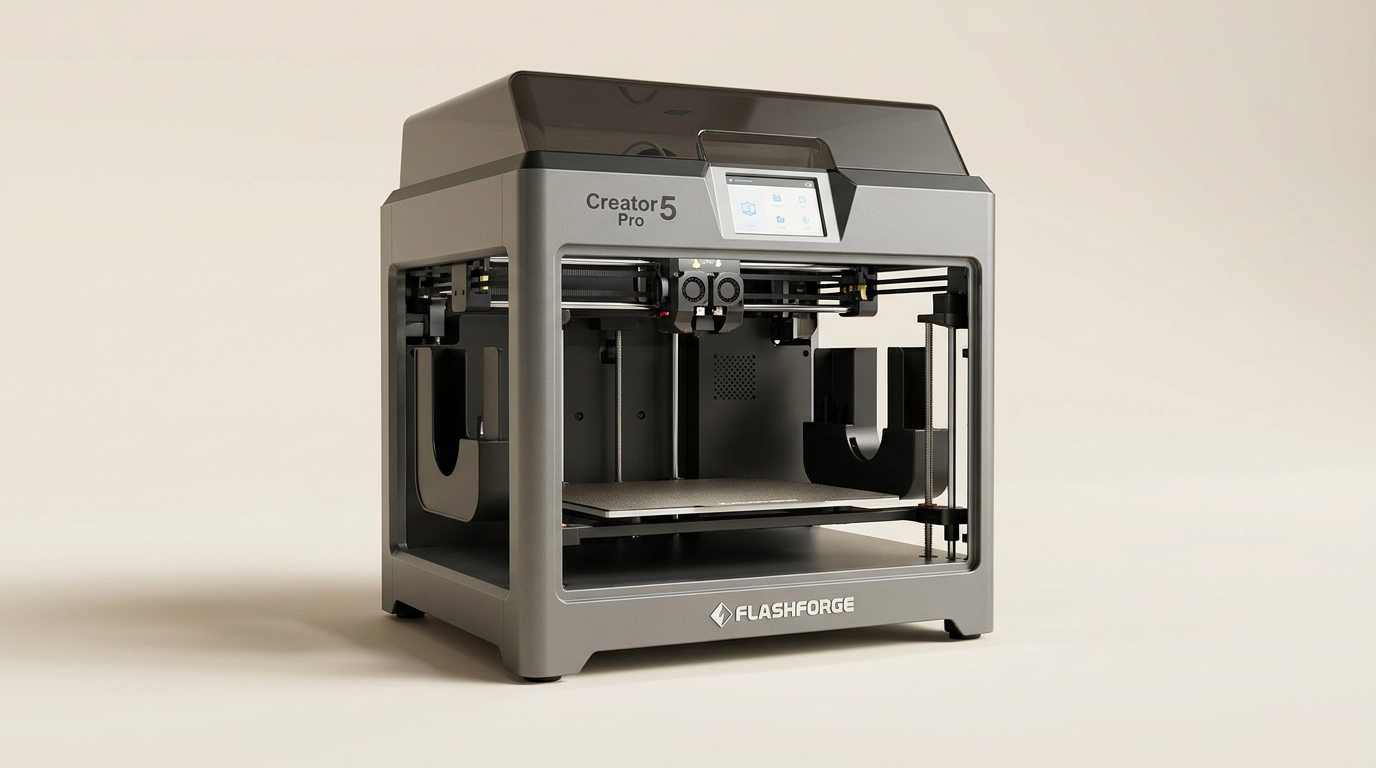
Flashforge Creator 5 Pro Review: Multi-Material Toolchanger
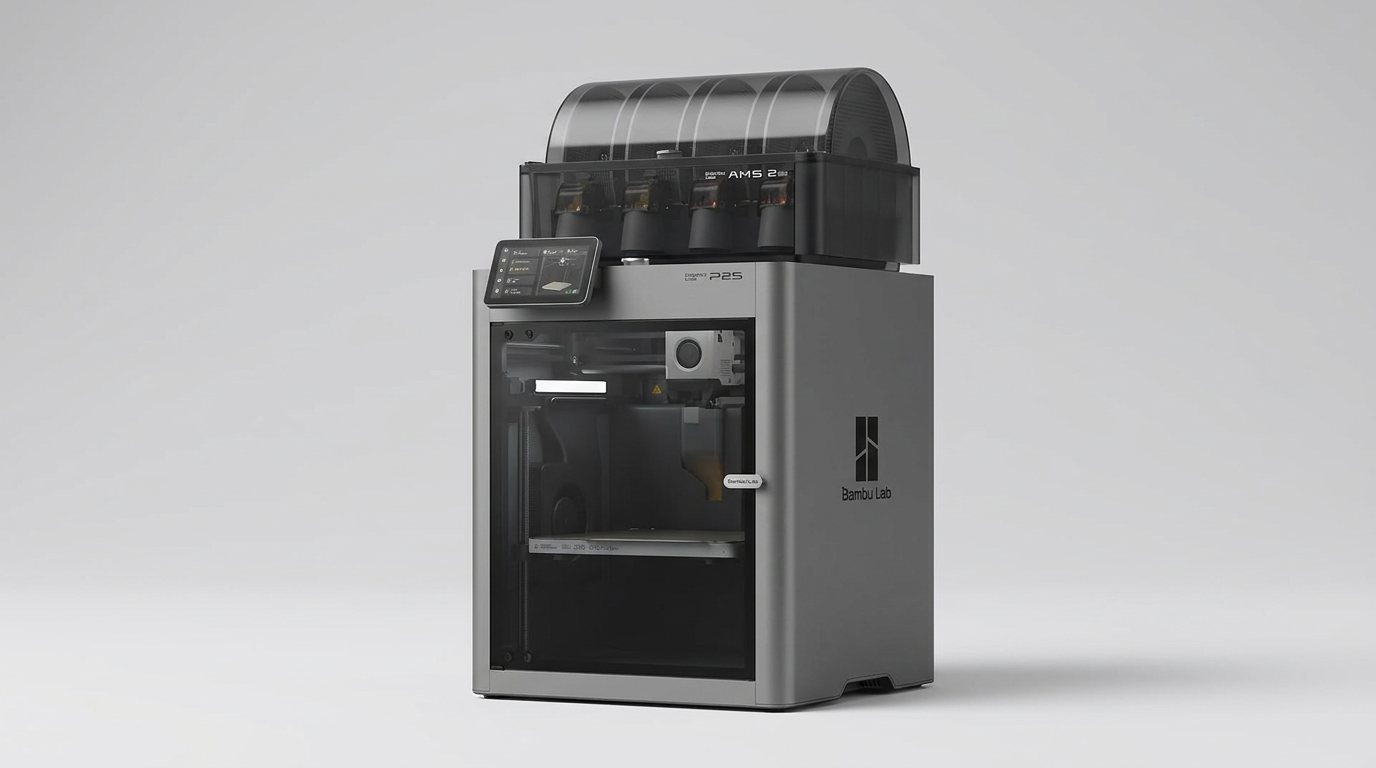
Bambu Lab P2S Combo Review: The 3D Printer Appliance
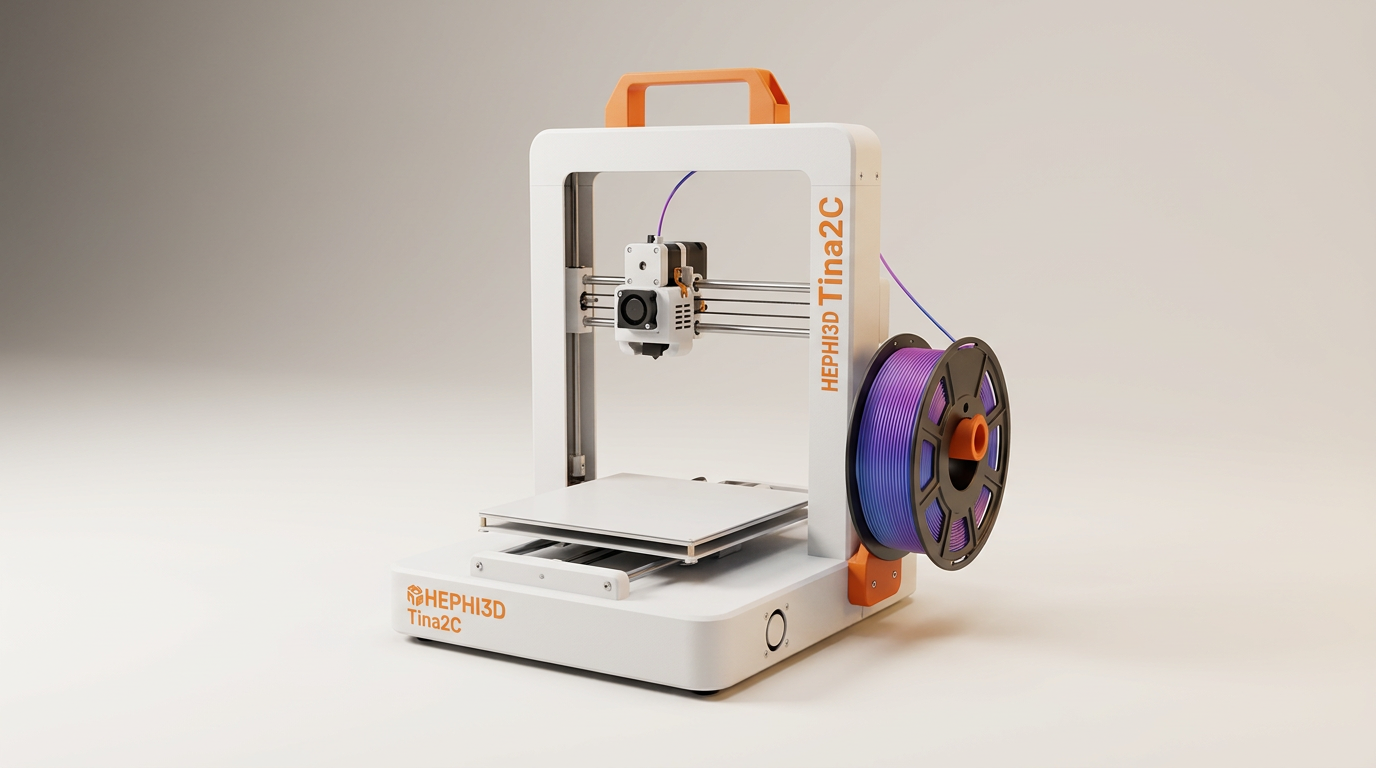
Hephi3d Tina2C Review: An Entry-Level 3D Printer for Kids
This review is based on real experiences shared by owners in online communities.