
MYNT3D Junior2 3D Pen Review: A Low-Temp Entry Point for Young Makers
This review is based on real experiences shared by owners in online communities.
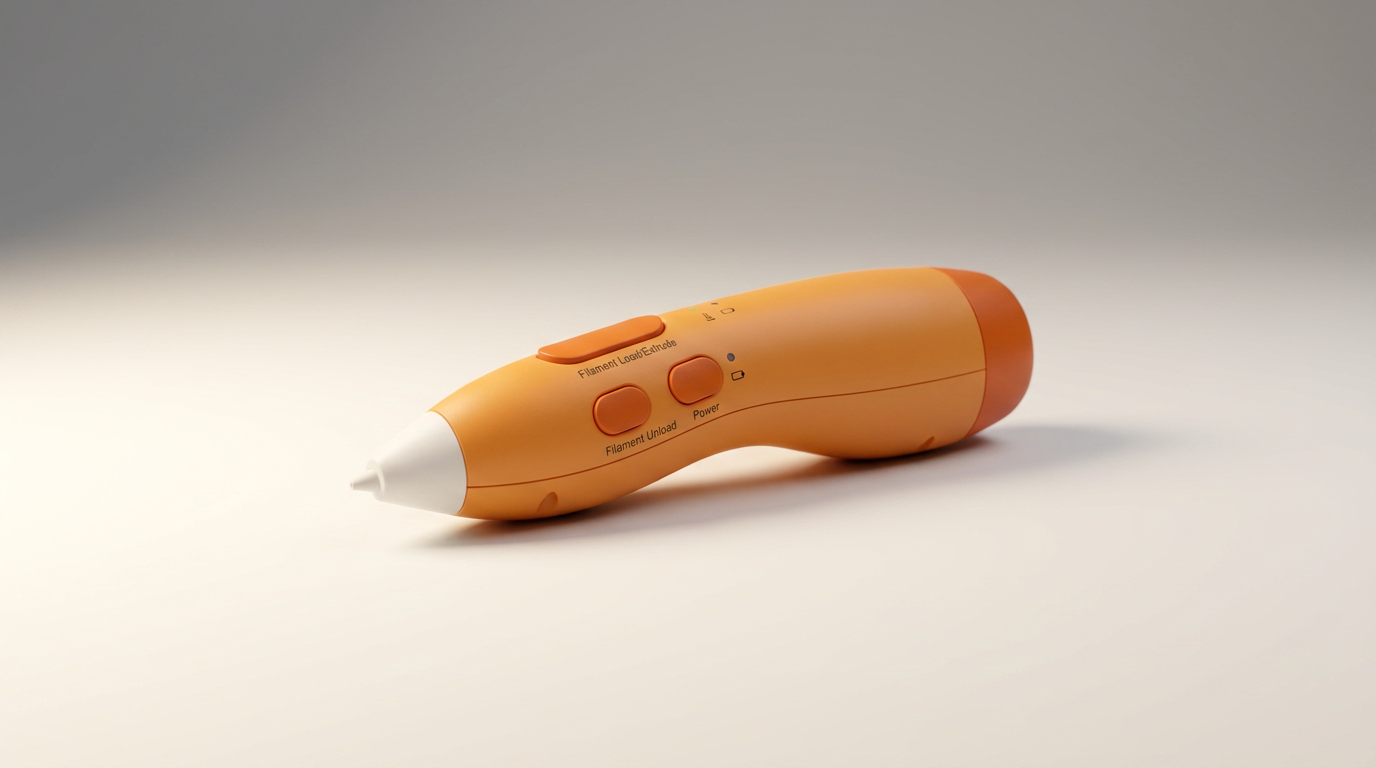
The MYNT3D Junior2 aims to democratize 3D creation for younger users, carving out a niche in a category often dominated by tools requiring higher temperatures and more advanced handling. Unlike many consumer 3D pens, the Junior2 explicitly eschews compatibility with standard ABS and PLA filaments, instead opting for a proprietary low-temperature PCL material. This design choice represents a calculated trade-off: prioritize safety for small hands over material versatility and structural rigidity.
This deliberate focus on child-centric safety positions the Junior2 not as a miniature professional tool, but as an introductory art supply, akin to a hot glue gun for plastic. Its success hinges on whether this specialized approach delivers a genuinely positive and frustration-free experience for its target audience, or if the limitations inherent in low-temperature PCL filament ultimately hobble its creative potential. The Junior2 forces a re-evaluation of what a 3D pen for kids should be, asking if simplified safety outweighs broader utility.
Owners consistently praise the pen's immediate appeal to children, who find the concept engaging. However, the unique material requirements and power management present an interesting friction point. Understanding this 'walled garden' approach to filament and its implications for sustained use is critical for potential buyers.
What owners love
- + Child-safe low-temperature nozzle prevents burns
- + Easy for young children to use without extensive assistance
- + Promotes creative engagement and hands-on learning
- + Ergonomic design suitable for small hands
- + Battery-powered for portability
Common complaints
- − Strictly uses proprietary PCL filament, limiting options
- − Short battery life, often requiring frequent recharging
- − Filament can be difficult to source and more expensive
- − Output is flexible, limiting structural integrity of creations
- − Some units experience early clogging or outright failure
Design & Build
The MYNT3D Junior2 features a larger, more ergonomic design, specifically engineered for smaller hands. This physical form factor, combined with a low-temperature nozzle, directly addresses a primary concern for parents: safety. Owners frequently highlight this low operating temperature as a significant advantage, confirming that the extruded filament is cool enough to prevent burns. This design choice, while excellent for child safety, means the pen is incompatible with common 3D printing plastics like ABS and PLA, a critical design constraint that defines its material ecosystem. This creates a 'safety tax' where material options are limited in exchange for peace of mind.
Setup & Ease of Use
Setting up the Junior2 is generally straightforward. The pen comes with introductory filament and basic stencils, allowing children to begin creating almost immediately. Owners report that children as young as 7 or 8 years old can operate the pen independently, a testament to its simplified controls. However, some users note the extrusion speed can be fast, even for adults, suggesting a slight learning curve for precise control. The manufacturer's inclusion of a USB charging cable, but not an AC adapter, is a minor inconvenience that aligns with common packaging trends but requires users to source their own power brick.
Performance in Real Use
In practice, the Junior2 successfully engages young users, who find it exciting to bring their drawings into three dimensions. The low-temperature PCL filament, while safe, results in creations that are notably flexible rather than rigid. This characteristic can be a 'structural ceiling' for ambitious projects, as some owners found it challenging to create self-supporting structures like standing photo frames or intricate models. The pen's battery life is a recurring complaint; several parents indicate it lasts only 15 to 20 minutes before requiring a recharge, which can interrupt creative flow and lead to frustration for both child and parent. This short run-time positions it more as a short-burst activity tool than an extended creative session device.
Software & Ecosystem
The MYNT3D Junior2 operates within a closed ecosystem, requiring specific low-temperature 1.75mm PCL filament. This proprietary nature is the source of significant user frustration. While intended to ensure safety and prevent clogging, it creates a 'refill scarcity' issue. Owners report considerable difficulty in sourcing compatible filament, often purchasing incorrect types that lead to pen damage and clogs. This can quickly render the pen unusable once the initial supply runs out, transforming a seemingly good value into a single-use toy if refills are not carefully researched and acquired from the outset. The reliance on a specific material type is a hidden cost of this particular product.
Value & Reliability
Initial impressions of the Junior2 often lean positive, with many seeing it as a good gift. However, long-term reliability and the cost of ownership become points of contention. Several owners report the pen malfunctioning or clogging after only a few uses or within a few months. The difficulty in finding appropriate filament refills exacerbates this issue, turning a relatively affordable initial purchase into a potentially expensive paperweight. The manufacturer's customer service has also been cited as unresponsive when product faults arise. This suggests a potential 'disposable tech' lifecycle, where the product's novelty outweighs its longevity, particularly given its reliance on a specialized, often hard-to-find consumable.
Verdict
Consider - The MYNT3D Junior2 is a suitable entry point for very young children interested in 3D art, but only if its material limitations are understood upfront.
This pen is best for parents seeking a genuinely child-safe 3D drawing tool for kids under 10, prioritizing low temperature over material strength or versatility. It is a good choice for short, supervised creative sessions where the goal is exploration and immediate gratification, not durable constructions. Those who anticipate frequent, prolonged use or expect to create structurally sound objects should look elsewhere.
The Junior2 exemplifies the 'safety-first trap' in toy design: while the low-temperature operation is a clear win for safety, the resulting closed filament ecosystem and material properties create an unexpected long-term friction point. Buyers must accept that this pen offers a specific, constrained creative experience, prioritizing play protection at the expense of widely available consumables and durable output. It's a drawing tool, not a construction device.
FAQ
More 3D Printing Pens reviews
SCRIB3D Advanced 3D Printing Pen Review: Beyond the Hobbyist
MYNT3D Super 3D Pen Review: A Low-Cost Creative Gateway
MYNT3D Professional Printing 3D Pen Review: Precision for Play
Lebakort Storage Case Review: An Essential 3Doodler Pen Companion
RLSOCO 3D Printing Pen Case Review: Beyond the Printer
KEZIGLOW 3D Pen Filament: A Safe and Vibrant Option for Young Artists
This review is based on real experiences shared by owners in online communities.