
Magic Popcorn Pen Review: Flat Results and Heat Woes
By AValidReview.
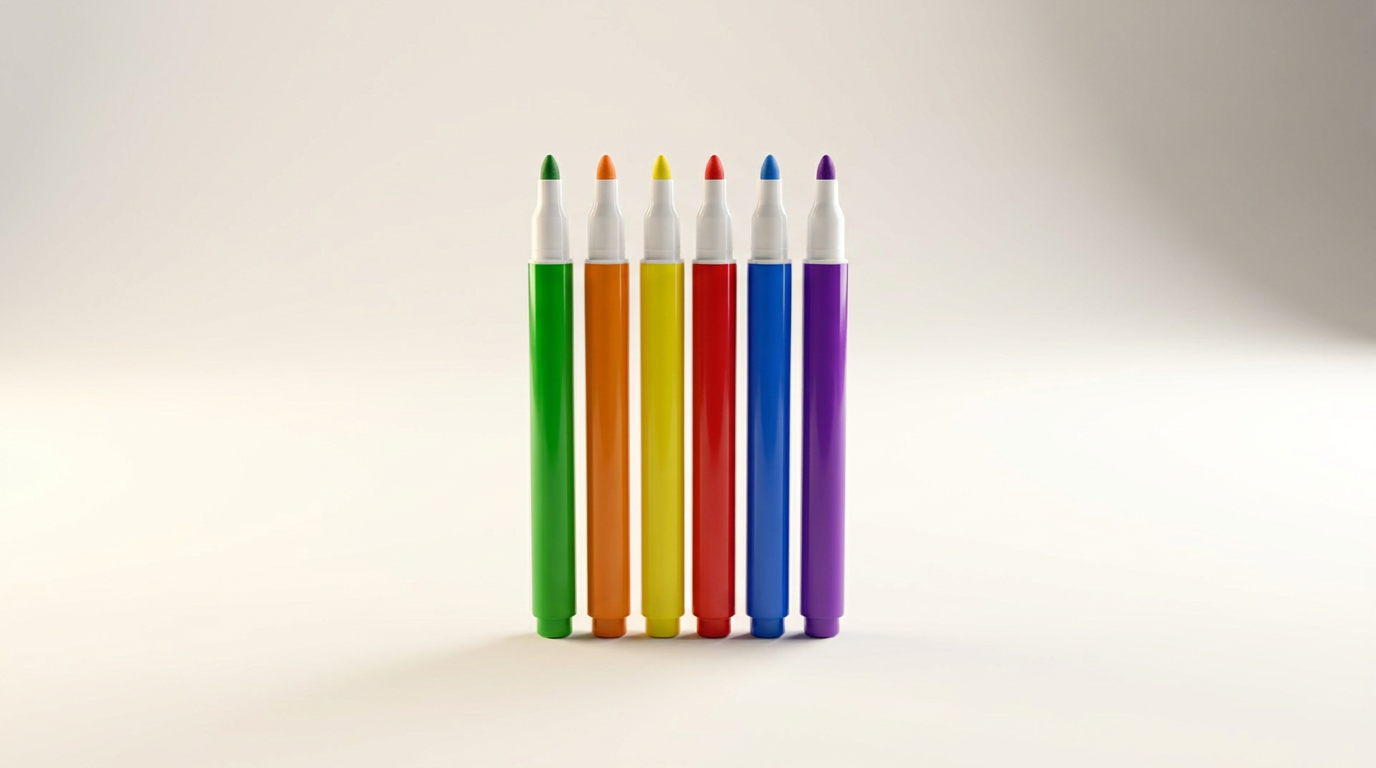
The modern craft aisle frequently borrows terminology from additive manufacturing, promising dimensional texture through simple chemical reactions. The Magic Popcorn Pen set attempts this by pairing expandable liquid ink with thermal activation, claiming to transform wet doodles into raised, foam-like relief art with the aid of a household hair dryer. It presents an enticing prospect for cards and scrapbooking, promising tactile flair without the hardware investment of an actual extrusion pen.
Yet this category is plagued by what can be termed the thermal activation trap: the gap between the heat energy required to trigger volumetric expansion and what a standard hair dryer can deliver safely to paper. When the underlying ink formulation resists expansion at normal household temperatures, the craft experience breaks down instantly.
Rather than an intuitive maker tool, this six-color generic kit exposes the physical limits of expandable novelty stationery. Early buyer feedback reveals fundamental flaws in flow control and heat response that prevent it from fulfilling its tactile promise.
What owners love
- + Inexpensive entry point under $15
- + Six-color assortment covers basic palettes
- + Washable ink simplifies workspace cleanup
- + Standard pen form factor fits craft organizers
Common complaints
- − Ink dispenses in uneven gloops instead of fine lines
- − Requires excessive hair dryer heating to initiate bubbling
- − Final artwork often dries flat with negligible relief
- − Frustrating workflow for young children and group activities
Design & Build
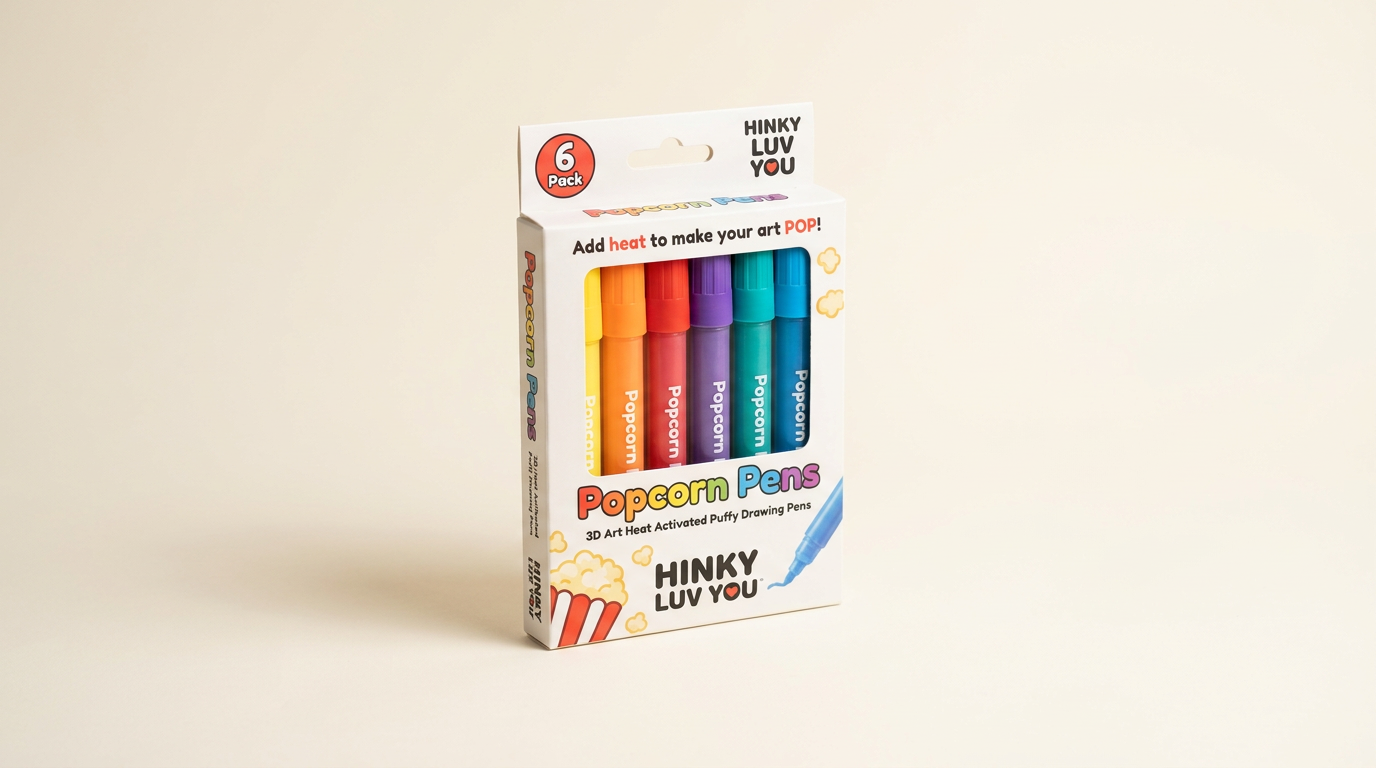
The Magic Popcorn Pen adopts the conventional profile of a felt-tipped or squeeze-feed craft marker. The plastic barrels are lightweight and functional, housing water-based expandable ink across six distinct hues. While the manufacturer advertises a fine tip suited for delicate work, the physical reality is compromised by the viscosity of the ink. The reservoir tends to purge unevenly, creating what craft hobbyists recognize as the gloop threshold: a state where too much wet medium pools on the substrate before fine line definition can take hold. As a result, intricate lettering or detailed line art is nearly impossible to sustain across a single stroke.
Setup & Ease of Use
Preparation is superficially straightforward: draw a design on paper, retrieve a hair dryer or heating tool, and apply direct heat until the medium pops. In practice, the workflow is clumsy. The ink requires a precise balance of wetness and heat to activate. If the ink dries naturally, the foaming agents lose efficacy; if the hair dryer is introduced too aggressively, the air velocity displaces wet puddles across the craft surface. The manufacturer suggests a two-minute heating cycle, but users report holding heating appliances over their projects for extended periods just to elicit a single bubble, leading to tired wrists and warped paper.
Performance in Real Use
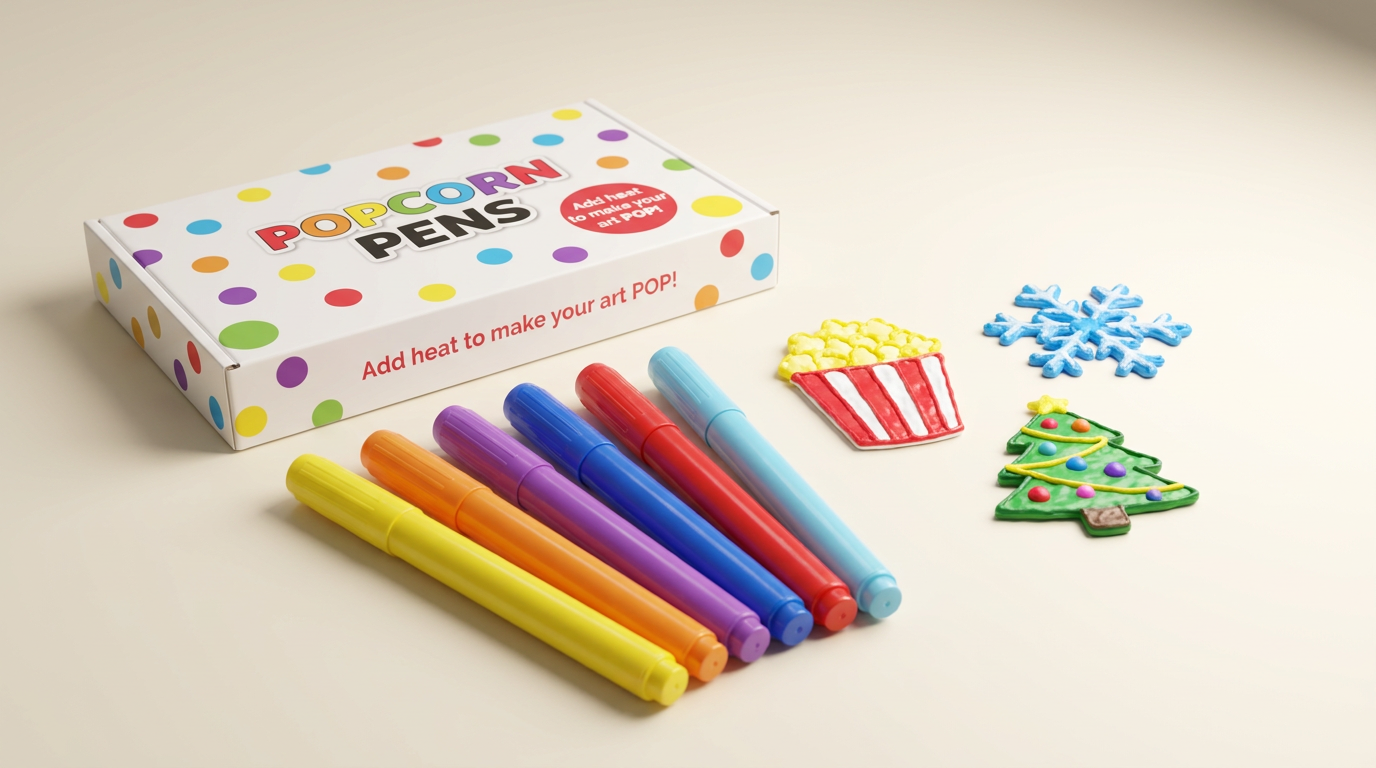
When subjected to heat, the ink rarely delivers on its advertised dimensional transformation. Real-world feedback is decisively negative regarding texture: patterns remain largely flat, taking on a tacky or uneven skin rather than a popcorn-like crumb. The micro-foaming reaction fails to achieve the vertical lift seen in promotional graphics. Furthermore, because users must concentrate intense heat in localized areas to provoke any response, paper substrates routinely buckle under the thermal strain long before the pigments expand. The finished product resembles smeared, dried craft paint rather than textured 3D embellishment.
Software & Ecosystem
While mechanical 3D pens operate on filament standards and variable temperature dials, liquid puff pens depend entirely on the external thermal tools at hand. A standard 1200-watt to 1800-watt hair dryer generates air volume rather than focused, radiant heat. Consequently, these pens practically demand dedicated craft embossing heat guns to function properly, an accessory rarely mentioned in the product brief. Without an auxiliary heat source capable of delivering concentrated warmth without high airflow, the ink is divorced from the very environment required to succeed.
Value & Reliability
Selling in the low budget tier around $10, the set is undeniably cheap, but low cost does not compensate for non-performance. Reliability across individual barrels is erratic, with ink consistency ranging from watery to clotted. A craft product targeted at collaborative projects with grandchildren or classroom groups must offer immediate, rewarding feedback. When the primary mechanical promise fails completely, the product loses its raison d'etre, relegating the pack to the status of overpriced, low-grade liquid markers that fail basic application tests.
Verdict
Stay Away - Inconsistent ink delivery and near-total failure to expand under standard heat make these pens an exercise in frustration.
This kit is not suitable for children, card makers, or hobbyists seeking true tactile embellishment. The flow is too irregular for fine illustration, and the heat requirements exceed standard household appliances.
The Magic Popcorn Pen embodies the worst habit of novelty craft marketing: selling a chemical reaction that theoretically works in industrial isolation but fails on ordinary kitchen tables. When a decorative tool demands excessive appliance heat just to produce a flat, gloopy smudge, it ceases to be a craft supply and becomes paper waste.
FAQ
More 3D Printing Pens reviews
DYUEXI 3D Popcorn Pens Review: Heat-Activated Craft Reality
Magics Puffy 3D Bubble Pens Review: A Total Expansion Failure
Avlpjno Popcorn Pens Review: Puffy Ink That Stays Flat
ROVIA 6 Colors Popcorn Pens Review: 3D Heat-Activated Art
Popcorn 3D Relief Art Pens Review: Chemistry Without Context
3D Pen Filament Refills 20 Colors Review: Reliable PLA Pack
This review is based on real experiences shared by owners in online communities.