
eSUN PLA+ Filament Review: High-Strength Printing for the New Era
This review is based on real experiences shared by owners in online communities.
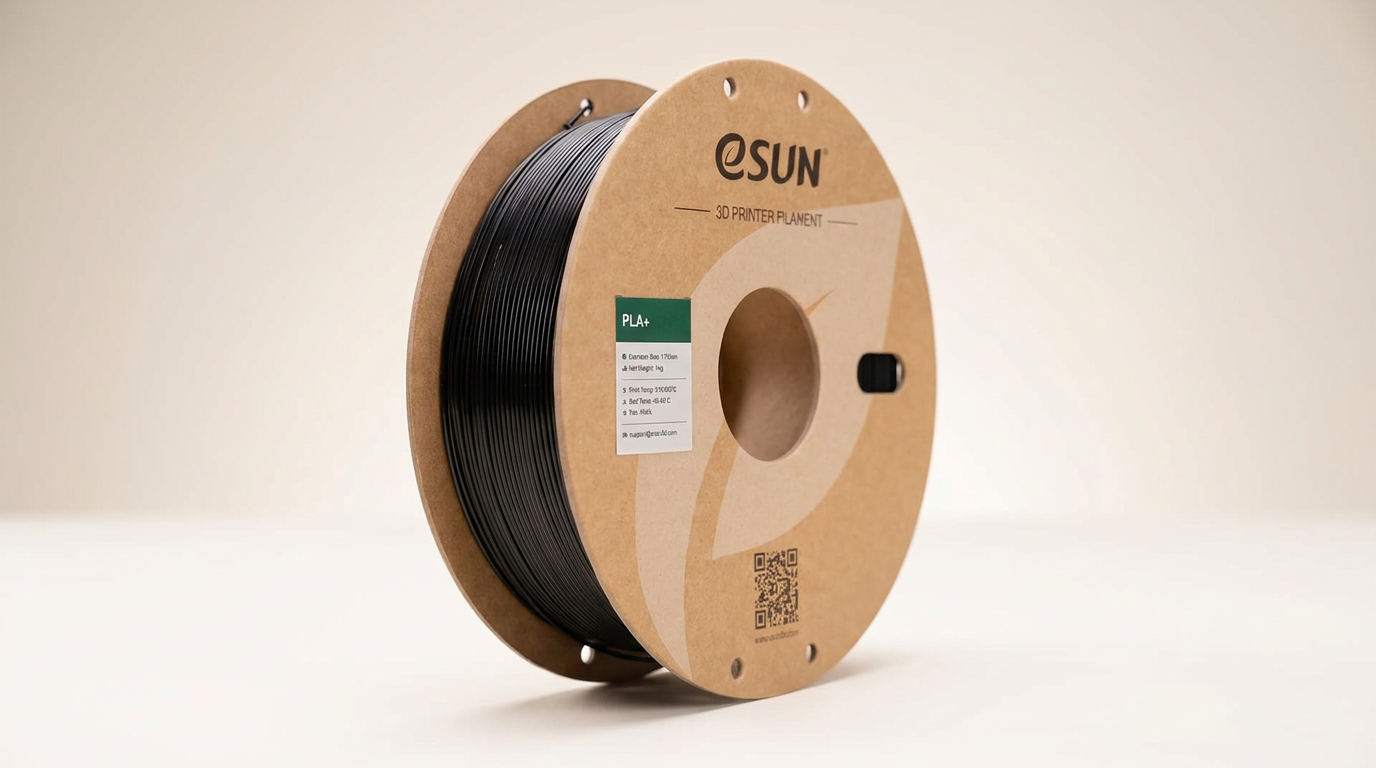
The ubiquity of high-speed 3D printers like Bambu Lab and Creality K1 series has reshaped expectations for filament performance. Where once 'good enough' PLA sufficed, the demand for materials that can print faster without compromising strength or surface finish has pushed many manufacturers to develop specialty blends. The eSUN PLA+ filament positions itself directly into this current, aiming to provide a stronger, more resilient PLA variant suitable for the accelerated workflow of modern machines.
This isn't merely PLA with a marketing suffix. Owners consistently describe a material that offers a tangible step up in part durability and print reliability compared to standard PLA, often at a price point that challenges even basic offerings from other brands. However, its transition to cardboard spools introduces a new consideration, particularly for users of enclosed automatic material systems (AMS) that expect a certain level of spool consistency.
What owners love
- + Consistently delivers strong, durable prints
- + Excellent layer adhesion and smooth surface finish
- + Compatible with high-speed printers and various models
- + Good value, often priced competitively
- + Available in a variety of vibrant colors
- + Minimal stringing and consistent extrusion reported
Common complaints
- − New cardboard spools can cause friction or AMS issues
- − Occasional moisture issues, requiring filament drying
- − Colors may appear different post-printing than on spool
- − Some owners note limited strength improvement over standard PLA
- − Spools can arrive damaged during shipping
Design & Build
For years, filament spools were a utilitarian afterthought. The eSUN PLA+ transitioned to cardboard spools, a decision that has generated mixed feedback among owners. While the filament itself maintains a reputation for good winding and dimensional accuracy, the cardboard spools introduce what we term the 'AMS friction tax' for users with sensitive material handling systems. Owners of Bambu Lab AMS units, for example, report needing adapter rings or even respooling the material onto plastic spools to ensure smooth operation. The cardboard material can create friction on spindles or accumulate dust in sensitive feeding mechanisms. Shipping damage to these spools is also a recurring complaint, although the filament itself typically remains unaffected.
Setup & Ease of Use
The eSUN PLA+ generally earns high marks for ease of printing. Many owners report successfully using default slicer settings, including those optimized for standard PLA on popular machines like Bambu Lab P1P/X1 and Ender 3 series printers. The material's low shrinkage properties contribute to stable prints with minimal warping or cracking, simplifying the calibration process. However, a significant theme emerging from owner feedback is the 'dry-before-you-print' imperative. Specifically, recent batches of black eSUN PLA+ have arrived with notable moisture content, manifesting as popping and stringing during printing. While drying the filament resolves these issues, it adds an extra step not always expected from a new spool.
Performance in Real Use
The core promise of PLA+ is enhanced strength, and owners largely confirm this. Parts printed with eSUN PLA+ are described as 'surprisingly tough' and 'more durable' than those made with standard PLA, suitable for functional components and even demanding applications like 3D printed tools. It prints well at high speeds, making it a strong match for high-speed core-XY machines. Adhesion to common print surfaces like textured PEI is generally excellent, even without adhesives. However, some users note the 'cosmetic color shift' phenomenon, where the printed color, especially with certain hues like red or green, may appear less vibrant or slightly different than what is seen on the spool. This is an important distinction for projects where exact color matching is critical.
Software & Ecosystem
eSUN PLA+ operates within a broad ecosystem of FDM 3D printers and slicer software, indicating its high compatibility. While some users opt to respool for AMS systems to leverage their RFID detection, the filament functions well with generic PLA or PLA+ profiles across various slicers. The manufacturer lists compatibility with a wide range of popular printers, including Bambu Lab, K1, Prusa, and Ender series, and owner experiences corroborate this. The material's robustness means users often do not need to stray far from standard settings, translating to a straightforward integration into existing printing workflows without extensive profile tuning. This broad compatibility underscores its utility as a general-purpose, enhanced PLA.
Value & Reliability
Priced around $15 to $20, eSUN PLA+ is frequently lauded as excellent value. Many consider it their 'go-to' filament due to its balance of cost, strength, and printability. Its reliability is high once moisture is addressed, with owners reporting consistent results across multiple rolls and over extended periods. The sentiment is that for the price, the strength increase and ease of use are difficult to match. The principal trade-off in the value equation centers on the cardboard spools; while they reduce manufacturing costs, they incur a 'usability cost' for some advanced printer setups, which may necessitate additional accessories or time spent preparing the filament before use. This indirect cost can impact the overall perceived value for specific user groups.
Verdict
Buy - It offers a compelling balance of enhanced strength and reliable printing performance at a competitive price.
This filament is well-suited for makers who need stronger-than-average PLA parts and appreciate a cost-effective, easy-to-print material. It is particularly strong for users with open-reel printers or those willing to manage cardboard spools for AMS systems. Those who demand absolute color consistency or who prefer the convenience of automatically detected plastic spools in an AMS might find the current offering less ideal. While priced competitively, typically in the $15-$20 range, users needing consistently dry filament right out of the box should be prepared for potential pre-drying steps.
The eSUN PLA+ represents a pivotal point in the commodification of specialty filaments. It democratizes advanced material properties once confined to higher-priced brands, making enhanced strength accessible to the mainstream 3D printing hobbyist. Its success lies not just in its material properties, but in serving as a baseline for what budget-friendly, performance-oriented filament can be, often setting the standard for material reliability in a rapidly evolving printer landscape.
FAQ
More 3D Printing Supplies reviews
FLASHFORGE Rapid PLA: The 'Stealth Performance' Filament
RAMBERY Silk Dual Color PLA Filament Review: Aesthetic Impact for Small Prints
eSUN PLA+ Filament: The Go-To Choice for High-Speed 3D Printers
SUNLU High Speed PETG Filament Review: The 'Dry-First Economy' Advantage
ERYONE Silk Filament PLA+ Review: The Glossy Aesthetic Standard
ELEGOO Matte PLA Filament Bundle Review: A Premium Material on a Budget
This review is based on real experiences shared by owners in online communities.