
Polymaker Panchroma PLA Filament Review: Consistent Prints, Vivid Colors
This review is based on real experiences shared by owners in online communities.
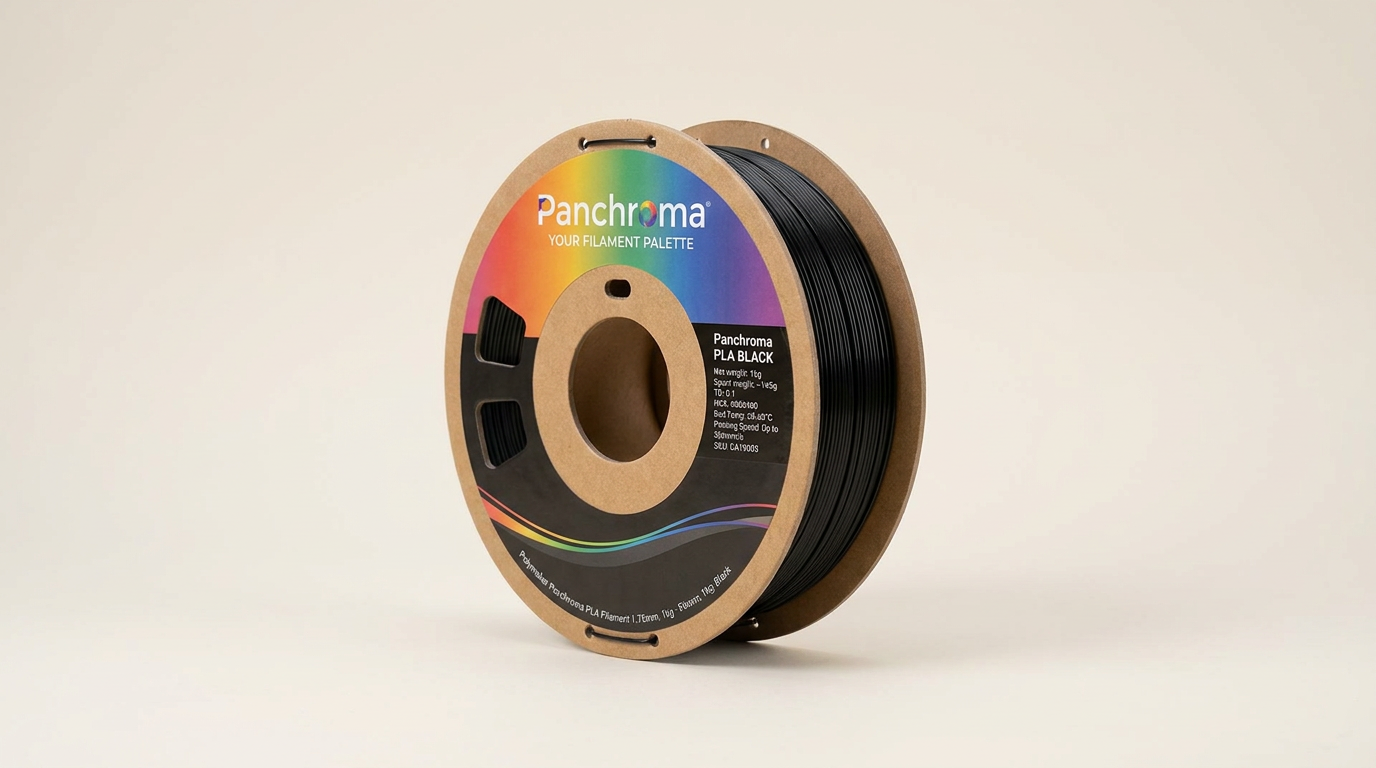
The 3D printing landscape has rapidly evolved, with new filaments frequently entering the market. While some brands chase niche properties or extreme performance, Polymaker's Panchroma PLA line quietly carves out a significant segment of the everyday printing market by delivering on a fundamental promise: predictable consistency. This isn't a filament designed to break speed records or offer exotic material properties; instead, it provides a solid, repeatable baseline that many high-volume makers prioritize above all else.
Most filament buyers often overlook the 'cost of remediation' in their purchasing decisions, focusing solely on the initial price per kilogram. However, for a product like Polymaker Panchroma, its real value proposition lies in minimizing misprints, tangles, and adhesion issues, thereby reducing material waste and print time. This emphasis on process reliability positions it as a workhorse filament, freeing users from the troubleshooting common with less refined options.
This review examines how the Panchroma Black filament lives up to its reputation for consistent results and vibrant color, dissecting whether its premium over budget alternatives is justified by its operational stability and overall print quality.
What owners love
- + Consistent diameter and smooth feeding reduce print failures
- + Excellent layer adhesion and minimal warping reported
- + Vibrant, accurate colors with a desirable satin finish
- + Beginner-friendly and compatible with various printers, including AMS systems
- + Reliable performance eliminates tangling and extrusion issues
Common complaints
- − Priced higher than many generic PLA filaments
- − Limited specific feedback on long-term durability or specific mechanical properties
- − No explicit mentions of biodegradable properties or eco-friendly packaging
Design & Build
The physical characteristics of Polymaker Panchroma filament contribute directly to its reputation for reliability. Owners consistently report excellent spool winding, which is critical for preventing tangles and ensuring uninterrupted material flow, particularly in automated material handling systems like Bambu Lab's AMS. This meticulous winding speaks to an understanding of the 'invisible infrastructure' of successful 3D printing; a neatly wound spool is not merely a convenience, but a functional imperative that reduces the hidden costs of print failures. The filament's diameter consistency, specified at 1.75mm with a tight ±0.02mm accuracy, is a frequent point of praise. This precision aids in stable extrusion and consistent print performance, directly countering common issues seen with lower-quality filaments that exhibit variations leading to nozzle clogs or inconsistent layer lines.
Setup & Ease of Use
Ease of use emerges as a dominant theme among users, with many, including novice 3D printer operators, describing the Panchroma filament as remarkably straightforward. The manufacturer's recommended printing temperatures (190-230°C nozzle, 20-60°C bed) are standard for PLA, contributing to its broad compatibility. Several owners specifically highlight its 'out of the box' performance with advanced systems like Bambu Lab's X1C, P1S, and A1 Mini, and even with generic profiles. This low-friction integration is a significant advantage, particularly for users seeking a 'plug and print' experience without extensive calibration. The filament's consistent feeding and strong bed adhesion minimize the early-stage failures that often frustrate beginners and consume the time of experienced makers. This user-friendly profile makes it an attractive choice for those who value operational simplicity over extensive fine-tuning.
Performance in Real Use
In day-to-day operation, Polymaker Panchroma demonstrates a high degree of print success. Owners report clean, consistent results with strong layer adhesion and minimal issues such as warping, stringing, or separation. The filament's ability to print at speeds up to 500mm/s, as indicated by the manufacturer, is corroborated by users employing high-speed printers, who experience no degradation in quality or reliability. Beyond performance, the aesthetic qualities receive significant acclaim. The colors are consistently described as vibrant, rich, and true to expectation, with a desirable satin or matte finish. Specific colors like 'Ryobi Green,' 'blonde hair,' and various reds and yellows are frequently highlighted for their accurate and vivid appearance. This combination of reliable mechanical performance and strong visual output makes it a versatile material for functional parts, artistic models, and everyday prototyping.
Software & Ecosystem
While Polymaker Panchroma is a material, its integration within the broader 3D printing ecosystem is a critical factor for many users. The filament's compatibility with a wide range of FDM printers, from Ender 3 Neo to Bambu Lab and Snapmaker models, underscores its versatility. The ability to use generic filament profiles, or readily available Polymaker-specific profiles, simplifies the slicing process. Many users report seamless operation with multi-material systems like Bambu Lab's AMS, indicating consistent diameter and spool geometry that prevent common feeding errors in such complex setups. This broad compatibility and minimal need for custom software profiles means users can often switch to Panchroma without significant software adjustments, reducing the 'configurational burden' often associated with new filament brands. The consistent results across different printer platforms further build user confidence in its predictable behavior.
Value & Reliability
Polymaker Panchroma PLA is generally positioned in a slightly higher price tier than many entry-level or generic PLA options, often falling in the around $20 price band. However, owners consistently view this as a justified premium for its reliability and consistent quality. The phrase 'you pay for that, but come on... it's not that much more for ease of use' encapsulates a recurring sentiment. The filament's reliability translates directly into reduced material waste from failed prints and less time spent troubleshooting. For users whose time is valuable, or those running multiple print jobs, this 'reliability dividend' offsets the higher initial cost. The consistent feedback regarding no tangles, strong adhesion, and smooth extrusion points to a product that delivers on its promise of dependable performance, making it a sound investment for those seeking consistent output without constant intervention.
Verdict
Strong Buy - This filament offers a compelling balance of ease of use, print quality, and consistent reliability.
This is an ideal choice for both novice users seeking a frustration-free entry into 3D printing and experienced makers who prioritize consistent, repeatable results across diverse projects. Its robust performance across various FDM printers and multi-material systems, combined with vibrant color reproduction, makes it suitable for a wide array of applications, from functional prototypes to aesthetic models. Those operating high-speed printers will also appreciate its reliable extrusion at elevated speeds. While its price point is above the cheapest options, typically in the high teens to low twenties, the reduction in failed prints and troubleshooting time provides a clear return on investment.
Users on extremely tight budgets who are willing to experiment with less consistent, cheaper filaments might find this an unnecessary expense. However, for anyone valuing print success, material consistency, and reduced operational headaches, the Polymaker Panchroma PLA offers a highly attractive proposition. This filament embodies the 'silent workhorse' archetype: it doesn't shout about revolutionary features, but rather quietly enables consistent output, proving that sometimes, the best upgrade is simply a more reliable base material.
FAQ
More 3D Printing Supplies reviews
Fuitnerd Filament Storage Box: An Accessible Dry Storage Solution
SUNLU PLA+2.0 Filament Refill: An Unspooled Advantage for 3D Printing
Kretrum Silk Dual Color PLA Filament Review: Vibrant Aesthetics for 3D Printing
eSUN High Speed PLA+ Filament Review: The Workhorse for Fast Printers
SUNLU PETG Filament 4kg Review: The Bulk Workhorse for High-Volume Prints
Deeplee PLA+ 2.0 Filament Review: A Workhorse Material for 3D Printing
This review is based on real experiences shared by owners in online communities.