
Frucindra Glow in the Dark PLA+ Filament Review
By AValidReview.
Research-based review methodology
This article analyzes up to 40 saved owner reviews together with marketplace product information and manufacturer specifications. It is not a physical hands-on or laboratory test. Owner reports can be subjective, variant-specific, and unrepresentative of all buyers.
The 1–10 score is a converted marketplace rating: it doubles the saved five-star marketplace average and rounds it to one decimal. It is not an independent editorial measurement. The marketplace review total is the real saved listing count, not the number of reviews individually analyzed. The source sample is up to 40 saved reviews unless saved generation data establishes an exact analyzed count. See the full methodology.
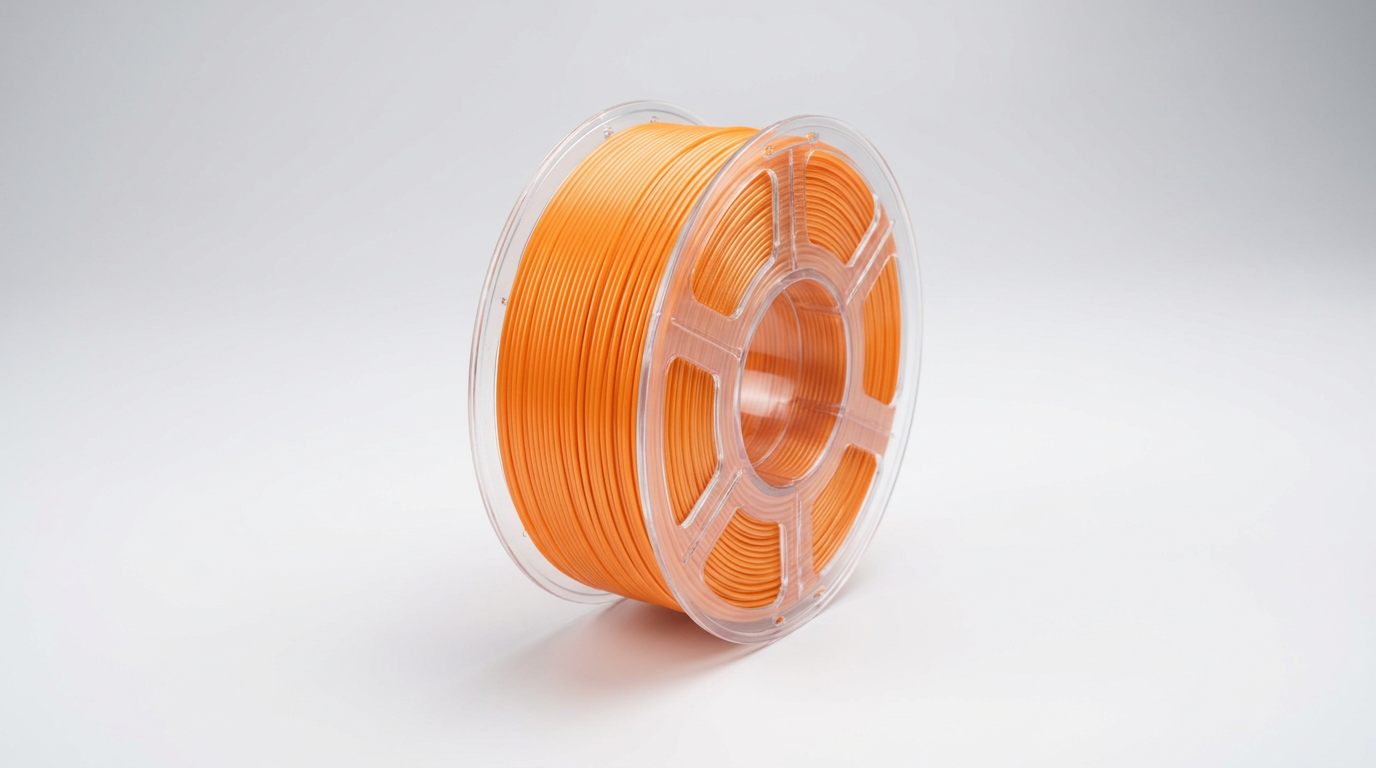
Phosphorescent 3D printing filaments occupy a strange niche in desktop fabrication: they are treated like novelty toys, yet they behave mechanically like abrasive composites. What most buyers overlook is the phosphor penalty. To get a vivid afterglow, manufacturers suspend dense strontium aluminate powders inside standard polymers, which changes thermal behavior, increases brittleness, and accelerates nozzle wear. Frucindra enters this space with a glow-in-the-dark PLA+ formulation aimed at decorative figurines, seasonal props, and display items.
A central quirk of this listing in the wild is format confusion. While marketed as standard metric spools, owner reports frequently describe receiving bundled quad-packs of 250-gram mini-spools rather than a singular bulk reel. That makes this material less of a production-run workhorse and more of an exploratory sampler. It gives makers a low-commitment route into luminous prints without leaving kilograms of abrasive, shelf-aging filament sitting in dry storage.
Beneath the surface novelty, successfully running this filament requires abandoning standard PLA assumptions. Between dialed-up printing temperatures, custom spool adapters for multi-material setups, and strict infill requirements, Frucindra delivers a vibrant visual payoff only if you treat it as an engineering challenge rather than standard plug-and-play plastic.
What owners love
- + Bright, long-lasting luminescence after exposure to UV or daylight
- + Strong bed adhesion on textured build plates without warping
- + Consistent extrusion and clean detail when tuned to higher temperatures
- + Convenient 250-gram format for low-volume seasonal and decorative projects
Common complaints
- − Filament is brittle and prone to snapping during feeder tube loading
- − Mini-spool dimensions require printed adapters for Bambu AMS units
- − Requires hot printing temperatures between 220C and 240C to prevent jams
- − Multiple owner reports of inconsistent winding and tangled spools
Design & Build
The physical characteristics of Frucindra glow-in-the-dark PLA+ mirror the material trade-offs common to heavily additive-loaded filaments. The manufacturer lists a standard 1.75mm diameter with a dimensional accuracy of plus or minus 0.03mm. Under room lighting, the unprinted strands present a pale, semi-translucent milky hue that conceals its evening character. However, multiple owners caution that the base polymer does not behave like a standard ductile PLA+. It exhibits noticeable rigidity and stiffness, with several users reporting that the strand snapped cleanly when routed through tight PTFE bowden tubes.
The spool architecture itself creates unexpected friction. A frequent point of discussion among owners is the 250-gram mini-reel format. While convenient for multi-color sample tests, these smaller spools lack the outer diameter and rim width needed to sit properly on automated roller systems. Users of multi-material systems such as the Bambu AMS note that they had to print adapter rings just to prevent the lightweight spools from tumbling or jamming. Furthermore, spooling quality shows variance. While the listing claims precision machine winding, multiple reviewers encountered loose tension and genuine knots that paused prints midway through extrusion.
Setup & Ease of Use
Getting clean results with this filament requires abandoning generic factory profiles. The recurring theme across successful prints is thermal compensation: the mineral particulate inside the plastic demands heat. Owners routinely report that standard 200C to 210C PLA settings lead to underextrusion, clicking extruder gears, and partial nozzle clogs. Dialing the hotend up to 220C, and in some setups as high as 240C on a 0.6mm nozzle, resolves backpressure and produces smooth layer stacking. Heated bed adhesion is a bright spot, with users achieving reliable first layers on textured plates at 55C to 60C without specialized adhesives.
Moisture management is another factor where lived experience diverges slightly from baseline expectations. The manufacturer ships the spools in vacuum-sealed packaging with desiccant, and some reviewers were able to print directly out of the bag without visible defects. Nevertheless, experienced makers point out that active filament drying significantly reduces micro-oozing and minor stringing during travel moves. If you leave these spools exposed to ambient air, the hydrophilic nature of modified PLA combined with porous particulate will degrade surface finish over time.
Performance in Real Use
When dialed in, the aesthetic output justifies the setup hurdles. The glow effect charges rapidly under direct sunlight or a standard blacklight flashlight, emitting a vivid, sharp luminescence that holds visibility in dark rooms. Crucially, the intensity of that glow obeys what can be described as the shell-density dynamic: thin single-wall prints look faint, while models printed with four or more perimeters and dense infill store significantly more phosphorescent charge. Reviewers who adjusted their slicer profiles to add extra wall loops were rewarded with deeply saturated, uniform night lighting.
Surface detail holds up well on decorative models, toys, and nightlight fixtures. Fine facial details on character prints and clean overhangs render without sagging once cooling is properly balanced. The critical caveat is nozzle degradation. The ceramic additives that produce the luminous reaction are inherently abrasive. While some owners ran small projects through standard brass stock nozzles without immediate failure, running through an entire spool on brass risks boring out the aperture, leading to sudden layer inconsistency. Using a hardened steel or ruby-tipped nozzle is an unwritten operational requirement.
Software & Ecosystem
Because Frucindra is an aftermarket brand without dedicated hardware integration, slicer configuration rests entirely on the user. Slicers like Bambu Studio, OrcaSlicer, and Cura handle the material well once users clone a generic PLA profile and modify temperature ceilings and volumetric flow rates. A few owners experienced stringing when treating it like high-speed silk or basic PLA, but tuning retraction distance and dropping travel acceleration produced clean benchies and miniatures.
The physical ecosystem remains the real barrier. Multi-filament switchers rely on standardized spool weights and inertia to retract cleanly. Because these reels weigh a fraction of a 1kg spool and have a compact footprint, the automated retraction cycle often lifts the entire spool out of its cradle. The community workaround of printing clip-on hub adapters or dropping weighted bearings into the spool core is virtually mandatory for automated toolheads. On conventional open-air side brackets or hanging spool holders, feeding proceeds without drama.
Value & Reliability
Sitting in the accessible $20 to $30 price range, this filament presents an interesting value calculation. For production-scale print farms, the mini-spool sizing and reported tangle occurrences make it a risky choice for unattended, long-duration jobs. The cost per gram is also slightly higher than basic bulk PLA. However, for hobbyists, parents printing customized toys, or prop makers building Halloween displays, the package functions as an economical creative toolkit. It prevents the common buyer remorse of purchasing a massive one-kilogram spool of glow material that ultimately sits unused on a shelf.
Reliability is binary and tied directly to user diligence. If you attempt to feed it cold through tight guide tubes on a stock brass assembly, it will likely snap, clog, or wear your hardware. If you account for its stiffness, inspect the outer wraps for snags, and run a dedicated hardened nozzle at elevated temperatures, the material delivers striking novelty prints that look indistinguishable from higher-end specialty filaments.
Verdict
Consider - A vibrant, highly luminous specialty material that rewards careful slicer tuning but frustrates automated feeders and uncalibrated setups.
This filament is well suited for hobbyists, prop makers, and parents who want to produce eye-catching decorative items without committing to full-size specialty spools. If you own a printer with a hardened nozzle, know how to calibrate temperature towers, and are comfortable printing spool adapters for multi-material units, the visual results are remarkably sharp.
Production print shops and beginners looking for an effortless, drop-and-go filament should steer clear. The brittle strand profile, elevated hotend temperature requirements, and occasional spool-winding snags make it too finicky for high-speed automated runs.
The mistake most buyers make with glow filament is treating it like colored plastic rather than a filled composite. Frucindra delivers an intense afterglow at an accessible price, but only because it offloads the mechanical overhead onto the operator: you pay for the novelty not in dollars, but in nozzle wear, manual spool management, and careful thermal calibration.
FAQ
More 3D Printing Supplies reviews
Bambu Lab 1.75mm PLA Review: The Cost of Convenience
ELEGOO Water Washable 3D Printer Resin Review: Detail vs Brittleness
SUNLU Silk PLA+ Filament Review: High Gloss, Low Friction
LOVOON Tricolor Silk PLA Review: Rich Sheen Without Purge Waste
Siraya Tech Flex TPU Air Review

FLASHFORGE Rapid PLA Review: High-Speed Filament with Deep Color
This research-based review summarizes saved owner feedback and product information; it does not report physical testing.