
Yoyoland 3D Popcorn Pens Review: Novel Craft Fun with Hidden Traps
By AValidReview. An AI-assisted summary of customer feedback, not a hands-on test.
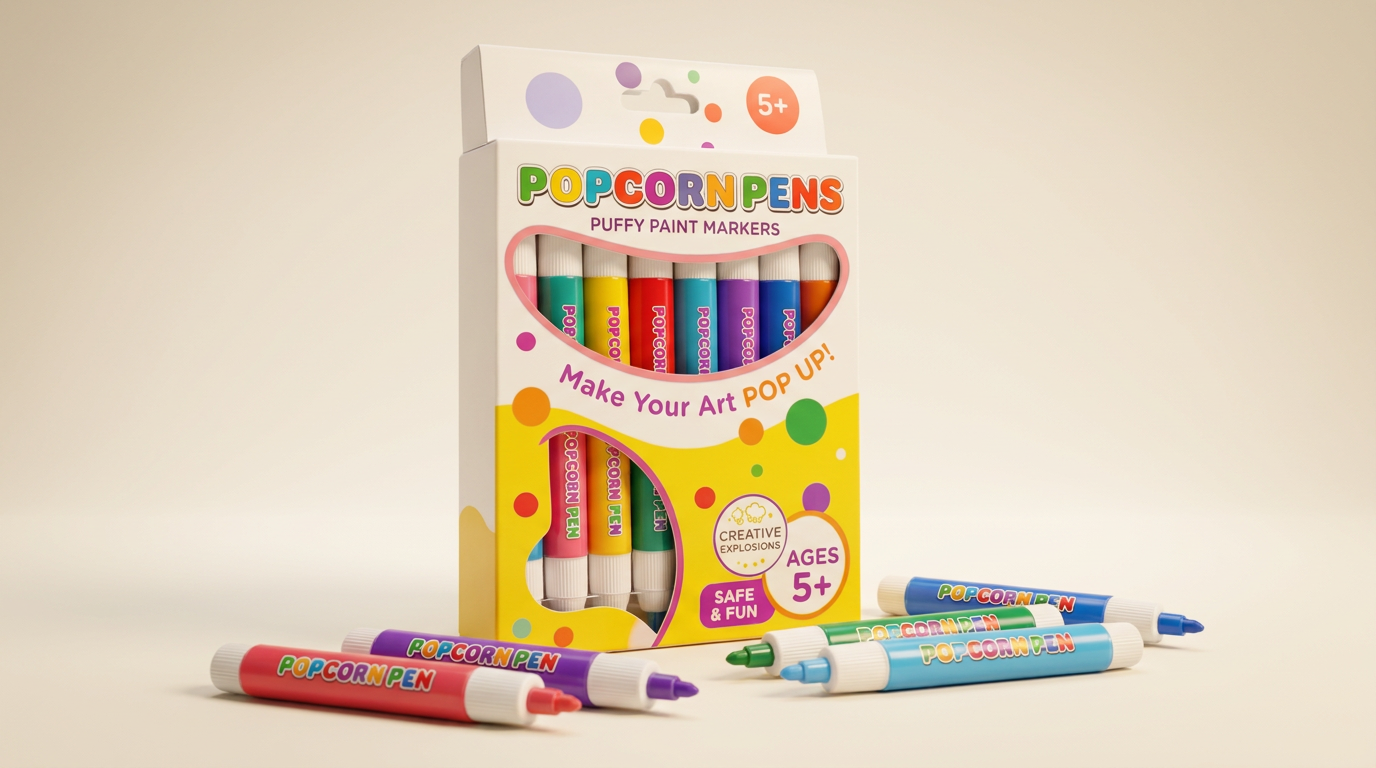
The modern craft aisle loves to dress up chemical novelty as digital fabrication. Listed under additive manufacturing and 3D printing categories, the Yoyoland 3D Popcorn Pens are not high-tech hardware; they are an exercise in analog additive manufacturing. The premise relies on micro-expandable chemical ink: draw a flat illustration on paper, hit it with a blast of focused thermal energy, and watch the pigment bubble up into a tactile, marshmallow-like relief.
When it works, it is an engaging, tactile parlor trick that legitimately captivates young crafters. Watching flat lines foam into rounded popcorn textures provides genuine creative delight that standard felt markers cannot match. Yet the line between kitchen-table wonder and catastrophic craft mess is remarkably thin, dictated almost entirely by a hidden nozzle obstruction and thermal physics that the packaging fails to explain.
Buyers looking for a stress-free stocking stuffer need to understand what this set actually demands. It is not an unbox-and-draw felt pen. It is a finicky thermal medium that requires adult intervention, strict technique, and a careful first step before you ever put tip to paper.
What owners love
- + Vibrant, eye-catching color palette across a 12-pen assortment
- + Novel tactile texture when thermal expansion succeeds
- + Fine-point nozzles support detailed line work and lettering
- + Engaging hands-on medium for personalized greeting cards
Common complaints
- − Unmarked secondary plastic plugs cause catastrophic blowouts if squeezed
- − High failure rate under standard hair dryers due to thermal activation gaps
- − Inconsistent factory fill levels leave some pens partially empty
- − Requires active adult handling of high-heat tools
Design & Build
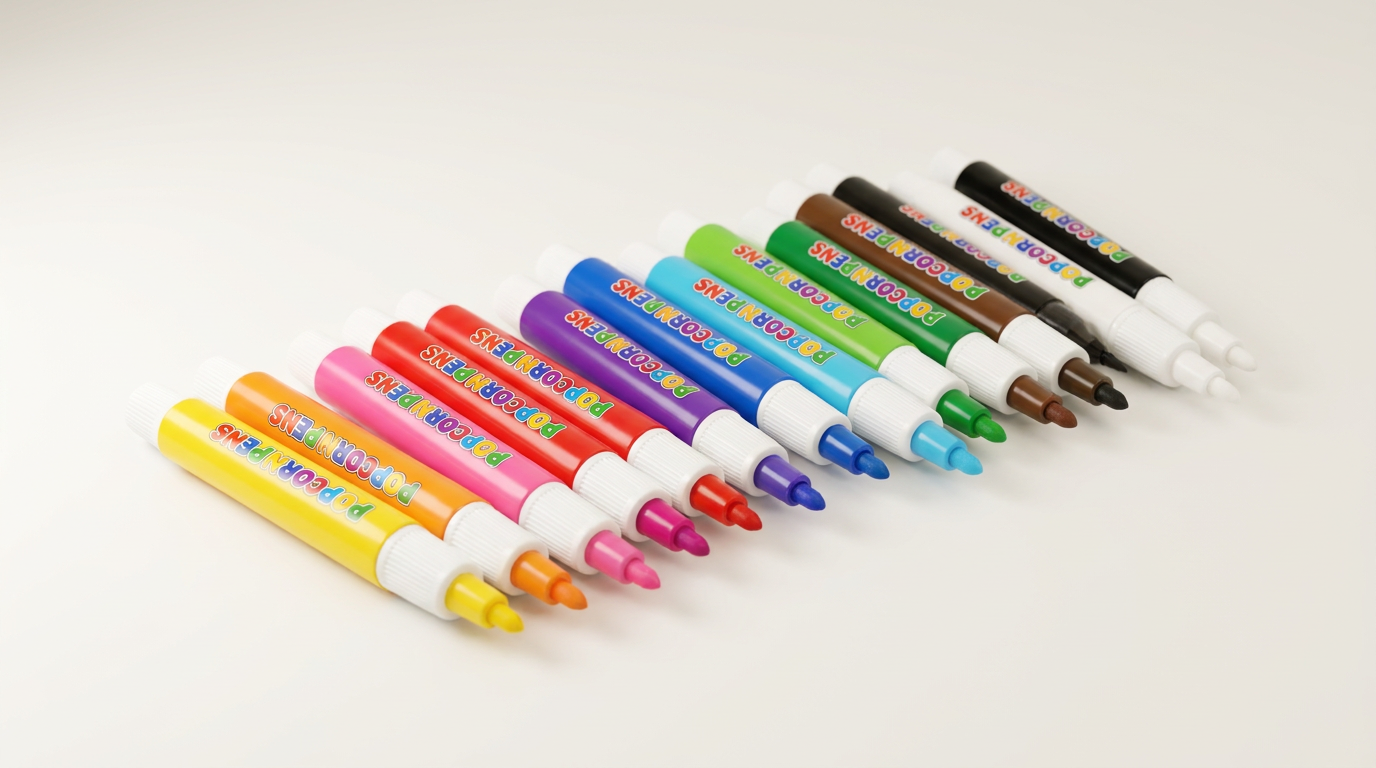
The Yoyoland set consists of twelve squeeze-barrel pens filled with heat-reactive liquid medium. The visual design leans heavily into child-friendly presentation, featuring bright casings and fine-aperture tips intended to balance flow control against fine lettering. In the hand, the plastic barrels feel basic, relying on manual squeeze pressure rather than gravity-fed or pressurized reservoirs to regulate output.
The critical design flaw lies in the interior sealing mechanism. Several pens ship with an unmarked secondary plastic stopper concealed beneath the primary screw cap. To an unsuspecting child or hurried parent, the pen appears ready to write once uncapped. When squeeze pressure meets this hidden barrier, the result is what owners describe as the pressure trap: fluid resists, pressure mounts, the friction-fit tip gives way, and the barrel empties violently across the work surface. From an engineering standpoint, failing to clearly indicate or tether this inner plug turns basic setup into an accidental ink bomb.
Setup & Ease of Use
Getting started should be straightforward, but the product suffers from an acute lack of clear instructions. Before applying ink, crafters must systematically inspect every barrel, unscrew the collar, discard the hidden transit seal, and reseat the applicator tip. Skip this step, and the pen simply will not dispense pigment.
Once prepped, application requires a calibrated hand. Squeeze too lightly, and the line breaks; squeeze too hard, and the liquid pools into a dense puddle that struggles to cure. The medium behaves more like liquid latex than standard marker ink. Multiple buyers note inconsistent fill volumes straight out of the box, with certain barrels arriving noticeably depleted. For a set sold in the under $20 bracket, factory variance is not unexpected, but opening a fresh pack to find half-empty tubes diminishes the out-of-box experience immediately.
Performance in Real Use
The real test comes down to what we call the thermal activation gap. The manufacturer promises that sweeping a hair dryer across fresh artwork instantly produces puffy 3D relief. In practice, the physics are far more exacting. If you use a hair dryer with high airflow and low heat, the wet paint simply ripples or smears across the cardstock. Conversely, if the heat is insufficient, the medium dries flat, leaving the user with basic, glossy acrylic paint and no raised texture whatsoever.
Achieving the advertised marshmallow expansion requires a concentrated thermal source held close to the paper at low air velocity. When users find that sweet spot, the transformation is undeniably charming. Lines swell cleanly, edges soften into pillowy domes, and homemade holiday cards take on a unique tactile pop. Children are routinely fascinated by the process. The trade-off is that young crafters cannot run this step autonomously; direct application of high-temperature air makes adult supervision mandatory throughout the entire project.
Software & Ecosystem
While categorized adjacent to digital 3D printing pens, this product relies entirely on an analog household ecosystem. Its performance depends heavily on two unincluded variables: paper substrate density and your personal hair dryer's heating profile. Standard twenty-pound printer paper absorbs the liquid carrier too quickly, causing the backing to curl and buckle the moment heat is applied. Heavy-duty cardstock or uncoated watercolor paper is required to withstand both the wet medium and sustained thermal exposure.
Furthermore, households equipped only with gentle, ionic, or high-velocity cool-shot styling dryers will struggle to trigger the chemical foaming agent. The pens rely on external thermal tooling that the manufacturer assumes every household possesses in the exact necessary configuration. Without the right cardstock and heating tool, the ecosystem fails to deliver the promised result.
Value & Reliability
Priced comfortably under $20, the Yoyoland 12-pack represents an impulse craft purchase. In terms of sheer novelty, it delivers reasonable engagement if you survive the initial setup. A dozen colors provide adequate variety for family card-making sessions, scrapbooking, and holiday gift tags. The consumable nature of the pens means this is fundamentally a seasonal craft kit rather than a permanent studio supply.
Reliability, however, is compromised by poor quality control. The split in user sentiment reflects an all-or-nothing outcome. Users who discover the hidden plug and possess a high-heat blower report pure delight; those who squeeze an obstructed pen or fail to hit activation temperatures end up with ruined clothes and flat paint. The value is present, but it carries an operational tax paid in patience, cleanup risk, and mandatory parental labor.
Verdict
Consider - A fun, tactile craft novelty that charms kids once activated, marred by poor packaging cues and hair-trigger tip blowouts.
FAQ
More 3D Printing Pens reviews
Prestige Rail Pro 3D Printer Oil Pens Review

ScontLuy 3D Relief Art Pen Review: Popcorn Craft Flop
Clkklpm 3D Magic Popcorn Pens Review: Faulty Heat-Activated Art
Topacme 3D Relief Art Pen Review: Magic Popcorn Pens Tested
Barods Popcorn Pens Review: Novelty Craft Failure
LTGEM 3D Printing Pen Hard Case Review
This review is based on real experiences shared by owners in online communities.