
Prestige Rail Pro 3D Printer Oil Pens Review
By AValidReview. An AI-assisted summary of customer feedback, not a hands-on test.
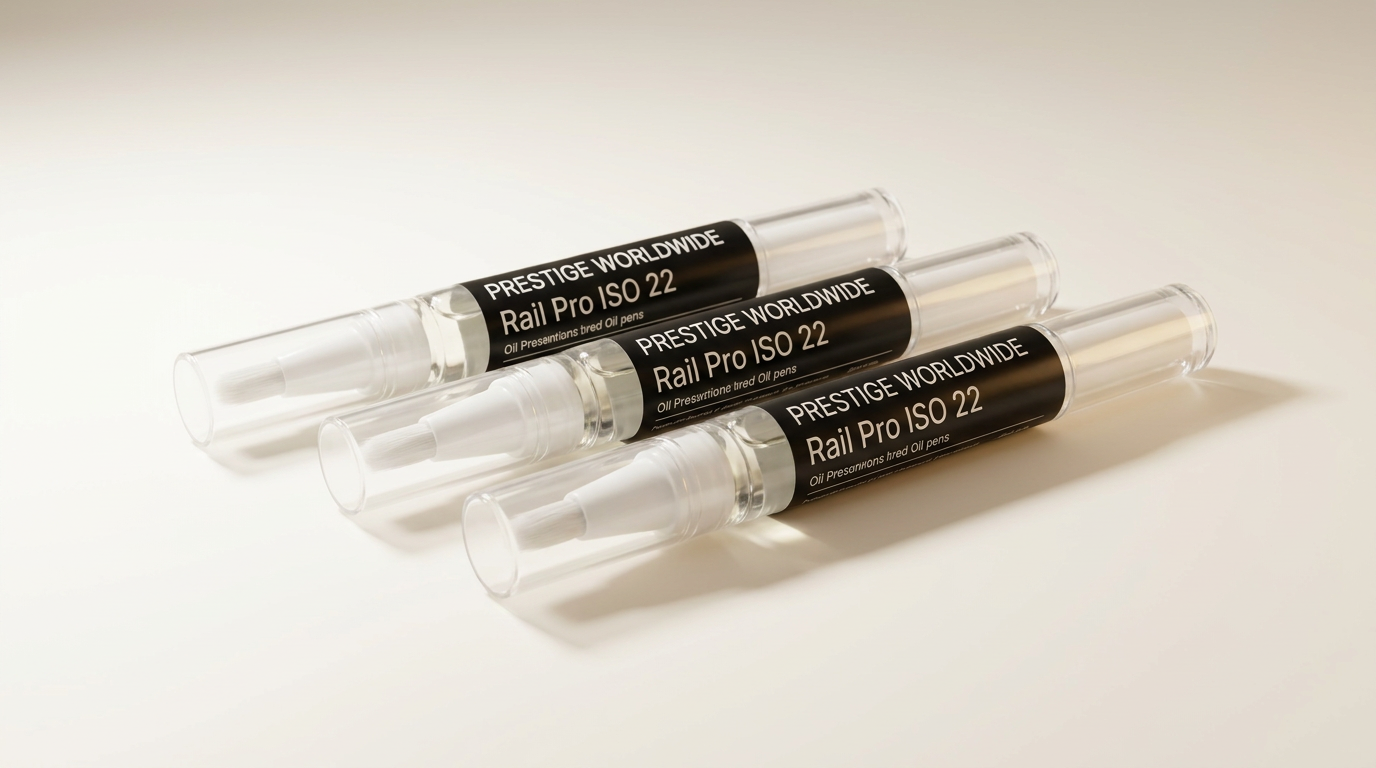
Most motion-system failures in desktop fabrication do not stem from neglect. They stem from over-enthusiasm. In 3D printing and light CNC work, the standard maintenance ritual involves tipping a squeeze bottle over a steel rail, flooding the carriage, and inadvertently creating a sticky dust trap. This over-lubrication tax ruins belts, soils print beds, and accelerates carriage wear as airborne particulates bind into an abrasive grinding slurry.
The Prestige Rail Pro USA Oil Pens counter this exact problem by borrowing a design convention from cosmetic applicators. Instead of free-flowing spouts or blunt syringe needles, these pens package 3ml of ISO 22 light machine oil behind a twist-to-dispense bristle brush. The premise is precision micro-dosing: putting an exact, minimal film of lubricant directly onto bearing raceways without runoff.
While industrial purists might initially scoff at miniature 3ml dispensers when quart jugs of machine oil sell for cheap, the value proposition here is not bulk volume. It is process control. For makers running high-speed CoreXY platforms or delicate linear guides, this pack represents a shift from messy shop maintenance to targeted, bench-safe servicing.
What owners love
- + Twist-to-dispense mechanism prevents accidental flooding and pooling
- + Brush bristles sweep lubricant directly into bearing ball raceways
- + Lightweight ISO 22 viscosity introduces zero drag on high-speed motion systems
- + Eliminates messy drips onto build surfaces, belts, and electronics
- + Compact pen form factor stores neatly in printer tool drawers
Common complaints
- − Non-refillable design creates unnecessary disposable plastic waste
- − Total volume of 9ml across three pens is low for multi-machine farms
- − Lacks fine volume indicator marks along the pen barrel
Design & Build
The Prestige Rail Pro pens adopt a mechanical twist-barrel format familiar to anyone who has handled technical paint pens or specialized cosmetic dispensers. Each unit houses 3ml of clear ISO 22 lubricant sealed beneath an internal piston. Rotating the base ratchets the piston forward, forcing tiny increments of oil through the feed tube into a dense, tapered synthetic brush head.
The brush tip is the crucial design decision here. Traditional needle applicators deposit droplets on top of a rail, leaving the carriage to push a bead of excess oil down the axis. In contrast, the flexible bristles can work fluid directly into the micro-grooves and internal ball-bearing tracks of standard MGN-series rails. The pen casing is rigid plastic with a firm snap cap that prevents leaks inside tool rolls. However, Prestige Worldwyde Dist sealed these pens permanently. The single-use penalty is obvious: when the 3ml reservoir empties, the entire plastic assembly goes into the trash rather than taking a refill from a master bottle.
Setup & Ease of Use
Commissioning a new pen takes only a few seconds. The first application requires several clockwise clicks of the base mechanism to prime the feed tube and saturate the white bristle tip. Once the oil beads visibly at the core of the brush, a single half-turn provides enough fluid to coat an entire 300mm linear rail.
Owners consistently note the immediate relief from messy rags and paper towels. The tactile feedback of the twist mechanism allows for repeatable dosing. Instead of guessing how hard to squeeze a compliant plastic bottle, you dial in a measured click and sweep the brush across the contact surfaces. The cap clicks on securely, ensuring that residual fluid trapped in the bristle cluster does not seep out onto workbench surfaces or adjacent hand tools.
Performance in Real Use
Viscosity selection is critical for modern high-speed 3D printers, and the ISO 22 formulation used here hits the sweet spot. Heavier oils and tacky greases induce viscous drag that can cause stepper motor layer shifts on rapid travel moves. The ISO 22 oil provides a fast-shearing, thin protective barrier that shields bare steel against oxidation while keeping carriage movement buttery smooth.
In practical application on linear rails, lead screws, and sewing machine shuttle hooks, the brush tip performs two duties at once. It cleans light surface dust away while laying down a microscopic oil film. Real-world feedback confirms that runoff is essentially eliminated. The oil stays where the bristles put it, bypassing the dreaded drip onto heated magnetic beds or rubber timing belts. For vertical Z-axis rods, the controlled film adheres cleanly without migrating downward into the motor coupler.
Software & Ecosystem
Lubrication hardware sits outside digital workflows, but modern automated maintenance schedules make targeted tools like this increasingly relevant. Slicer software suites and printer operating systems like Klipper now track cumulative carriage travel and prompt users for axis lubrication after set hour thresholds.
Having an applicator that lives in the printer side-drawer makes these software-prompted maintenance intervals painless. Instead of hauling a full maintenance caddy to the printer, users can knock out the required service routine in thirty seconds flat. The pens also bridge the gap across neighboring workshop tools, serving equally well on desktop laser gantry guides, CNC ball screws, and RC car suspension pivots without introducing cross-contamination.
Value & Reliability
Selling in the under-$20 range for a pack of three, these pens carry a clear convenience premium. By pure volume metrics, purchasing bulk machine oil by the bottle is drastically cheaper per fluid ounce. What you are buying here is not bulk fluid, but an insurance policy against contamination and over-application.
For a single-printer hobbyist, three 3ml pens represent roughly a year of regular rail servicing. The mechanical seals hold pressure without leaking during storage, and the synthetic bristles resist fraying even after repeated sweeps across threaded lead screws. For larger print farms with dozens of axes, however, the inability to top off the reservoirs diminishes the overall value equation, making a bulk bottle and a reusable brush technically more economical.
Verdict
Buy - The Prestige Rail Pro oil pens eliminate the mess and mechanical hazards of over-lubrication with unmatched precision.
This three-pack is an ideal maintenance upgrade for 3D printer enthusiasts, CNC hobbyists, and light machinery operators who want fast, clean, and controlled servicing without oil-soaked workbenches. If your setup features exposed linear rails or delicate carriage bearings, the brush delivery system justifies the price on convenience alone.
High-volume commercial print farms running dozens of machines should skip this disposable format in favor of bulk fluids and refillable dispensers. But for the dedicated desktop fabricator, the product solves a persistent shop headache by turning a clumsy chore into a clean, five-second calibration.
FAQ
More 3D Printing Pens reviews

ScontLuy 3D Relief Art Pen Review: Popcorn Craft Flop
Clkklpm 3D Magic Popcorn Pens Review: Faulty Heat-Activated Art
Topacme 3D Relief Art Pen Review: Magic Popcorn Pens Tested
Barods Popcorn Pens Review: Novelty Craft Failure
LTGEM 3D Printing Pen Hard Case Review
co2CREA Storage Case for 3D Printing Pen Review
This review is based on real experiences shared by owners in online communities.