
Popcorn Pens 3D Puffy Bubble Drawing Kit Review
By AValidReview. An AI-assisted summary of customer feedback, not a hands-on test.
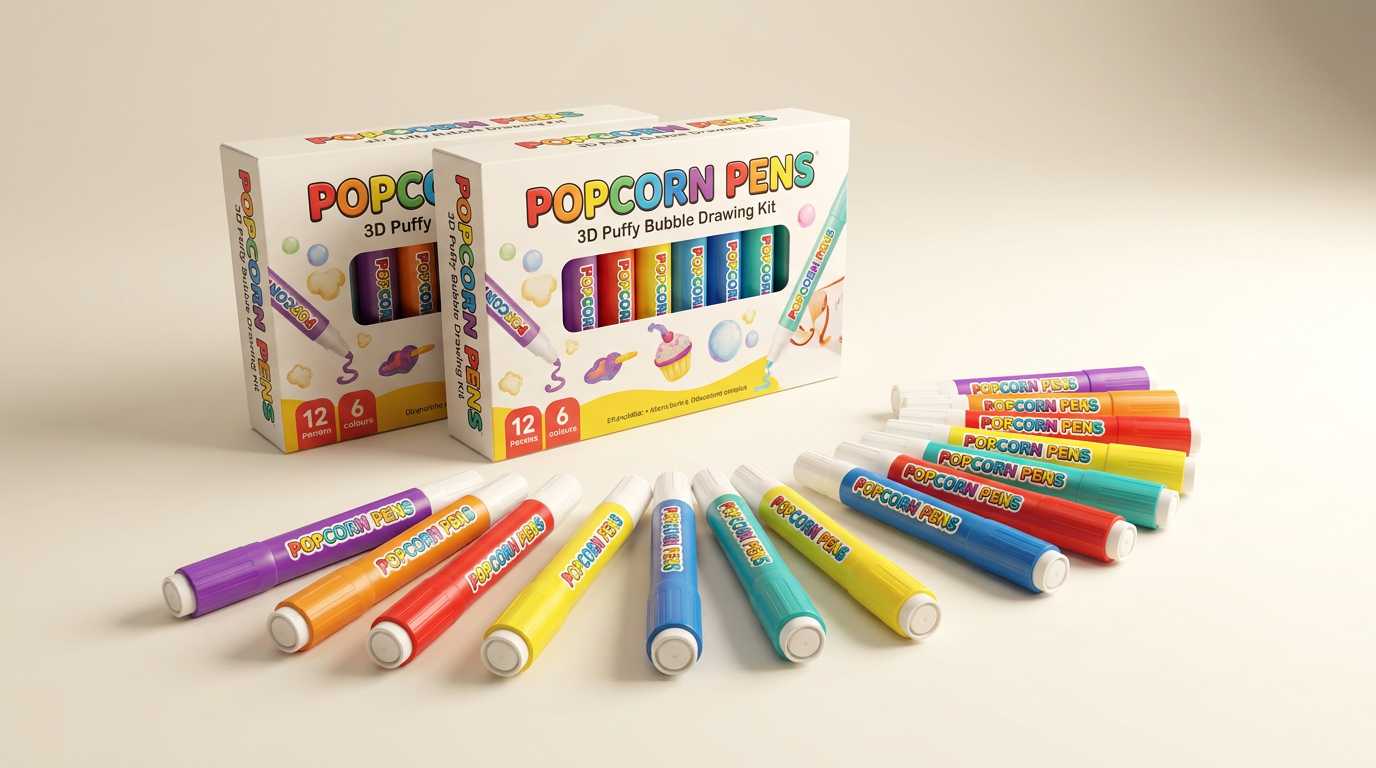
Novelty craft tools live or die on the gap between video demonstration and kitchen-table reality. The generic Popcorn Pens 3D Puffy Bubble Drawing Kit sells a compelling visual hook: apply liquid marker to paper, apply heat, and watch flat lines expand into textured, popcorn-like foam. It promises tactile dimension without the steep learning curve or hot nozzles of legitimate 3D pens.
Beneath the playful packaging lies what we call category spoofing. By cataloging basic heat-reactive pigment pens alongside digital additive manufacturing tools, sellers establish technical expectations that analog ink formulas struggle to sustain. Buyers expect a reliable maker tool, but receive a variable chemical curiosity.
The real issue with this kit is not the concept, which has existed in specialty stamping for decades, but execution. For every parent who watches their child marvel at a raised school poster, multiple others find themselves waving a hair dryer at soggy, stubborn ink that refuses to react. The result is a profoundly divided ownership experience.
What owners love
- + Delivers tactile, raised effects when the chemical reaction succeeds
- + Engaging visual medium for school posters and handmade greeting cards
- + Vibrant base pigments show up clearly on paper before heating
- + Familiar marker-style barrel design is accessible for young hands
Common complaints
- − High failure rate with ink refusing to puff up under heat
- − Vague instructions offer little guidance on necessary heat levels
- − Inconsistent results turn craft sessions into frustrating trial and error
- − Misleading category placement sets unrealistic technical expectations
Design & Build
At a physical glance, the Popcorn Pens kit mimics standard felt-tip or squeeze markers. The plastic barrels are lightweight, unbranded, and sized reasonably well for elementary-school hands. The tips allow for moderate line control, laying down wet, opaque tracks of fluid on heavy paper or cardboard. However, the build quality reflects bargain-tier manufacturing. Caps fit loosely, and ink viscosity varies across different colors in the multi-pack. Some pens pool heavily upon touch, while others deliver thin ribbons of pigment. Because the dimensional effect depends entirely on a consistent layer of wet compound, this uneven ink flow immediately compromises the drawing stage before any heat is applied.
Setup & Ease of Use
Getting started seems straightforward: draw a design, let it settle briefly, and run a high-heat source over the surface. In practice, the included instructions offer minimal technical parameters. They tell users to apply heat without specifying temperature, proximity, or duration. This leaves parents guessing between a standard hair dryer and a specialized craft heat gun. In real-world living rooms, a standard hair dryer set to high air velocity often blows wet paper across the table or smears the fluid before the thermal threshold is reached. The lack of clear guidance creates an immediate barrier for what is marketed as an intuitive children craft.
Performance in Real Use
Performance is governed by what we term the thermal activation gamble. When the conditions align, the markers do what they claim. Multiple owners report that their children produced eye-catching, raised lettering for school projects, noting that the bubbly texture gave greeting cards genuine pop. But that positive outcome sits alongside an equally large group of owners who report zero dimensional change. Several buyers report that no matter how long heat was applied, the ink simply dried flat like a standard poster marker, prompting accusations of misleading claims. The reaction demands a precise, concentrated temperature curve that typical household grooming appliances struggle to hit consistently.
Software & Ecosystem
While these pens do not use digital software, their operational ecosystem consists of the tools and paper substrates you must supply yourself. Standard twenty-pound printer paper fails quickly, warping and curling under the required heat blast while absorbing too much fluid to allow vertical expansion. Heavy cardstock or Bristol board is required, though the product listing does not state this upfront. Furthermore, pairing these markers with a dedicated craft heat tool rather than a beauty hair dryer appears to be the unwritten prerequisite for success. Without that specific secondary hardware, the pens remain trapped in an incompatible domestic workflow.
Value & Reliability
Priced well under $20 for a multi-pack, the financial investment is small, but the reliability penalty is severe. If a craft kit works only half the time under optimal conditions, its true cost is wasted craft time and disappointed children. The product demonstrates a stark binary performance curve: it either activates into a tactile triumph or produces nothing more than an expensive, wet doodle. For school assignments with deadlines, relying on these markers introduces unnecessary risk. Buyers seeking reliable textured art supplies would be better served by traditional puff-paint squeeze bottles that air-dry into raised forms without thermal Russian roulette.
Verdict
Stay Away - Inconsistent thermal expansion turns an enticing craft concept into a frustrating gamble.
This kit is technically tolerable only for patient adult crafters who already own a dedicated embossing heat gun and understand how to manage heat-reactive inks on heavy cardstock. If you are willing to treat the pens as an unpredictable experiment, you might coax a few fun textured lines out of the set.
Parents buying a casual weekend activity for young kids or students facing a strict school project deadline should skip this entirely. The high failure rate and poor guidance almost guarantee disappointment at the drawing board.
What buyers miss is that micro-foaming inks are sensitive chemical systems, not magical toys. When generic manufacturers strip away precise thermal instructions and quality control to hit a bargain price point, they do not just cut corners on packaging: they break the core mechanism that makes the product work.
FAQ
More 3D Printing Pens reviews
kjsdsss 18PCS Magic Popcorn Pens Review
Yoyoland 3D Popcorn Pens Review: Novel Craft Fun with Hidden Traps
Prestige Rail Pro 3D Printer Oil Pens Review

ScontLuy 3D Relief Art Pen Review: Popcorn Craft Flop
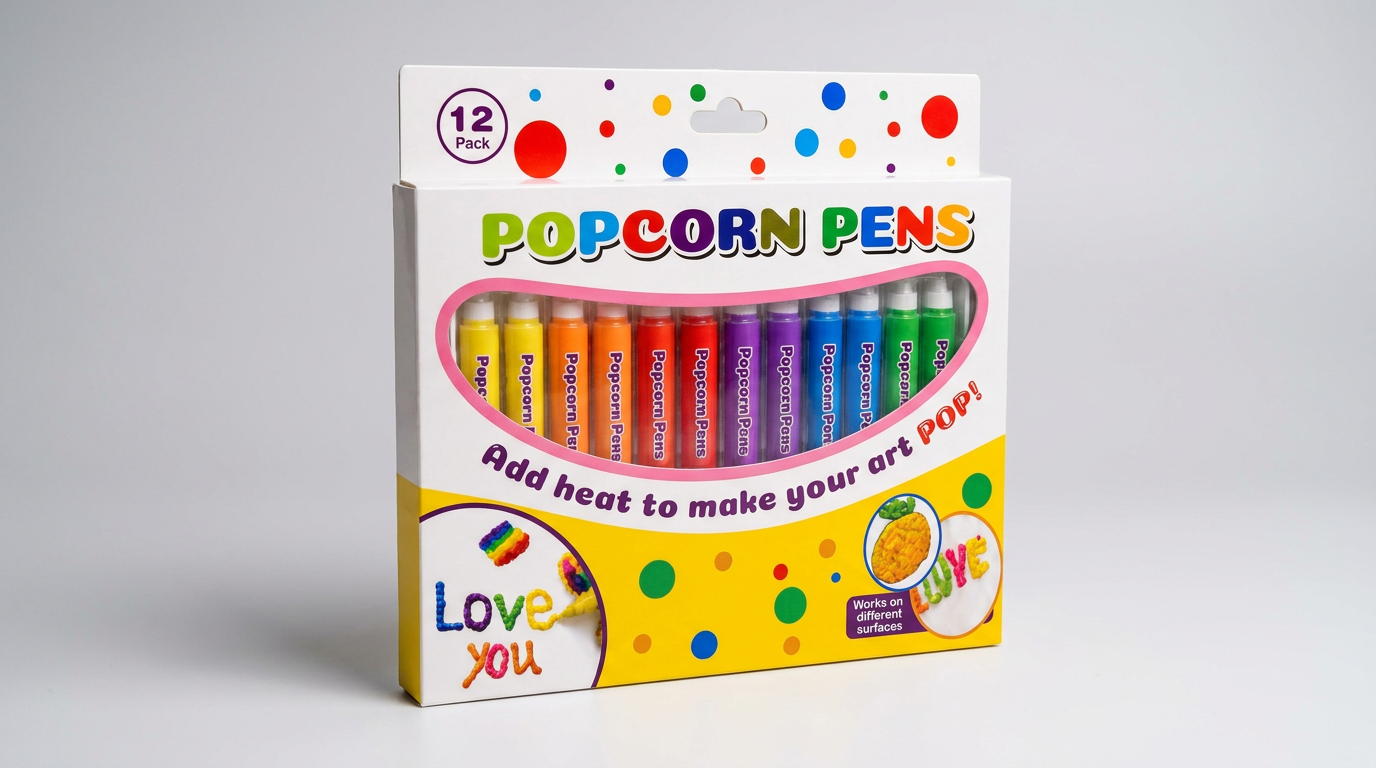
Clkklpm 3D Magic Popcorn Pens Review: Faulty Heat-Activated Art
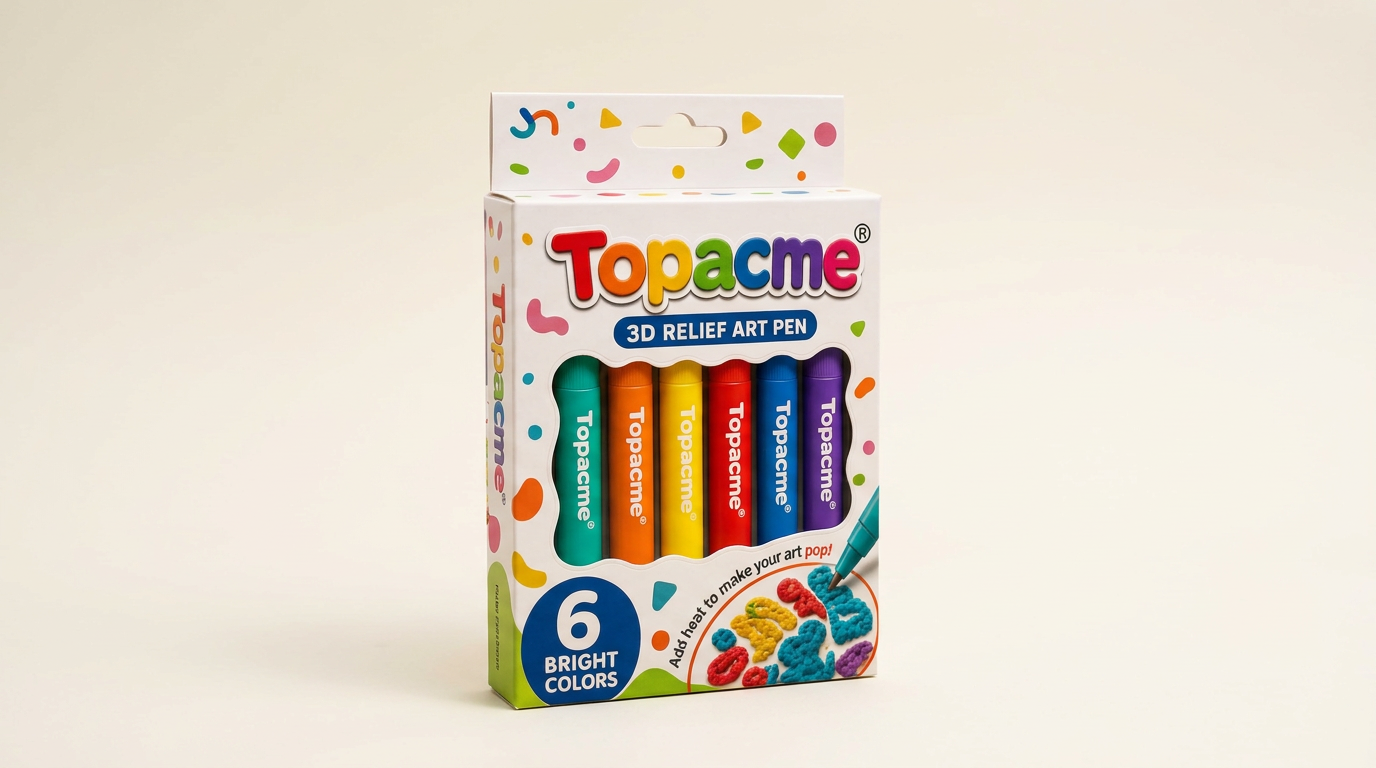
Topacme 3D Relief Art Pen Review: Magic Popcorn Pens Tested
This review is based on real experiences shared by owners in online communities.