
JINGHUIRUIHONG 3D Relief Popcorn Pens Review
By AValidReview. An AI-assisted summary of customer feedback, not a hands-on test.
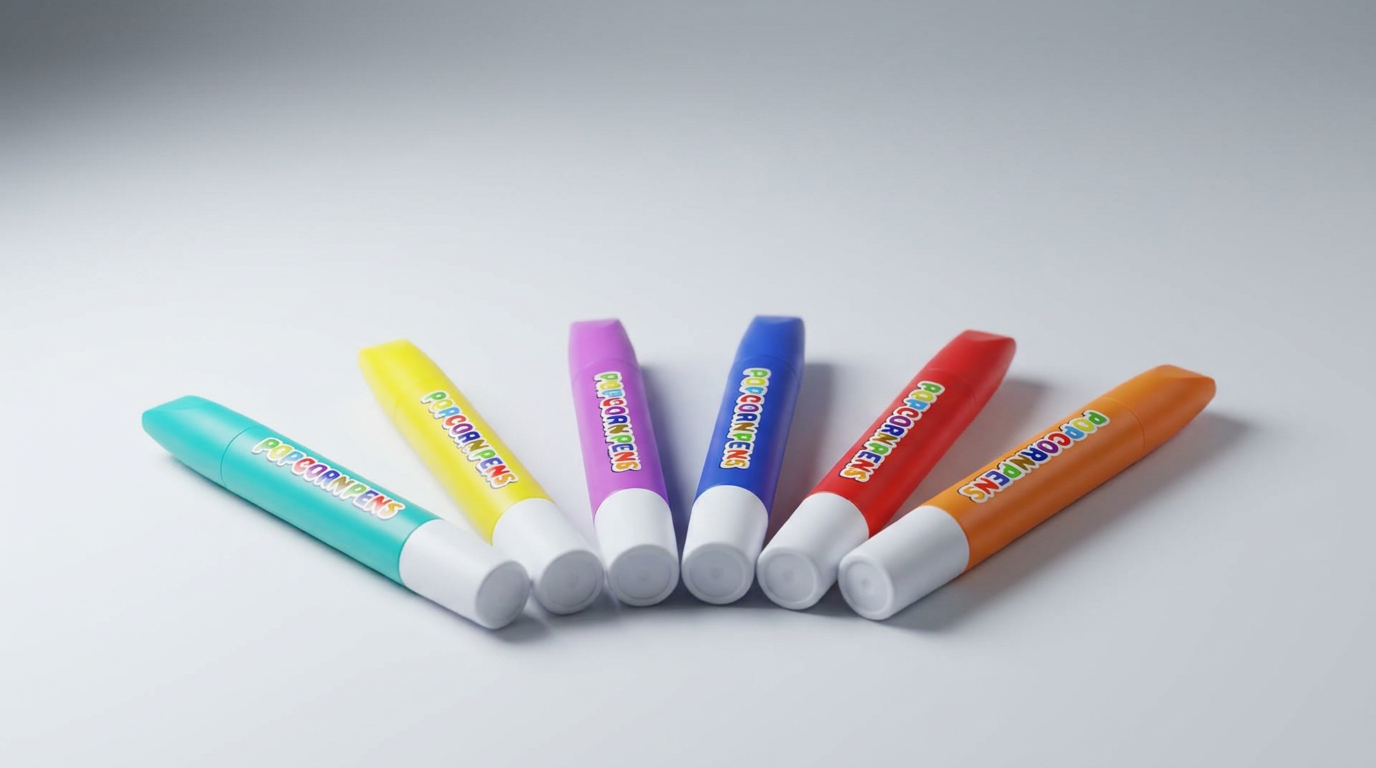
The novelty craft market relies on simple, repeatable magic to capture children's attention, but the JINGHUIRUIHONG 3D Relief Art Pen represents an extreme breakdown in basic product execution. Marketed as an accessible alternative to electronic 3D printing pens, this set of squeeze tubes promises self-expanding, popcorn-textured lines activated by household heat. In reality, it exemplifies category hijacking: low-grade chemical novelties miscategorized alongside technical fabrication tools to capture unearned search interest.
The core issue is what can be termed the dispensing paradox. For a fluid-based drawing tool to function, the internal pressure required to discharge the liquid must be well below the structural failure threshold of the vessel. Here, the relationship is inverted. The fluid viscosity and tip obstruction create such extreme resistance that the force needed to express the compound frequently exceeds the integrity of the pen body itself.
What results is not an engaging craft afternoon, but an exercise in frustration. Before an artist even reaches the thermal activation phase, they must contend with sealed passages, uncertain preparation steps, and the constant threat of high-pressure blowouts.
What owners love
- + Inexpensive entry point under $15 for a multi-color craft pack
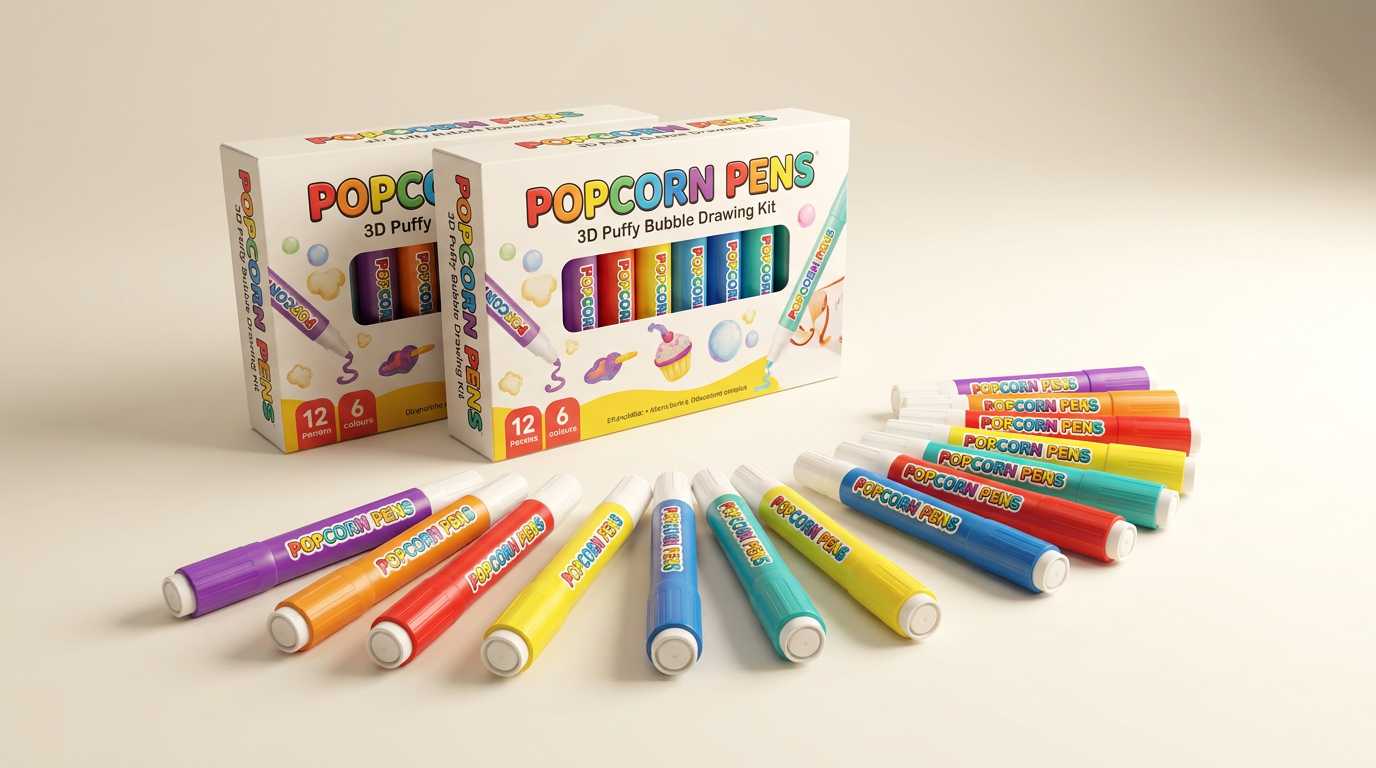
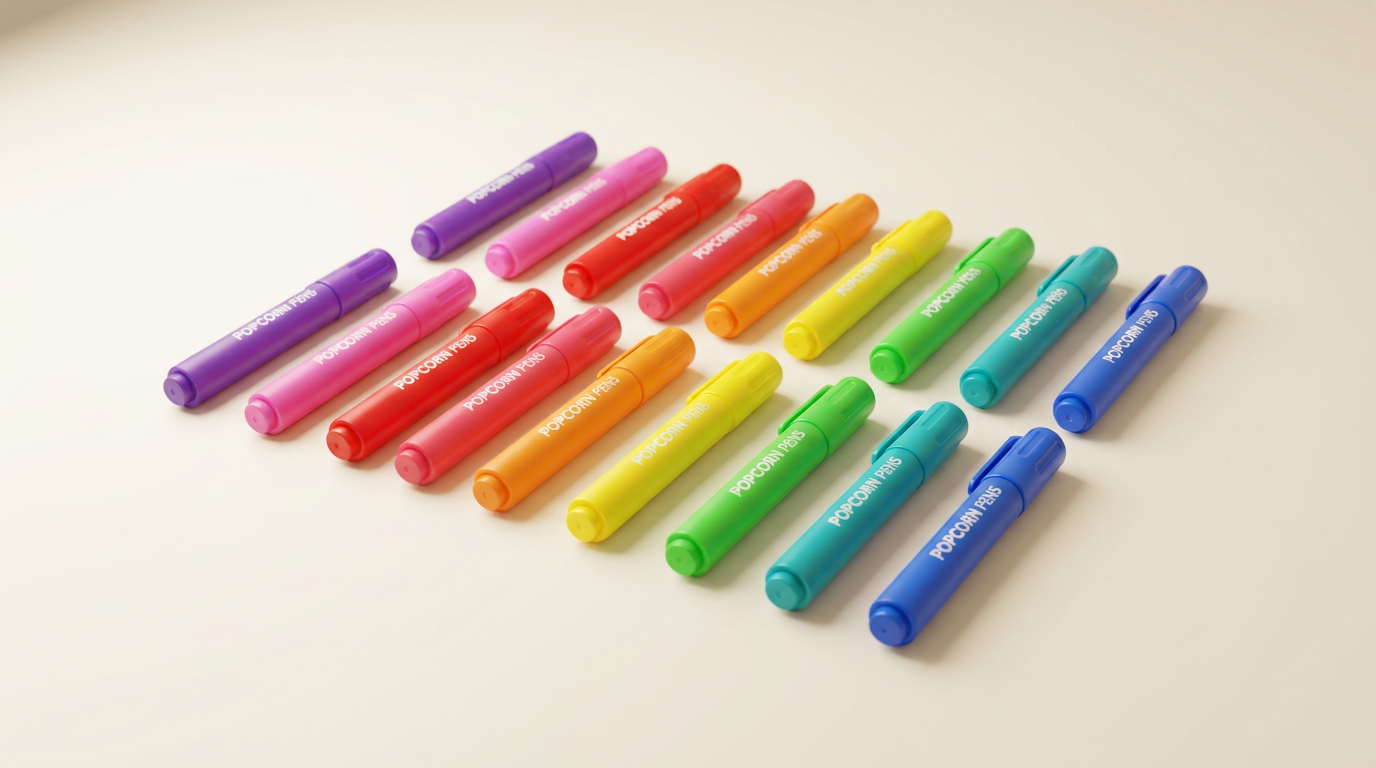
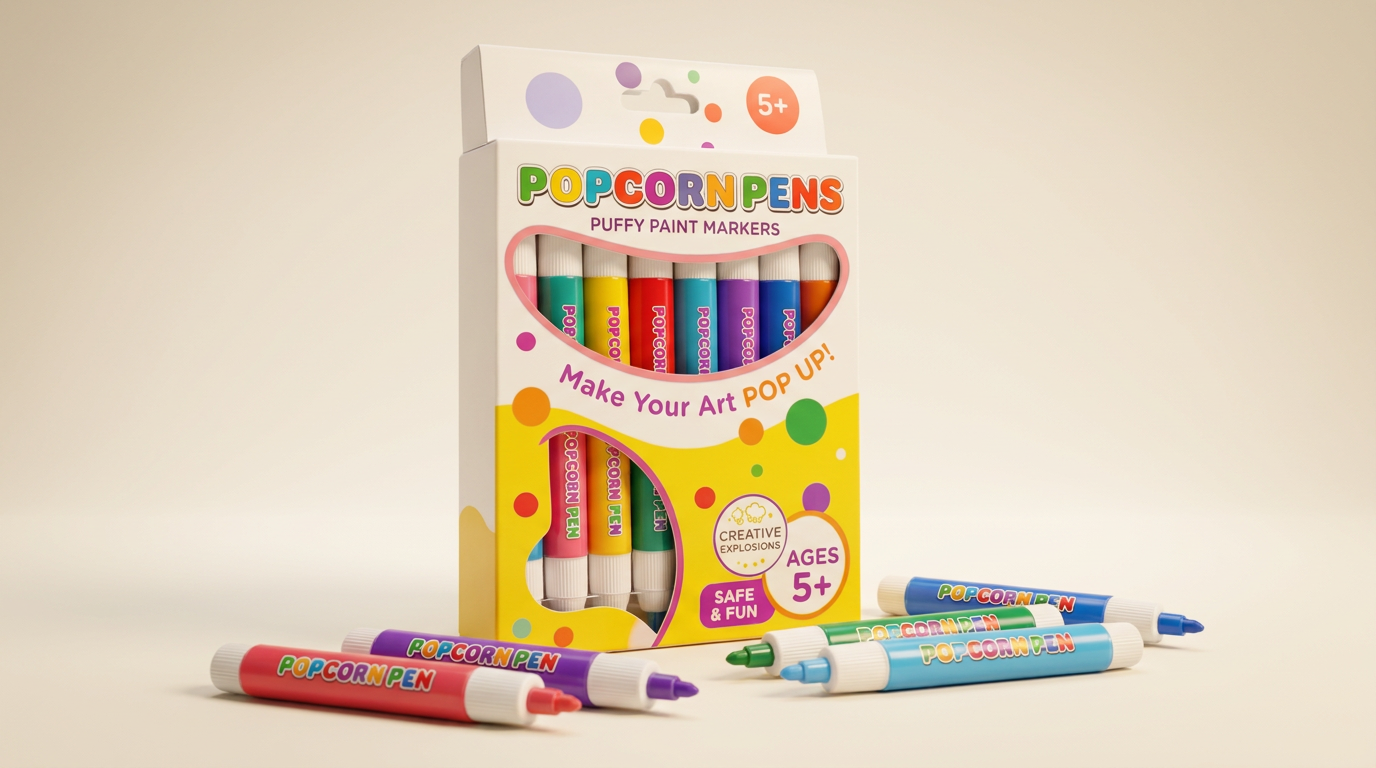
- + Six vibrant pigment options provided in a single kit
- + Compact form factor scaled reasonably well for younger hands
- + Water-soluble ink cleans up relatively well when ruptures occur
Common complaints
- − Severe dispensing blockages prevent normal ink flow
- − Thin plastic housings prone to bursting under squeeze pressure
- − Complete absence of clear unsealing or priming instructions
- − Compound fails to puff predictably when exposed to standard hair dryers
Design & Build
The pens are built around lightweight, flexible plastic barrels tipped with fine-point plastic nozzles. In theory, this layout should afford fine line control similar to a precision glue applicator. In execution, the manufacturing tolerances are distressingly poor. The plastic seams along the barrel shoulders show variable thickness, creating localized weak spots that buckle under modest force. The fine tips, designed to meter out delicate patterns, act instead as bottlenecks for an overly dense fluid carrier that appears prone to premature drying or settling within the nozzle neck.
Setup & Ease of Use
Initial unboxing reveals a glaring omission: documentation. Owners are left entirely to guess whether the nozzles require slicing with a blade, puncturing with a pin, or simply brute-force extrusion. Because the company provides no operational guidance, users frequently waste time attempting to force hardened or factory-sealed tips open by hand. For young children, the physical force required to express even a droplet is completely prohibitive, demanding adult intervention that still often fails to establish a consistent flow.
Performance in Real Use
When users apply enough pressure to overcome the initial blockages, the dispensing paradox triggers catastrophic failures. Rather than yielding a controlled bead of ink, the weakened plastic barrels tend to rupture violently, sending bursts of pigment onto walls, furniture, and ceilings. For the rare pen that does dispense without disintegrating, the thermal activation deficit becomes apparent. Standard residential hair dryers fail to generate the rapid, uniform thermal transfer needed to make the chemical compound blossom. Artwork remains largely flat, gummy, and discolored rather than puffing into the advertised three-dimensional relief.
Software & Ecosystem
While analog craft pens do not rely on firmware or digital apps, they do rely on an ecosystem of packaging, clarity of classification, and companion resources. JINGHUIRUIHONG stumbles entirely here. By classifying a basic liquid craft supply under industrial additive manufacturing categories, the brand creates false consumer expectations of mechanized reliability. The kit lacks templates, clear drying-time parameters, or recommended wattage ratings for heat sources, leaving buyers to troubleshoot chemical application through unguided trial and error.
Value & Reliability
At a street price comfortably under $15, the financial risk appears low on paper, but the real-world value is effectively zero. A craft supply that cannot clear its primary hurdle (dispensing its contents without structural rupture) is not a budget alternative; it is an immediate liability. Between ruined work surfaces and wasted crafting sessions, the hidden cost of cleanup and replacement far outweighs the nominal savings over reliable, branded dimensional fabric paints.
Verdict
Stay Away - Catastrophic dispensing failures and absent instructions turn what should be a simple craft project into a messy hazard.
Parents, educators, and hobbyists seeking textured art should skip this set entirely. If you want dimensional craft lines, standard fabric puff paints or entry-level filament-based 3D pens from established brands provide working flow mechanics and safe operation.
This product is a classic victim of category hijacking, where bottom-tier novelty goods are stuffed into industrial search listings with zero regard for physical utility. When a fluid applicator requires so much force that it detonates against the ceiling before laying down a single line, it ceases to be an art tool and becomes disposable plastic waste.
FAQ
More 3D Printing Pens reviews
This review is based on real experiences shared by owners in online communities.