
cuoct 3D Relief Art Pen Review
By AValidReview. An AI-assisted summary of customer feedback, not a hands-on test.
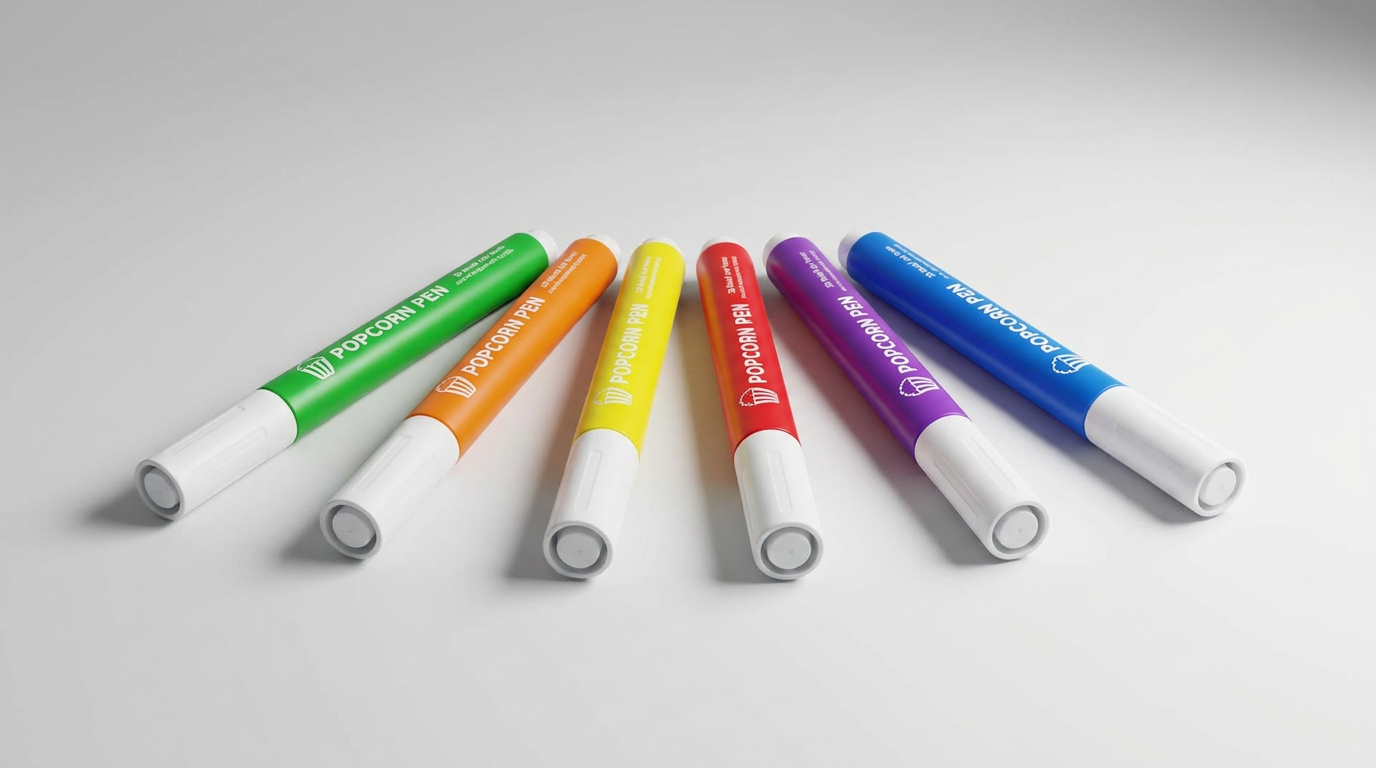
The craft market thrives on algorithmic mimicry. Every few months, an obscure brand repackages standard expanding foam ink as a high-tech additive manufacturing tool, quietly positioning novelty squeeze tubes alongside genuine 3D printing pens. The cuoct 3D Relief Art Pen is the latest entry in this catalog hack, promising magical popcorn-like expansion that rises off the page when heated. What buyers actually unbox is a twelve-piece set of liquid paint pens trapped behind a massive thermal activation gap.
The premise sounds appealing for a rainy afternoon science craft: draw a flat line, pass a household hair dryer over the paper, and watch the pigment bubble into tactile bas-relief. In practice, the chemistry required to trigger that expansion exposes an immediate physical conflict. Wet, low-viscosity paint does not like being blasted with high-velocity air, and the heat output from standard styling tools rarely matches what the chemical blowing agents demand.
While a minority of users manage to coax a modest foam texture out of these pens with high-wattage dryers, most households end up with separated ink, clogged nozzles, and flat, runny watercolors. It is a cautionary study in how paper-thin product listings overpromise on basic craft chemistry.
What owners love
- + Bright neon and pastel color selection across two six-pack boxes
- + Engaging sensory experience when the heating process works properly
- + Chunky pen barrels are comfortable for small hands to grasp
- + Functions passably as standard liquid paint markers for basic paper crafts
Common complaints
- − Fails to puff up reliably without extreme, close-range heat
- − Airflow from hair dryers easily blows wet ink across the page
- − Frequent pigment separation and nozzle clogs right out of the box
- − Inconsistent flow makes controlled line work almost impossible
Design & Build
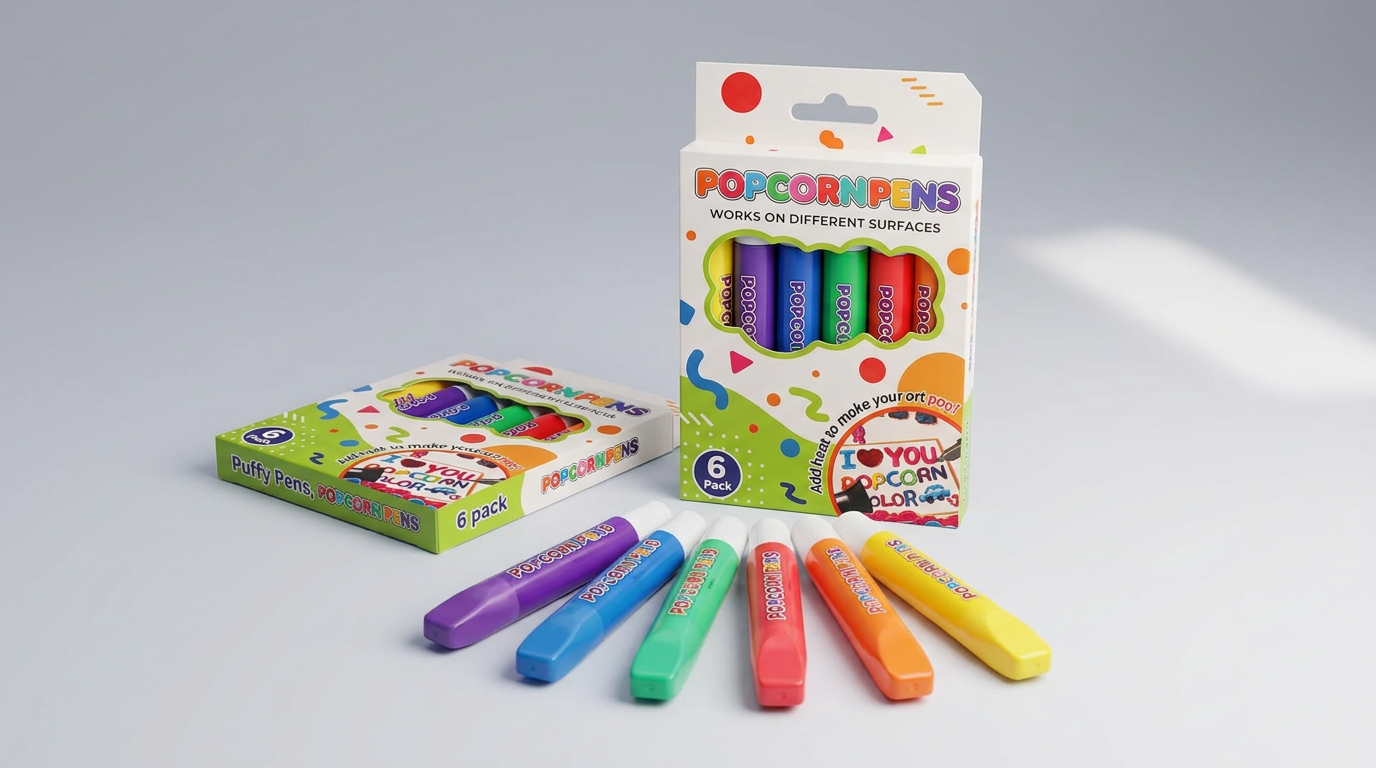
The cuoct pens arrive in two six-pack cardboard cartons containing chunky, squeezable plastic barrels with conical plastic nibs. The build quality reflects its rock-bottom manufacturing cost: thin plastics, loosely seated tips, and caps that several owners report fail to seal properly once opened, leading to inevitable leaks. More concerning is what happens inside the translucent reservoir before you even make a mark. Buyers frequently report severe pigment separation, with a watery binder sitting on top of dense, settled color sediment. Vigorous shaking and kneading rarely recombine the formula, leaving the plastic tips vulnerable to immediate clogs that require clearing with a safety pin. For a product aimed at low-friction creative play, the basic container physics present friction before the cap is even off.
Setup & Ease of Use
Operating these pens is less like drawing and more like managing fluid hydraulics. Because the ink is exceptionally watery rather than viscous, controlling the discharge demands delicate squeeze pressure. Toddlers and young children routinely flood the page by squeezing out large, uncontrolled puddles. The manufacturer advertises precision 3D detailing, but the broad plastic nib and fluid inconsistency restrict users to thick outlines and abstract shapes. Once the paint is down, the instructions mandate drying followed by heating. Here lies the operational trap: leave the ink too wet and the hair dryer scatters it; let it dry entirely and the blowing agents lose their structural pliability. Achieving an even deposit without air bubbles takes trial and error that stretches the patience of the target audience.
Performance in Real Use
The core selling point of the cuoct pens is the puffy relief effect, but real-world execution runs into the fluid-velocity paradox. To get the chemical blowing agent to foam, users must apply sustained, high-intensity heat. Yet directing a hair dryer close enough to achieve that thermal threshold inevitably blasts wet paint into smears across the sheet. Even when owners employ premium styling tools like high-heat dryers held inches away, results are wildly unpredictable. Some users report modest bubbling that resembles low-relief sandpaper, but an equal number see zero structural change after five straight minutes of direct heat. The finished texture rarely resembles the dramatic, marshmallow-like heights pictured on the box, functioning instead as a patchy, slightly raised crust.
Software & Ecosystem
While these pens do not run software, they rely on an unstated domestic ecosystem of secondary tools that the packaging glosses over. The critical accessory is a high-output hair dryer or craft heat gun, neither of which is safe for unattended child use. Standard household dryers often lack the focused thermal density needed to foam the paint without blowing paper across the table, forcing parents into the role of industrial heating technicians. Furthermore, the watery formula bleeds aggressively through standard printer paper and thin sketchbooks, necessitating heavy cardstock or coated poster board to prevent buckling under both moisture and subsequent heat exposure.
Value & Reliability
Priced under fifteen dollars for twelve pens, the initial cost of entry is undeniably low. However, that figure conceals an abysmal reliability curve. With half of the pens in many packs arriving clogged or fundamentally incapable of expanding, the usable yield drops precipitously. The product essentially acts as an overpriced, frustrating set of watery squeeze paints. When a novelty product fails its primary advertised feature for a majority of owners, even a single-digit price point fails to deliver genuine value. Dedicated acrylic dimensional paints from established craft brands offer far higher consistency without requiring a high-stakes thermal activation process.
Verdict
Stay Away - Inconsistent chemical formulation and an extreme heat threshold make this puffy pen set an exercise in craft frustration.
Parents looking for an independent craft to keep young children occupied should look elsewhere. The need for sustained, high-temperature heat application makes adult intervention mandatory, while the watery formula creates messes that fail to puff up as promised. If you already own a dedicated craft embossing gun and want to treat this strictly as a cheap tactile experiment on heavy cardstock, you might find brief amusement in the novelty, but the failure rate remains high.
The cuoct Relief Pen represents the worst habit of marketplace category hijacking: taking a decades-old novelty paint formula, misclassifying it in additive manufacturing search results, and relying on digital mockups to sell a process that basic domestic tools cannot reliably execute. True creative materials work with the user; this set forces you to fight both the physics of fluid ink and the limits of your hair dryer.
FAQ
More 3D Printing Pens reviews
Popcorn Pens 12-Piece 3D Bubble Drawing Pen Review
Popcorn Pens 3D Bubble Drawing Review: A Craft Disaster
GYZOMKBIU Popcorn Pens Review: Flat Results and Viral Hype
GizmoBox Popcorn Pens Review: Fun 3D Art with Big Caveats
JINGHUIRUIHONG 3D Relief Popcorn Pens Review
Generic Popcorn Pens Review: The Puffy Ink Illusion
This review is based on real experiences shared by owners in online communities.