
3DMakerpro 6mm 3D Scanning Marker Dots Review
By AValidReview. An AI-assisted summary of customer feedback, not a hands-on test.
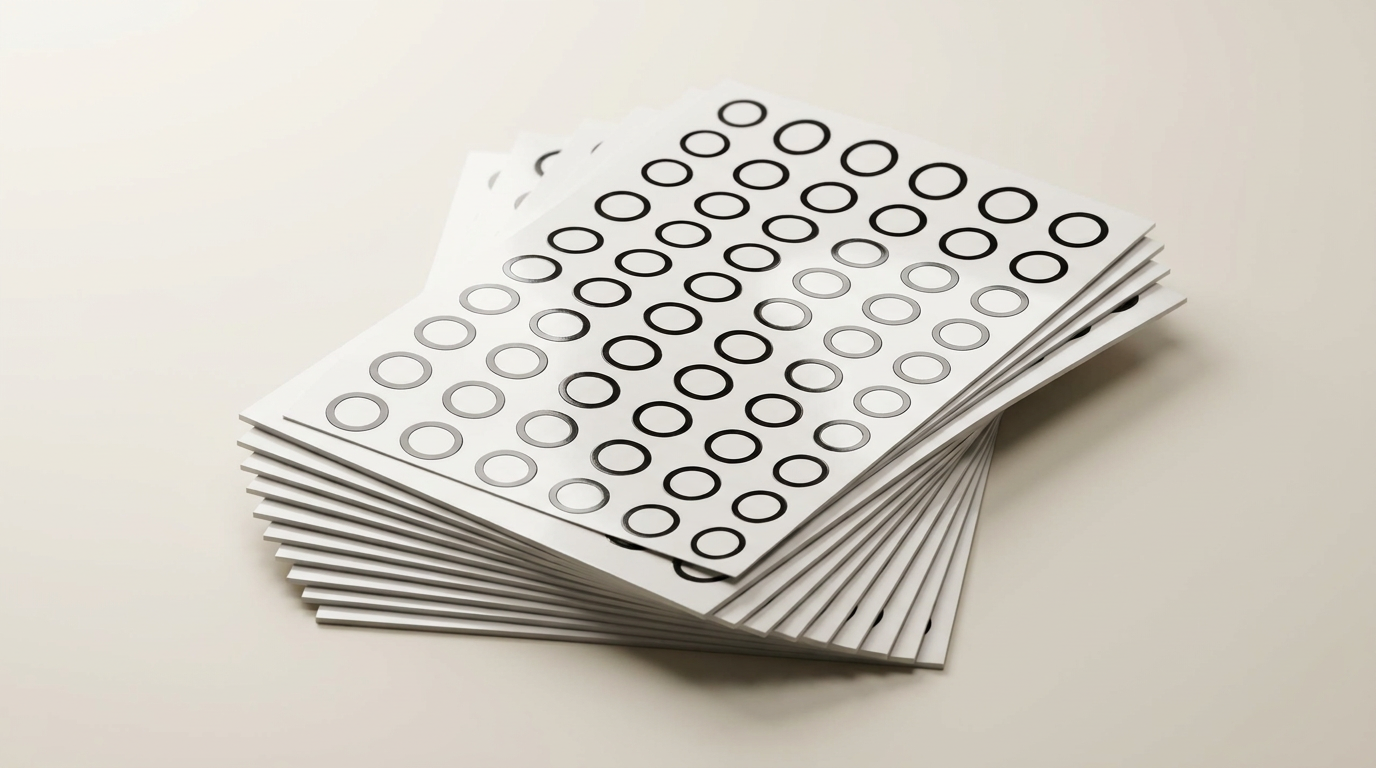
Consumer 3D scanning hardware has evolved rapidly, but software tracking algorithms still reliably choke on the same obstacle: the geometry void. Present a structured light or laser scanner with a smooth sheet metal panel, an injection-molded housing, or a symmetrical cylinder, and the point cloud quickly degenerates into frame loss and alignment drift. To anchor these featureless expanses, technicians rely on high-contrast optical targets.
Historically, hardware manufacturers leveraged this reliance into an unspoken vendor markup tax, insisting that users feed their rigs expensive first-party stickers. 3DMakerpro sells these 6mm inner-diameter reflective marker sheets as direct accessories for its own Moose and Toucan scanners, yet their real utility extends across the entire desktop scanning landscape.
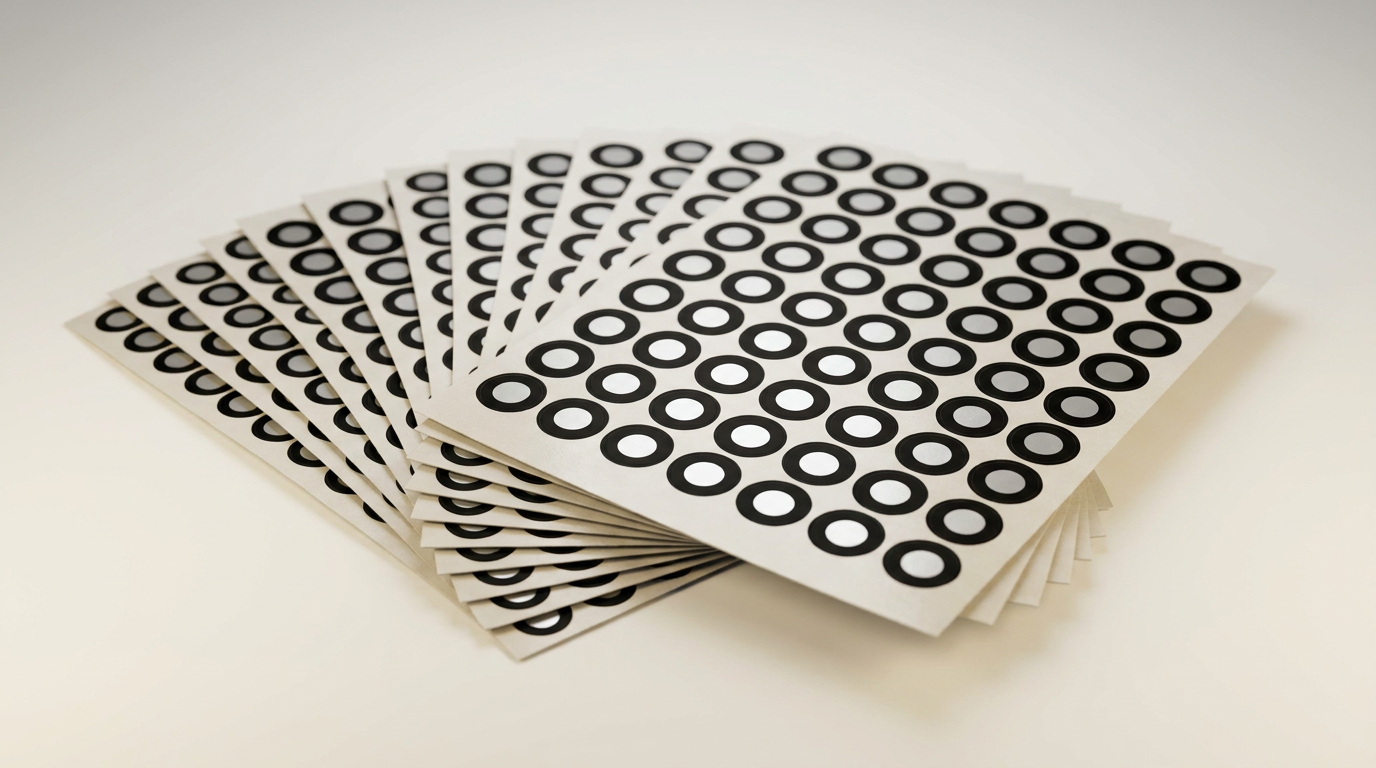
Packaged in a 500-count bundle across ten sheets, these dots reveal the open secret of optical consumables: tracking dots are industrial commodities. Whether applied to raw metal or mounted onto reusable fixtures, they serve as an equalizer for difficult reverse-engineering projects without requiring specialized brand loyalty.
What owners love
- + High retroreflective return across structured light and laser scanners
- + Clean, residue-free release on smooth plastics and bare metals
- + Tacky adhesive maintains hold across extended multi-pass captures
- + Intermixes seamlessly with competitor markers on identical scanning runs
- + Accessible volume packaging for small-batch reverse engineering
Common complaints
- − 6mm sizing is too large for intricate miniature scans
- − Peeling and manual placement remains inherently labor-intensive
- − Adhesive struggles on oily, dusty, or porous surfaces
Design & Build
Each pack contains ten die-cut sheets holding 50 markers apiece, configured with a 6mm reflective inner diameter bordered by a high-contrast black outer ring. The construction mirrors standard metrology targets: a micro-prismatic reflective core laminated onto a thin, flexible polymer carrier with a pressure-sensitive adhesive backing. The physical dimensions match the target profiles favored by Creality and Shining 3D units. Inspection shows consistent circular concentricity and clean edge cuts, meaning optical centers remain stable under varied scanner illumination angles. The adhesive strikes a sensible middle ground; it grips firm flat stock tenaciously while resisting tearing when lifted by a fingernail or tweezers.
Setup & Ease of Use
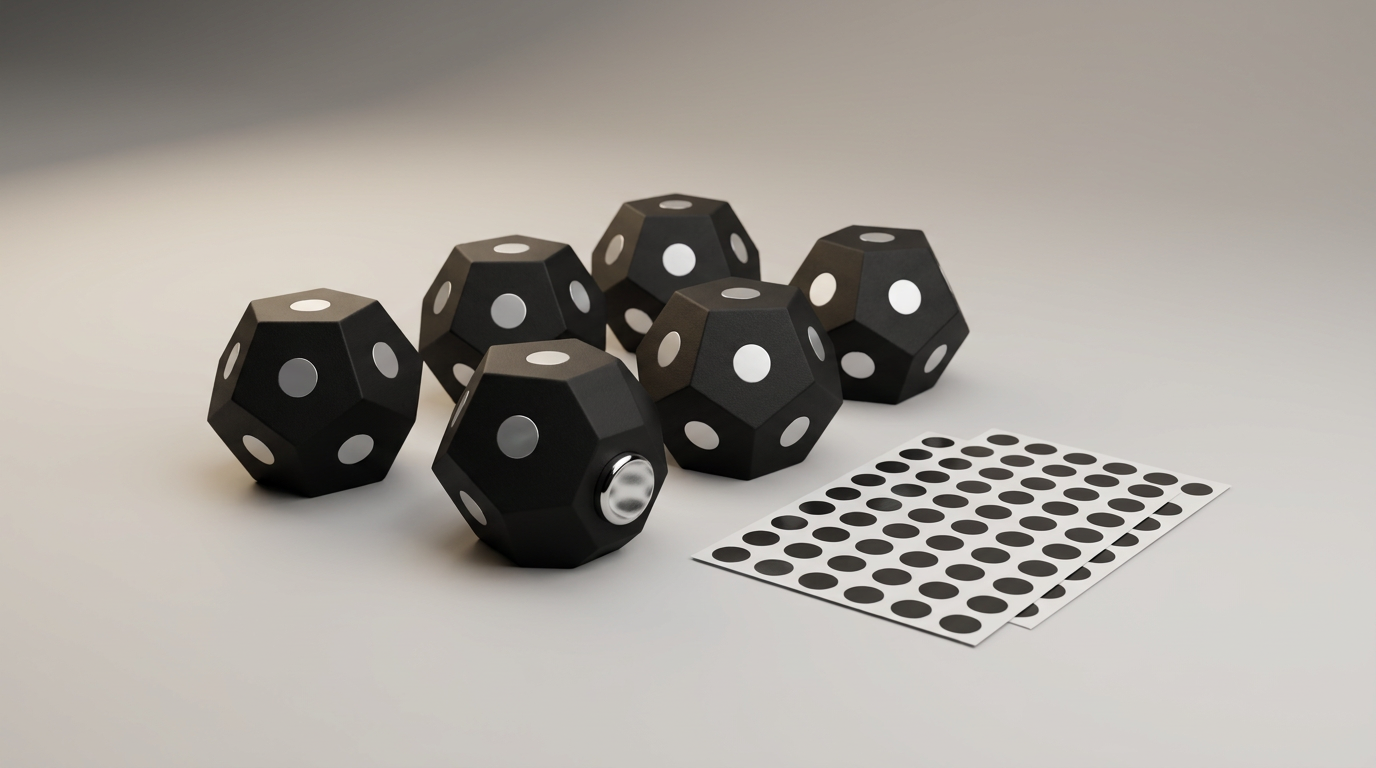
Applying tracking targets is an inherently repetitive task, but the backing paper releases cleanly without bending the reflective face. To prevent the sacrificial surface dilemma, where sticking adhesive directly onto delicate or pristine customer parts risks contamination, several experienced owners place these dots on 3D-printed magnetic target blocks instead. When mounted directly to workpieces, surface hygiene dictates success. The adhesive sticks reliably to degreased aluminum, smooth PLA prints, and automotive body panels, but will lift early if introduced to cutting fluids, silicone release agents, or particulate dust. Removal leaves zero gummy residue on polished surfaces, eliminating the need for solvent wipe-downs after scanning.
Performance in Real Use
In operation, the reflective core yields an aggressive optical bounce that scanner software registers as a distinct high-intensity centroid. When scanning featureless geometry, like flat aluminum plates or uniform cylinders, these dots eradicate tracking loss entirely. Users operating laser systems like the Creality Raptor or structured-light setups like the 3DMakerpro Moose report instantaneous target acquisition with no dropped frames during rotation. Point clouds generated with these markers demonstrate tight multi-pass registration, allowing overlapping scan angles to fuse into a single coherent mesh without manual alignment in post-processing.
Software & Ecosystem
While equipment makers frequently insist that their proprietary algorithms require branded consumables, field use proves these markers are universally compatible. In fact, users routinely intermix these 3DMakerpro dots with OEM markers from Creality and Einscan on the same scanning volume without triggering calibration errors or focal distortion. Photogrammetry and scanning utilities simply detect the high-contrast retroreflective threshold and compute the spatial coordinate. The markers introduce no artifacts or software-side tracking rejections, confirming that optical tracking standards transcend brand boundaries.
Value & Reliability
Selling in the roughly $20 price bracket for 500 pieces, the package offers strong utility for hobbyists and light industrial shops alike. Because marker-assisted scanning consumes targets rapidly, often requiring 30 to 80 dots per medium-sized automotive part, running through a standard factory pack takes surprisingly little time. Sourcing affordable third-party replacements that deliver identical tracking fidelity prevents users from rationing targets during critical alignments. Given their reliability across multiple scanner brands, these sheets easily justify shelf space next to any desktop scanning workstation.
Verdict
Buy - A reliable, fairly priced consumable that breaks unnecessary manufacturer lock-in for marker-assisted scanning.
This pack is an essential purchase for reverse engineers, 3D printing enthusiasts, and shop technicians running desktop scanners over flat, symmetrical, or untextured surfaces. It functions flawlessly with 3DMakerpro, Creality, and Einscan systems.
Those scanning tiny miniatures or jewelry should skip this pack, as 6mm markers will overwhelm small features and necessitate 3mm micro-dots instead.
The metrology market often attempts to disguise universal optical targets as proprietary hardware extensions. These markers strip away that marketing illusion, proving that consistent tracking comes down to clean adhesive and standard retroreflective physics rather than an expensive logo on the sticker sheet.
FAQ
More 3D Scanners reviews
3DMakerpro Seal Lite Review: Precision at a Strict Distance
Creality Scan Bridge for CR-Scan Otter Review: Wireless Freedom
Creality Otter Lite 3D Scanner Review: High Precision with a Catch
Starry 6.0mm 3D Scanner Markers Review: Reliable Tracking Dots
Creality Scan Bridge Review: Wireless Freedom at a Cost
Kingdder Magnetic 3D Scanning Marker Review
This review is based on real experiences shared by owners in online communities.